Electronics kits · Ages 1-12
Smart Toy Safety Checklist (2026): What Most Parents Miss Before Buying
A smart toy safety checklist for parents, covering data privacy, COPPA, connectivity breaches, button batteries, and recalls, with 5 connected toys scored honestly.
Published Jun 21, 2026 · 9 min read
As an Amazon Associate, I earn from qualifying purchases. Your price stays the same.
TL;DR
- The biggest smart toy safety risks parents miss aren't choking hazards. They're data privacy and connectivity breaches: always-on mics, voice clips stored in a company cloud, and unencrypted Bluetooth.
- Real history backs this up. The FTC fined VTech $650,000 over a breach, CloudPets leaked 2.2 million voice messages, and Germany banned the My Friend Cayla doll as a surveillance device.
- For a privacy-first family, the safest connected toy here is the Toniebox: no microphone, no camera, audio that never leaves the box. Avoid an always-on mic toy unless you accept the data trade-off.
How we evaluated: this guide draws on manufacturer specifications, published expert reviews, FTC, CPSC, and Mozilla *Privacy Not Included safety sources, and patterns across verified-buyer feedback, not personal hands-on testing. Enforcement actions and breach figures are cited to public sources; review-based observations are patterns, not exact counts.
The connected toy your child unwraps this year may also be a networked microphone in their bedroom, and almost nobody reads the privacy policy first. A smart toy safety checklist built only around choking hazards misses what went wrong in every major toy scandal of the last decade: data. This guide gives you the checklist parents miss, then scores five real picks against it.
Quick pick: Toniebox 2. Best for privacy-first families who want no microphone, no camera, and audio kept on the box. See it on Amazon (affiliate link)
What does a real smart toy safety checklist cover?
Most checklists stop at physical hazards, but a connected toy needs five checks: the first two are the ones parents never run:
- Data privacy and COPPA: does it collect your child's data, and did it ask?
- Connectivity security: is the Bluetooth or cloud connection actually protected?
- Button batteries and small parts: does it meet the new federal battery rule?
- Parental controls: can you set limits, filter content, and turn off ads?
- Recall status: has it been recalled, and will you find out if it is later?
Each section explains the risk, the incident behind it, and the question to ask.
Why is data privacy the risk parents miss most?
Connected toys collect personal data from children: microphone recordings, voice interactions, photos, and account info. U.S. law (COPPA, the Children's Online Privacy Protection Act) requires a company to get a parent's consent. The gap parents miss is that many devices use always-on mics, store voice data in the cloud, and bury the controls. In 2015, a breach at VTech exposed 6.3 million children's records, including chat logs, photos, and voice recordings. The FTC fined VTech $650,000 in 2018 for COPPA violations, citing missing consent and unencrypted storage. Worse, the My Friend Cayla doll let strangers within Bluetooth range speak directly to a child. Germany's regulator banned it in 2017 as an illegal surveillance device.
Ask before buying: Does it require parental consent before collecting data? Does it store mic or camera recordings, and where? Can you view and delete your child's data? Is the privacy policy short enough to read?
How dangerous is the connectivity?
A device that syncs over Bluetooth or WiFi is only as safe as its weakest link: weak encryption, an exposed cloud backend, or unpatched firmware. Unencrypted pairing with no PIN means anyone within about 50 feet can connect. The CloudPets breach is the cautionary tale. In 2017, more than 820,000 owner accounts sat in an unprotected database, and attackers exposed 2.2 million voice messages recorded by children and parents; the company set no password-strength rules, so credentials were trivial to crack.
Ask before buying: Is Bluetooth pairing password-protected, or does it auto-pair with anyone nearby? Is the cloud account protected with two-factor login? Does the maker ship firmware updates? Mozilla's *Privacy Not Included guide to connected devices is a clear resource for vetting a device's security.
Do button batteries and small parts still matter?
Yes, this is where the physical checks belong. A swallowed coin battery can burn through a child's esophagus in two hours. After 18-month-old Reese Hamsmith died from swallowing one, the U.S. passed Reese's Law and a new federal standard for button and coin battery safety. Under that rule (ANSI/UL 4200A), a button or coin battery compartment must require a tool such as a screwdriver, or two independent and simultaneous hand movements, to open, so try to open it bare-handed in one motion, and if it pops open, the toy fails the test. The broader ASTM F963 toy safety standard is the baseline any reputable maker already meets.
Ask before buying: Does it use button or coin batteries, and is the compartment tool-sealed? Are there small detachable parts or loose magnets? Children aged 3 to 8 are the highest-risk group for ingestion, so keep small parts and magnets out of reach of any toddler.
Can you actually control what it does?
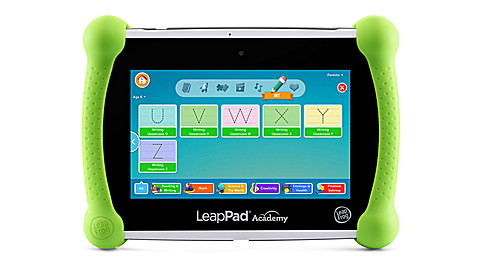
A "kid-safe" label with weak parental controls still lets a child rack up unlimited screen time, see ads, or hit an in-app purchase, and the controls often live in a separate app that ships un-configured. Depth varies sharply by product. The Toniebox and Yoto companion apps let a parent curate exactly which audio content loads onto the device, so the library is a closed set you chose. The LeapPad Academy adds parent-set screen-time limits and a curated, age-graded app catalog. The Echo Dot Kids leans on the Amazon Parent Dashboard to set limits and review activity, but the mic listens unless you act.
Ask before buying: Can you set daily time limits and a bedtime lockout? Can you approve or filter content first? Does it show ads, and can you disable them? A closed, curated library beats an open algorithm.
How do you keep up with recalls after you buy?
Products get recalled for hazards found after they ship, and a parent who bought something six months ago usually has no idea. The fix is a 30-second habit: search the product on the U.S. CPSC database at SaferProducts.gov before you buy, bookmark it, and re-check quarterly. The Yoto Mini is a live example: older units were recalled for a battery fire hazard, while the current 2024 edition is unaffected.
Which smart toys pass the checklist?
Five real picks, scored against all five checks. Across published reviews and verified-buyer feedback, the screen-free audio players draw the most consistent praise for "zero ads, zero tracking, peace of mind," while the always-on mic device draws the most privacy unease.
| Toy | Price | Microphone / Camera? | Does data leave the device? | Verdict |
|---|---|---|---|---|
| Toniebox 2 | ~$140 | No mic, no camera | No; audio stays on the box, no account | Strong (safest pick) |
| Yoto Mini (2024) | ~$80 | No mic, no camera | No on-device recordings; companion app curates content | Strong |
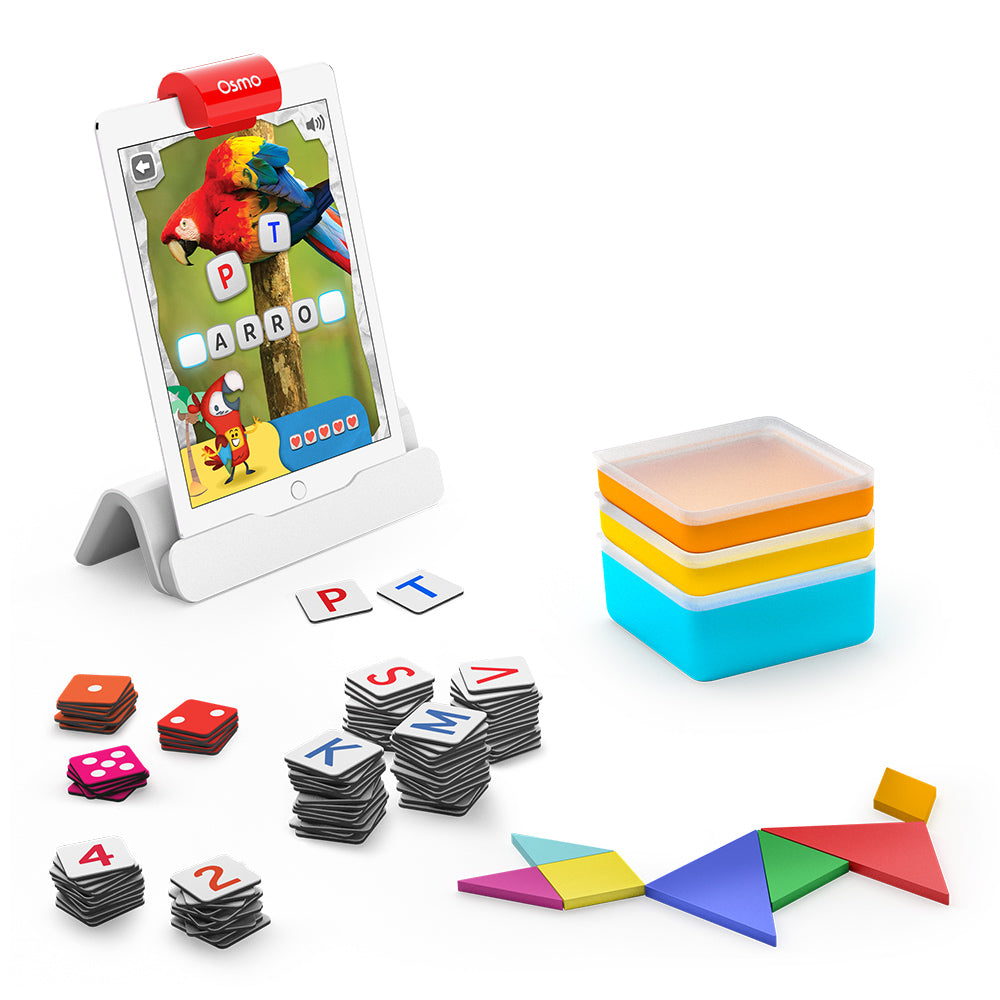
| Osmo Genius | ~$53 | Downward camera reads table pieces; no mic | No; pieces processed on-device | Moderate |
| LeapPad Academy | ~$99–129 | No mic, no camera | Yes; learning progress syncs to a cloud account | Moderate |
| Echo Dot Kids | ~$60 | Always-on mic | Yes; audio clips sent to Amazon's cloud | Caution (listens by default) |
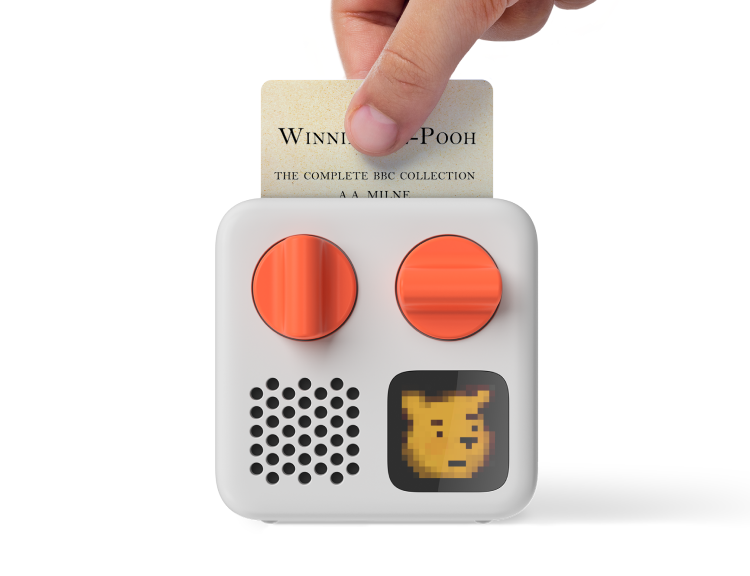
Toniebox 2 (ages 1+, ~$140 starter set) is the privacy benchmark: a child sets a figure on top and a story plays, with no microphone, no camera, and no account, so there is nothing to record or leak. Owners praise the screen-free, ad-free experience; the recurring gripe is the cost of collectible figures, not safety. See our Toniebox vs Yoto vs Storypod showdown.
Yoto Mini (2024 edition) (ages 3+, ~$80) is the on-the-go pick. Like the Toniebox, the hardware has no microphone and no camera, so there is nothing on the device to record. Buy the 2024 edition specifically: older Minis were recalled for a battery fire hazard, a textbook case for the recall check above.
Osmo Genius Starter Kit (ages 5 to 10, ~$53) earns a moderate rating because it does use a camera. But the Osmo base uses a downward-facing camera to read the physical pieces on the table. It is not a microphone listening to the child, and the recognition runs on the device. It needs an iPad or Fire tablet (not included). See our STEM picks for ages 6 to 8.
LeapFrog LeapPad Academy (ages 3 to 8, ~$99 to $129) is a non-recording kids' tablet with parental controls built in, so nothing captures the child. It lands at moderate because progress syncs to a cloud account and the full library needs a subscription, the most common owner frustration, not as privacy-forward as the audio players. See our LeapFrog vs VTech learning-tablet breakdown.
The honest caution is the Amazon Echo Dot Kids (ages 3 to 12, ~$60). It is a capable voice device with a large content library, but it has an always-on microphone and audio clips are processed on Amazon's servers, the most common concern owners raise. The mic-off button is essential, but the default state is listening, so buy it only if you accept Amazon's data collection, not for a privacy-first home.
The verdict
Bottom line: For a privacy-first family, the safest connected toy here is the Toniebox (4.7/5): no microphone, no camera, and audio that never leaves the box, so there is nothing to breach.
On a budget / STEM-first? The Osmo Genius Starter Kit (~$53) is the cheapest screen-based pick that still keeps the camera pointed at the table, not the child.
For genuine peace of mind, choose a pick with no recording hardware: the Toniebox 2 suits home and the Yoto Mini 2024 suits travel, and both pass every check. The Osmo Genius is a fair STEM middle ground, the LeapPad Academy works if you accept a cloud account, and the Echo Dot Kids is the cautionary example. Whatever you pick, run the five checks and search the CPSC recall database before you buy.
As an Amazon Associate, I earn from qualifying purchases made through product links in this guide. This does not affect the price you pay. The guide is based on manufacturer specs, published expert reviews, FTC, CPSC, and Mozilla safety sources, and verified-buyer feedback, not hands-on testing.
Shopping for a gift? Start here
- Best LEGO Botanicals Sets for Adult Builders and Gift-Givers (2026)
- LEGO Botanicals Bonsai Tree vs LEGO Botanicals Orchid: Which Is Better for Adult Builders and Gift Buyers?
- Holiday Gift Guide 2026: The Best Toys by Age and Budget, From Preschool to Grown-Ups
- Gifts for Grown-Ups Who Still Love Toys: LEGO, Board Games and Puzzles (2026)
How we research: This guide is based on manufacturer specifications, published independent reviews, and verified-buyer feedback, not hands-on testing.
Holiday gift guide drops every Friday in Q4
One email a week with the newest review and the toys our community is actually buying. No spam, unsubscribe anytime.