electronic-learning · ages 3-8
Toniebox vs Yoto vs Storypod: Which Screen-Free Audio Player for Kids? (2026)
Three screen-free audio players for ages 3-8, three very different content models and price tiers.
Published 2026-06-02 · 9 min read
Amazon Associates disclosure
As an Amazon Associate, I earn from qualifying purchases. The price you pay is the same. This guide is based on manufacturer specifications, published independent reviews, and verified-buyer feedback, not hands-on testing.
TL;DR
- Toniebox (~$140, ages 3+): easiest for toddlers, but figures cost $15-20 each.
- Yoto Player (~$110, ages 3+): cheapest to live with. Cards run $1-2, and the library is big.
- Storypod (~$80-100, ages 0-6): privacy-first, no microphone, learning-focused content.
- Check the recall: older Yoto Mini units were recalled for a battery fire hazard. Buy only the 2024 edition.
- All three are fully screen-free, which fits AAP guidance for young kids.
Audio players are the rare kids' gadget that parents and pediatricians both like. No screen. No ads mid-story. A three-year-old can run one alone. But the three big names work in very different ways, and the sticker price hides the real cost. This is a research-based comparison of Toniebox, Yoto, and Storypod against manufacturer specs, expert reviews, and safety records. No hands-on testing is claimed. Every fact below is sourced.
Why do parents pick a screen-free audio player?
The pitch is simple. Kids get stories, music, and podcasts without a glowing rectangle. That lines up with the American Academy of Pediatrics, which advises limiting screen media for young children in favour of hands-on, interactive play. Audio also does something screens do not: it leaves a child's hands and imagination free while they build, draw, or wind down for bed.
There is a quieter benefit too. These players hand control to the child. They pick the figure or card, they press play, they choose the next story. That small bit of independence is a big part of why kids actually use them instead of asking for a tablet.
How does each one work?
The hardware is similar. The content model is where they split.
Toniebox uses collectible figurines called Tonies. A child sets a figure on top and the matching story plays. It is the most toddler-proof of the three. The catch is cost: each figure runs roughly $15-20, so a growing collection adds up. The library sits around 500 characters, heavy on familiar brands and classic stories, which is great for younger kids and a little limiting for older ones.
Yoto uses credit-card-sized cards. Slot a card in, audio plays. Cards cost about $1-2, the library runs past a thousand titles, and the player holds a long charge (roughly 16 hours). A clock face and a few buttons let a child browse and set a sleep timer. For a kid who burns through content, Yoto is by far the cheapest to feed.
Storypod uses fabric figures it calls Crafties, plus learning-focused audio. It leans younger and more educational, and it makes a point of shipping without a microphone or camera. The content library is smaller and pricier per item, closer to the Tonies model, and the focus is early learning rather than a deep story catalogue.
What is the Yoto Mini recall, and why does it matter?
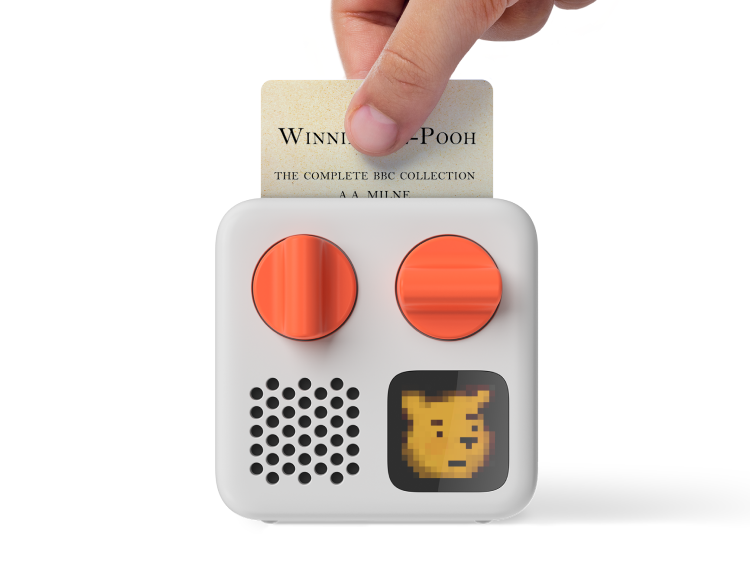
This is the first thing to check, before price or features. The U.S. CPSC announced a recall of Yoto Mini speakers sold from 2021 to 2023, after reports of the battery overheating and posing a fire and burn hazard. It covered hundreds of thousands of units. Yoto offers a free replacement battery kit for affected models.
The current 2024 edition of the Yoto Mini is not part of the recall and uses a different battery supplier. So a Yoto Mini is still a fine buy. You just have to buy the new one, and if you own an older Mini, stop using it and claim the kit. The full-size Yoto Player and the other two brands have no active recall as of writing, but recall status is live, so check CPSC.gov/Recalls before you buy.
Are they safe and private?
On physical safety, all three are built to the mandatory U.S. toy standard, ASTM F963. Figures and cards are small parts, so the usual rule applies: keep them away from children under 3, and treat the box age label as binding (CPSC small-parts rule).
Privacy is where these differ, because two of them are connected devices. Yoto and Toniebox use WiFi and a companion app to load content. Yoto's privacy practices have been reviewed independently by Mozilla's *Privacy Not Included, which is a useful read before you set one up; turn off any optional audio-recording features you do not want. Storypod takes the opposite stance and ships with no mic and no camera at all, which is the easiest choice for privacy-cautious parents. Whichever you pick, set it up on the parent app first and review the data settings.
How much do they really cost over a year?
The sticker price is the small number. The content is the big one. Picture a child who gets two new titles a month. On Yoto, at $1-2 a card, that is about $25-50 a year. On Toniebox or Storypod, at $15-20 a figure, the same habit costs $360-480 a year. That is not a rounding error. It is the difference between a cheap hobby and an expensive one.
So the right way to compare is total cost over the first year, not the box price. A Yoto Player plus a year of cards often lands below a Toniebox plus a year of figures, even though the Toniebox sometimes looks cheaper to start. If your child is a casual listener who replays the same five favourites, the figure models are fine and the tactile charm wins. If your child devours new stories, Yoto saves real money.
Which one travels and shares best?
Battery and size matter more than parents expect. The Yoto Player holds a long charge and the smaller Yoto Mini is built for a bag or a car seat, which makes Yoto the easiest to take on a trip. The Toniebox is chunky and soft, easy for little hands at home but bulkier to pack. Storypod sits in between.
Siblings change the math too. Cards and figures are shared easily, but two kids often want to listen to different things at once. A second cheap Yoto Mini is a far smaller outlay than a second Toniebox plus a duplicate figure set. If you expect a hand-me-down or a shared shelf, factor that in before you commit to a pricier content model.
Which one should you buy?
Here is the honest split.
- Buy Toniebox if your child is a toddler and you want the simplest possible thing. Drop a figure on top, done. Just budget for the figures.
- Buy Yoto if you want the lowest running cost and the biggest library. The cards are cheap, and an older child can manage them alone. For a heavy listener, nothing else comes close on price per hour.
- Buy Storypod if privacy is your top concern or you want learning-first content for a younger child, and you do not mind a smaller, pricier library.
If you only want one rule of thumb: pick by age and budget, not by which looks nicest on a shelf. A toddler points you to Toniebox. A book-a-day kid and a tight budget point you to Yoto.
For more screen-free options once your child outgrows audio, see our guide to screen-free coding robots for preschoolers and the broader best STEM toys for 6-to-8-year-olds.
Side by side
| Toniebox | Yoto Player | Storypod | |
|---|---|---|---|
| Best age | 3+ (toddler-easy) | 3-8 | 0-6 |
| Content | Tonies figures (~$15-20) | Cards (~$1-2) | Crafties (~$15-20) |
| Library size | ~500 | 1,000+ | smaller, learning-focused |
| WiFi/app | Yes | Yes | Minimal |
| Microphone | No persistent surveillance | Optional (parent-controlled) | None |
| Price tier | ~$140 | ~$110 | ~$80-100 |