robotics · ages 8-14
Makeblock mBot Neo vs Elegoo UNO R3 (2026): Which Is the Better First Maker Kit for a Teen?
A robot that works out of the box, or a box of 200+ electronics parts. This research-based comparison of the Makeblock mBot Neo and the Elegoo UNO R3 starter kit ranks them by what your teen actually learns, how steep the climb is, and which one matches a robot-first vs a circuits-first kid. Based on manufacturer specs and published expert reviews.
Published 2026-06-04 · 9 min read
Amazon Associates disclosure
As an Amazon Associate, I earn from qualifying purchases. The price you pay is the same. This guide is based on manufacturer specifications, published independent reviews, and verified-buyer feedback, not hands-on testing.
TL;DR
- The Makeblock mBot Neo (~$139, ages 8+) is a robot that assembles in ~30 minutes and does things right away. It starts in visual blocks and grows into Python. Best for a kid who wants to build a robot first and understand it second.
- The Elegoo UNO R3 "Most Complete" kit (~$57, ages 12+) is 200+ electronics parts and a breadboard, with no robot body. It teaches real circuits and Arduino C/C++. Best for a kid who wants to know how electronics actually work.
- This isn't "which is better." It's "which matches your kid." Robot-first visual learner: mBot Neo. Circuits-first tinkerer: Elegoo.
As an Amazon Associate I earn from qualifying purchases made through links in this review. It doesn't change the price you pay. This comparison is based on manufacturer specifications and published expert reviews, not personal hands-on testing.
Two kits keep showing up when a parent searches for a teen's first "real" STEM gift. One is a friendly robot. The other is a fat box of electronics parts. They look like rivals, but they teach almost opposite things. I dug into the manufacturer specs and the published expert reviews to sort out which kid each one actually fits.
What do you actually get in the box?
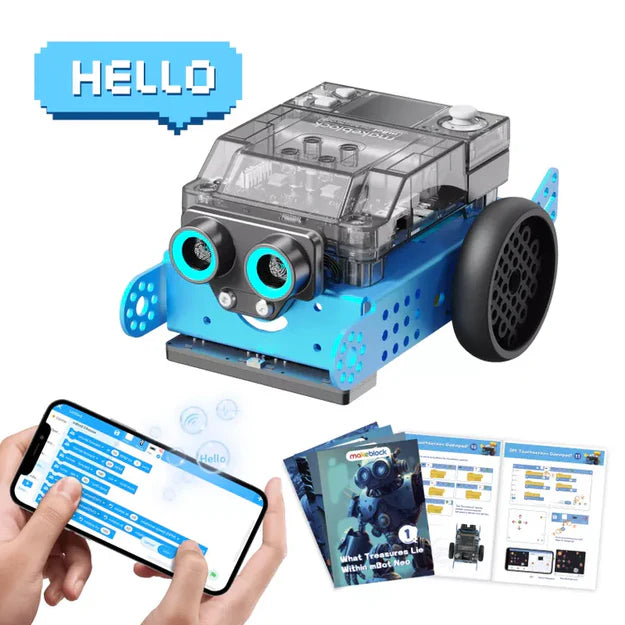
The Makeblock mBot Neo (sold as mBot2) is a pre-designed robot. It ships with an aluminum chassis, encoder motors, an ultrasonic sensor, a color line-follower, and the CyberPi control board. You assemble it in about 30 minutes with the included screwdriver, then it drives, follows lines, and avoids obstacles (Makeblock spec). The point is a working robot on day one.
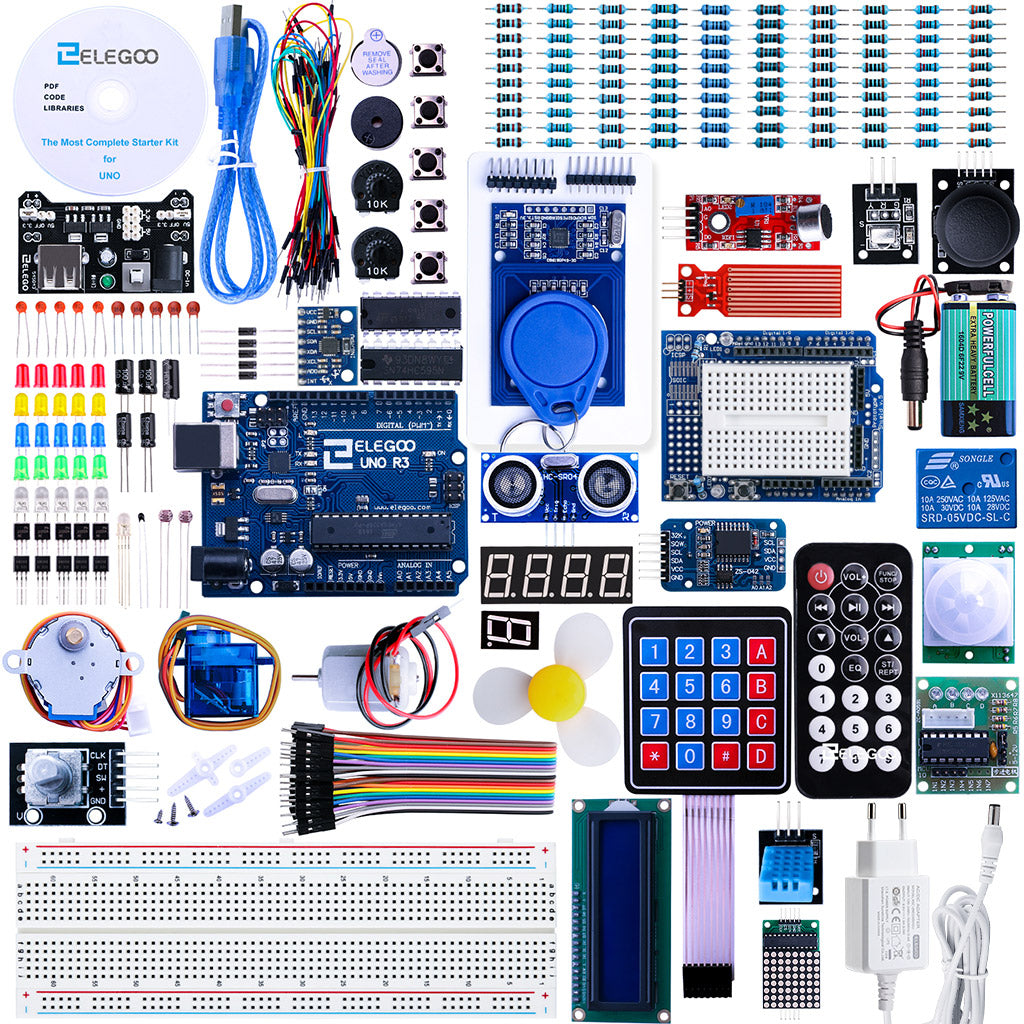
The Elegoo UNO R3 "Most Complete" kit is the opposite. It's a solderless breadboard plus 200+ components: an UNO R3 board, LEDs, resistors, buttons, an LCD, sensors, motors, and jumper wires. There's no robot. There's a free PDF with 30+ lessons, and the board is fully Arduino IDE compatible (Elegoo spec). The point is to learn how circuits work by wiring them yourself.
That single difference drives everything else. One kit hands you a robot and asks "now how do you program it?" The other hands you parts and asks "now what do you want to build?"
Which one teaches coding more gently?
For a kid who has never coded, the mBot Neo has the gentler on-ramp. Its software, mBlock, is built on Scratch 3.0, so the first programs are drag-and-drop blocks with no syntax to mistype. When the child is ready, mBlock converts those blocks to Python with one click (mBlock software). That visual-to-text path is why Makeblock labels it 8+.
Elegoo starts in Arduino C/C++ from the first line. There's no visual mode. A learner has to handle typed syntax, variables, and debugging right away. That's not a flaw. It's industry-standard code and excellent preparation. It's also why Elegoo labels the kit 12+, and why a review of the learning curve calls the breadboard side the part that "requires more patience than block-based alternatives" (STEM Education Guide).
So the coding question is really about frustration tolerance. A younger or first-time coder gets quicker wins on the mBot. A patient kid who likes figuring things out can handle Elegoo's deeper start.
Which one actually teaches electronics?
Here the verdict flips. The mBot Neo abstracts the hardware away. Sensors talk to the robot through a tidy API, so your kid programs behavior without ever wiring a circuit. That's great for robotics logic and weak for electronics fundamentals.
The Elegoo kit is the better electronics teacher by a wide margin. Building on a breadboard forces a kid to understand resistors, LEDs, sensors, and how a circuit closes. The 30+ guided lessons walk through real wiring, not abstractions. If your teen is curious about how electronics work, or is heading toward electrical engineering, this is the stronger foundation. For raw circuit learning, our roundup of budget circuit kits sits in the same lane.
It helps to picture a single project on each kit. On the mBot Neo, a kid writes a few blocks and the robot follows a black line around the floor. The sensor reads the line, but the wiring that makes that possible stays inside the module. On the Elegoo kit, that same kid wires a light sensor to the breadboard by hand, connects it to the right pin, adds a resistor, and writes the C code that reads the voltage. The mBot result looks more impressive in five minutes. The Elegoo result teaches more about why it works. Neither is wrong. They simply pay off on different timelines, and that timeline is the real thing you're choosing between.
What about durability, expandability, and the long haul?
The mBot Neo is built to survive a kid. Its aluminum chassis is rated as durable, it runs up to about 5 hours on a charge, and it expands with 60+ add-on modules in the Makeblock ecosystem (Makeblock spec). Good Housekeeping has repeatedly ranked mBot among the top beginner robotics kits for exactly this reason (Good Housekeeping).
Elegoo expands differently. Because the board is plain Arduino, it plugs into the entire open Arduino world of parts, shields, and tutorials. That's effectively unlimited, but it's self-directed rather than guided. The trade is clear. Makeblock gives you a curated path; Arduino gives you an open field.
What does each cost, and what does the price buy?
| Feature | mBot Neo | Elegoo UNO R3 |
|---|---|---|
| Price tier | ~$139 | ~$57 |
| What you get | Pre-built robot (chassis, motors, sensors, board) | 200+ parts + breadboard, no robot body |
| Maker age label | 8+ | 12+ |
| Time to first win | ~30 min | ~1-3 hr per project |
| Coding entry | Scratch-style blocks → one-click Python | Arduino C/C++ (text only) |
| Teaches robotics | Yes (robot out of the box) | No (needs a separate chassis) |
| Teaches raw circuits | No (abstracted) | Yes (full breadboard wiring) |
| Soldering needed | No | No |
| Durability | Aluminum, high | Plastic breadboard, moderate |
Prices are approximate as of June 2026 and move with sales. The mBot Neo is also sold direct by Makeblock, and the Elegoo kit direct by Elegoo; both run their own affiliate programs, so prices and bundles can differ from Amazon.
The $139-vs-$57 gap looks dramatic until you remember they aren't the same product. The mBot price includes a finished robot. The Elegoo price is components only. If robotics is the actual goal, the mBot is the cheaper route once you account for the chassis you'd have to add to an Arduino.
Which cheaper or pricier alternatives are worth knowing?
If $139 is too steep but you still want the code-first hook, a BBC micro:bit kit runs about $30-40. It uses block-based MakeCode, aligns with CSTA and NGSS classroom standards (Teq), and is the school favorite. The catch is there's no robot body unless you add one.
If your teen already codes and the mBot looks too simple, the Makeblock mBot Ranger (~$160) adds three build configurations and roughly 100 parts. The Elegoo path scales too, straight into custom Arduino projects. For a robotics-only step up, our Sphero BOLT+ review covers another strong option.
Safety check
Both kits have clean records. A search of the CPSC recalls database shows no active recalls for the mBot Neo or the Elegoo UNO R3 as of June 2026. Both contain small parts under 1.25 inches, which the CPSC treats as a choking hazard for children under 3 (CPSC small-parts guidance). Keep either kit away from toddlers, and respect the 8+ and 12+ labels, which track coding difficulty more than physical danger.
Recommended pick
For most kids 8-12, and for any first-time coder, get the Makeblock mBot Neo. It turns into a working robot fast, removes the syntax barrier, and still grows into Python. It's the better "hook them first" tool.
For a patient 12+ kid who wants to understand electronics from the ground up, get the Elegoo UNO R3 Most Complete kit. The 200+ parts and real breadboard wiring teach circuit fundamentals the robot quietly hides, and Arduino C/C++ is a genuine head start.
And if you're not sure which kid you have, ask one question: does your teen want to make a robot do things, or understand how the electronics work? The honest answer points straight at the kit. For more code-first picks, see our Makey Makey vs micro:bit electronics guide.