robotics · ages 13-18
Best Drones for Teenagers (2026): From the $99 Coding Tello to the Sub-250g DJI Neo
The honest pick of the best drones for teenagers in 2026, spanning STEM coding, sub-250g camera drones, and budget, with the FAA rules that actually apply to teens.
Published 2026-06-11 · 9 min read
Amazon Associates disclosure
As an Amazon Associate, I earn from qualifying purchases. The price you pay is the same. This guide is based on manufacturer specifications, published independent reviews, and verified-buyer feedback, not hands-on testing.
TL;DR
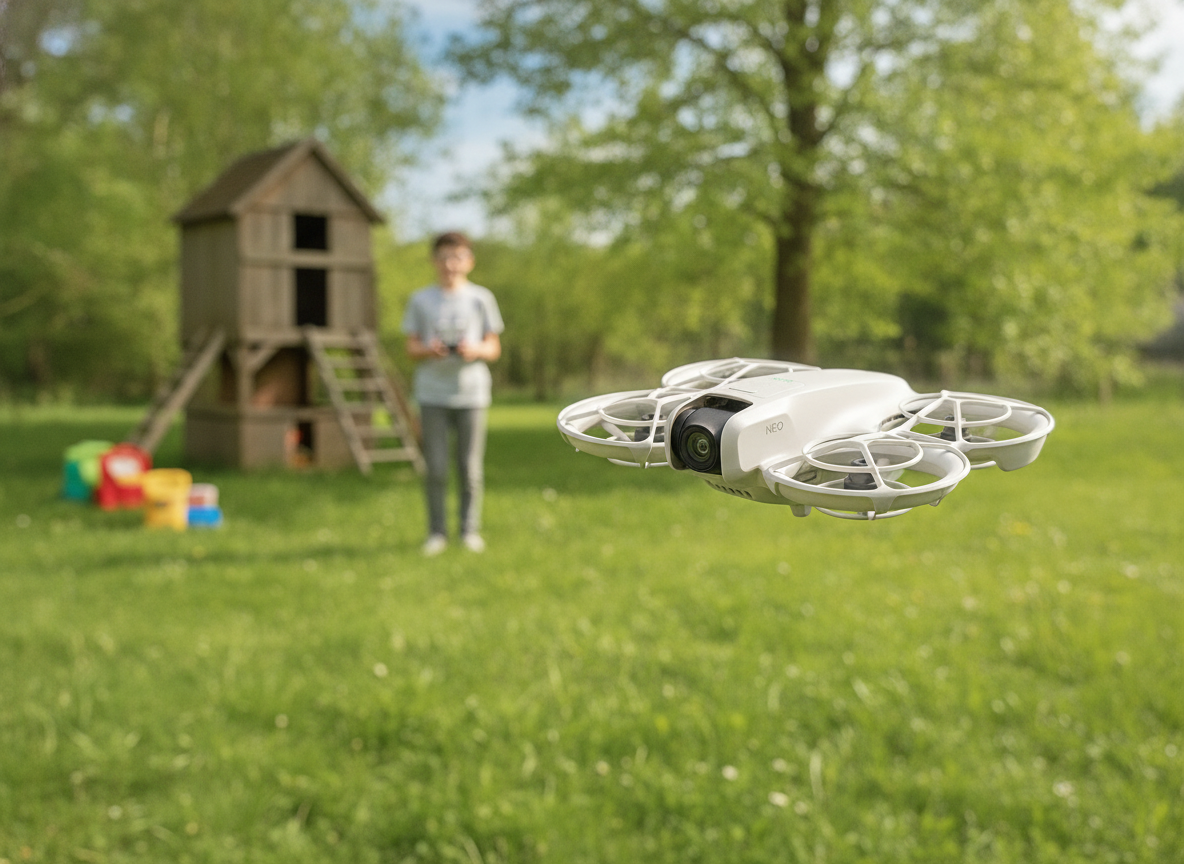
- Best all-round: the DJI Neo (~$199, 135g) — sub-250g so no registration, palm takeoff, and stabilized 4K that a beginner can actually fly.
- Best for coding: the Ryze Tello (~$99) — flies from Scratch and a Python SDK; a STEM tool first, a camera drone a distant second.
- Best camera: the DJI Mini 4K (~$299, 246g) — a true 3-axis gimbal and 10km range, still under the 250g line.
- Budget GPS: the Potensic ATOM SE and Holy Stone HS175D (~$130-200) — GPS return-to-home and 4K photos for less.
As an Amazon Associate I earn from qualifying purchases made through links in this review. It doesn't change the price you pay. This guide is based on manufacturer specifications, FAA rules, and published expert reviews, not personal hands-on testing.
Your teenager wants a drone. Most "best drones for teenagers" lists are really aimed at adult hobbyists with a $1,000 budget and a Part 107 license. A teen's first drone is a different question. It has to be cheap enough to crash without heartbreak. It has to be light enough to skip the registration paperwork. And it has to be honest about whether it's a coding tool, a camera, or a toy. Here are the five that actually fit, and the one FAA rule that decides which one is legal to fly.
The one rule that matters before you buy: 250 grams
Before the specs, the law. In the United States, the FAA splits recreational drones at exactly 250 grams. A drone that weighs 250g or more must be registered ($5, valid three years) and must broadcast Remote ID. A drone under 250g flown for fun needs neither (FAA — Register Your Drone). That single number is why four of the five picks below sit deliberately under the line.
The part many parents miss is that the free TRUST test applies to everyone, at every weight. Every recreational flyer must pass the FAA's Recreational UAS Safety Test and carry proof, and Congress set no minimum age (FAA — Recreational Flyers). So even a sub-250g Tello flown by a 13-year-old legally requires TRUST. It's free, online, and takes about 30 minutes. You do it together before the first flight. For registration specifically, the registrant must be 13 or older; for a younger child a parent registers on their behalf (FAA — Recreational Flyers).
Keep this framing as you read: sub-250g means no registration paperwork; it never means no TRUST.
Ryze Tello — the coding drone
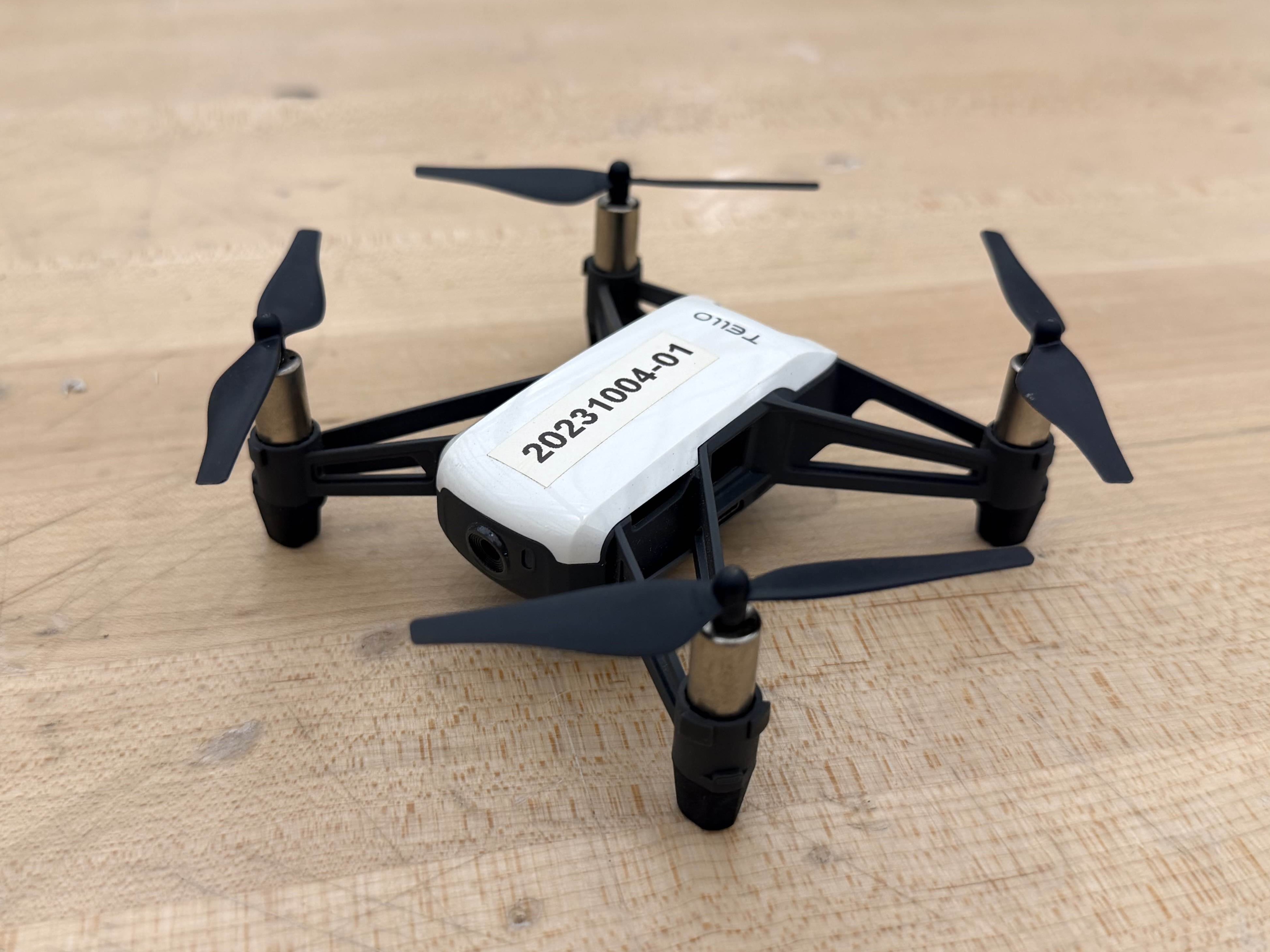
The Tello is the odd one out here, and on purpose. It's the only pick built around programming rather than photography. At about 80 grams it's the lightest drone on this list. It flies from MIT's Scratch block-coding environment for beginners, then steps up to a documented Python SDK for teens ready to write real flight scripts (Ryze — Tello). That makes it a genuine STEM device: your teen isn't just flying, they're commanding takeoff, flips, and flight paths with code.
The trade is the camera. The Tello shoots 5MP photos and only 720p video, with no gimbal and no GPS, so footage is fine for fun and useless for anything you'd want to post (Tom's Guide — Ryze Tello review). Flight time is around 13 minutes. Treat it as a coding-and-fundamentals tool that happens to fly, priced around $99-159 depending on the bundle.
Who it's for: the teen who likes the how it works as much as the flying — the same kid who'd enjoy our micro:bit vs Arduino starter guide.
DJI Neo — the best all-rounder
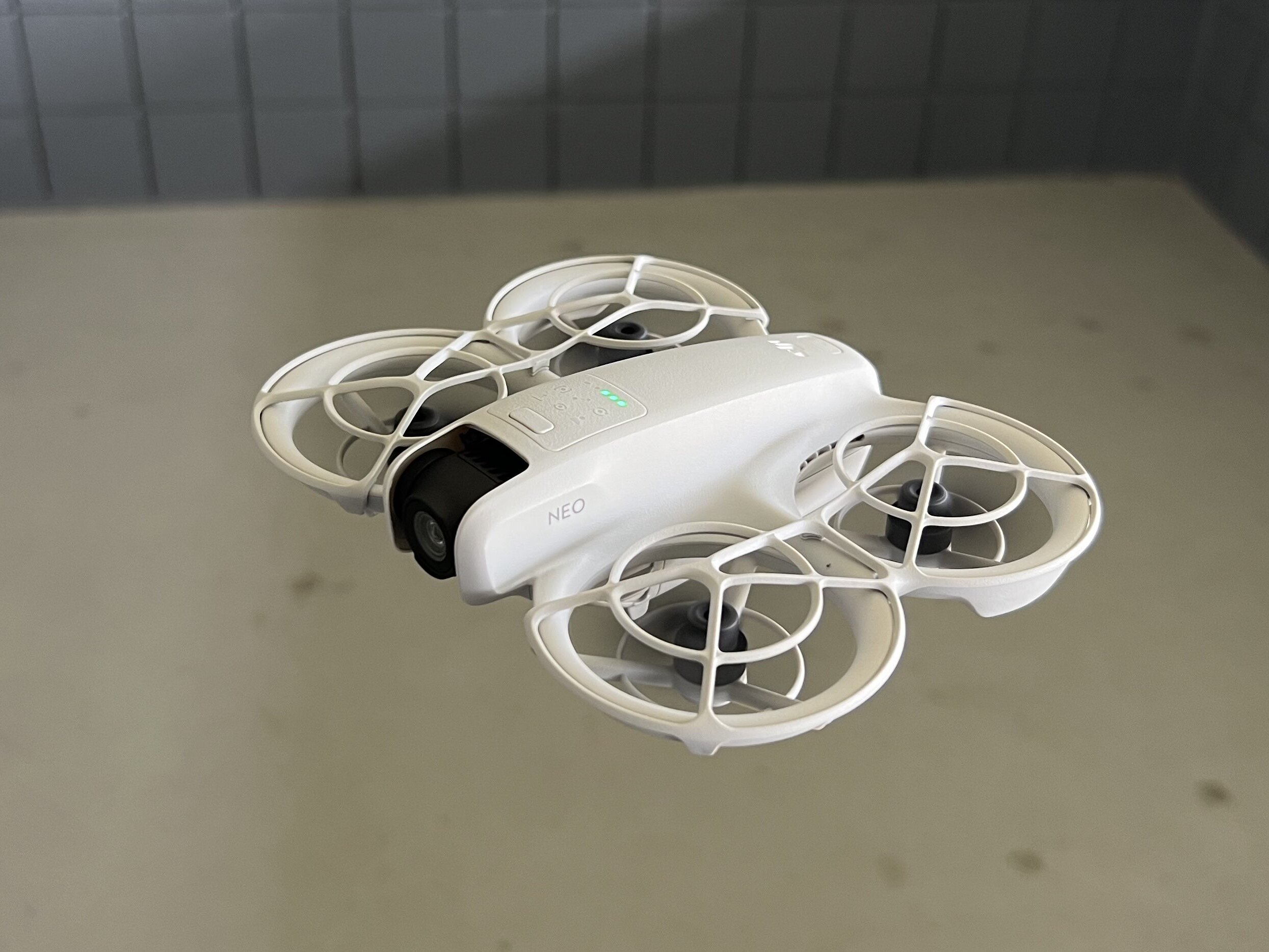
The Neo is my top pick for most teens, and it earns it by removing friction. It weighs 135g, so it's firmly under the registration line. It can also take off from your palm and track a subject with no controller at all (DJI — Neo specs). For a beginner, "press the button on top and it lifts off your hand" is a genuinely lower barrier than learning sticks on day one.
The camera is the real upgrade over a toy drone: a 12MP sensor recording stabilized 4K at 30fps, with built-in propeller guards that survive the inevitable wall bump (DJI — Neo specs). Flight time is about 18 minutes per battery, and it launched at $199 (CineD — DJI Neo). It's not the longest-range or sharpest drone here. But for the money, it's the one that gets a nervous beginner flying and filming fastest.
Who it's for: the teen who wants real footage without a steep learning curve, and a parent who'd rather skip the registration portal.
DJI Mini 4K — the best camera
When the goal is footage that actually looks good, the Mini 4K is the answer that still ducks under 250g. It weighs 246g — within the no-registration tier by a hair — and unlike the Neo it carries a true 3-axis mechanical gimbal, which is the difference between "stabilized" and "smooth" (DJI Store — Mini 4K).
It records 4K/30fps, flies up to 31 minutes per battery, and reaches up to 10km of video transmission, far beyond the Neo's range (DJI Store — Mini 4K). It launched around $299 and has spent stretches discounted to roughly $249 (DroneXL — Mini 4K price). The catch for a teen is that it's a controller-based drone with no palm takeoff and no propeller guards out of the box, so it's a little less crash-forgiving than the Neo.
Who it's for: the older teen serious about aerial video who'll learn proper stick control.
Potensic ATOM SE and Holy Stone HS175D — the budget GPS pair
If $199 is too much, two sub-250g GPS drones cover the budget end honestly. The Potensic ATOM SE weighs under 249g, adds GPS with return-to-home, a 4K EIS camera, and roughly 31 minutes of flight per battery — a lot of capability near $130-200 (Potensic — ATOM SE). The Holy Stone HS175D weighs about 217g and brings GPS, auto-return, and waypoint flying around $160 (Holy Stone — HS175D).
The honest caveat on both: the cameras flatter themselves. Reviewers note the HS175D shoots 4K photos but tops out near 2K video, and neither has the gimbal smoothness of the DJI tier (DPReview — Holy Stone HS175D). What they buy you is GPS — the drone holds position and flies home on low battery, which is forgiving for a first-time pilot in an open field.
Who it's for: budget-first families who value GPS safety nets over camera quality. A teen who'd rather build than fly might prefer our best robot kits roundup instead.
How they compare, side by side
| Drone | Price | Weight | Under 250g? | Camera | Flight time | Best for |
|---|---|---|---|---|---|---|
| Ryze Tello | ~$99-159 | ~80g | Yes | 720p video | ~13 min | Coding / STEM |
| DJI Neo | ~$199 | 135g | Yes | 4K stabilized | ~18 min | Easiest all-round |
| DJI Mini 4K | ~$299 | 246g | Yes | 4K, 3-axis gimbal | ~31 min | Best footage |
| Potensic ATOM SE | ~$130-200 | <249g | Yes | 4K EIS, GPS | ~31 min/battery | Budget + GPS |
| Holy Stone HS175D | ~$160 | ~217g | Yes | ~2K video, GPS | ~23 min/battery | Cheapest GPS |
Prices are approximate as of June 2026 and move with sales. Four of five sit under the 250g registration line; only a heavier drone would add the $5 registration and Remote ID step. TRUST applies to all of them.
Read the table and the logic is clear: the only drone here that's a different hobby is the Tello. The other four are camera drones at climbing price and quality, all sub-250g, so the choice is purely how much footage quality and range your teen needs.
The verdict — our pick
Bottom line: For most teenagers, the DJI Neo is the pick (4.5/5) — sub-250g so no registration, palm takeoff, and stabilized 4K that a beginner can actually fly. Buy the Ryze Tello instead if the goal is learning to code, or the DJI Mini 4K if the goal is the best possible footage.
Buy the DJI Neo for the teen who wants to fly and film today with the least friction and no paperwork. It's the drone most likely to get used rather than shelved.
Buy the Ryze Tello for the kid who wants to program a drone, not just pilot one — Scratch to start, Python when they're ready.
Buy the DJI Mini 4K for the older teen serious about aerial video, and the Potensic ATOM SE or Holy Stone HS175D when budget rules and a GPS safety net matters more than camera polish.
Whichever you choose, the order is the same: stay under 250g if you can, pass the free TRUST test together first, and fly the first few flights in a wide-open space with an adult nearby. Do that, and a teen's first drone is one of the few gifts that teaches patience, physics, and a little bit of code all at once.