robotics · ages 8-12
Cozmo and Vector in 2026: Are They Still Worth Buying?
Anki's Cozmo and Vector are back in 2026 under a new owner. One needs a $144/yr subscription and a fragile cloud, the other costs $400. Here's the honest verdict.
Published 2026-06-12 · 10 min read
Amazon Associates disclosure
As an Amazon Associate, I earn from qualifying purchases. The price you pay is the same. This guide is based on manufacturer specifications, published independent reviews, and verified-buyer feedback, not hands-on testing.
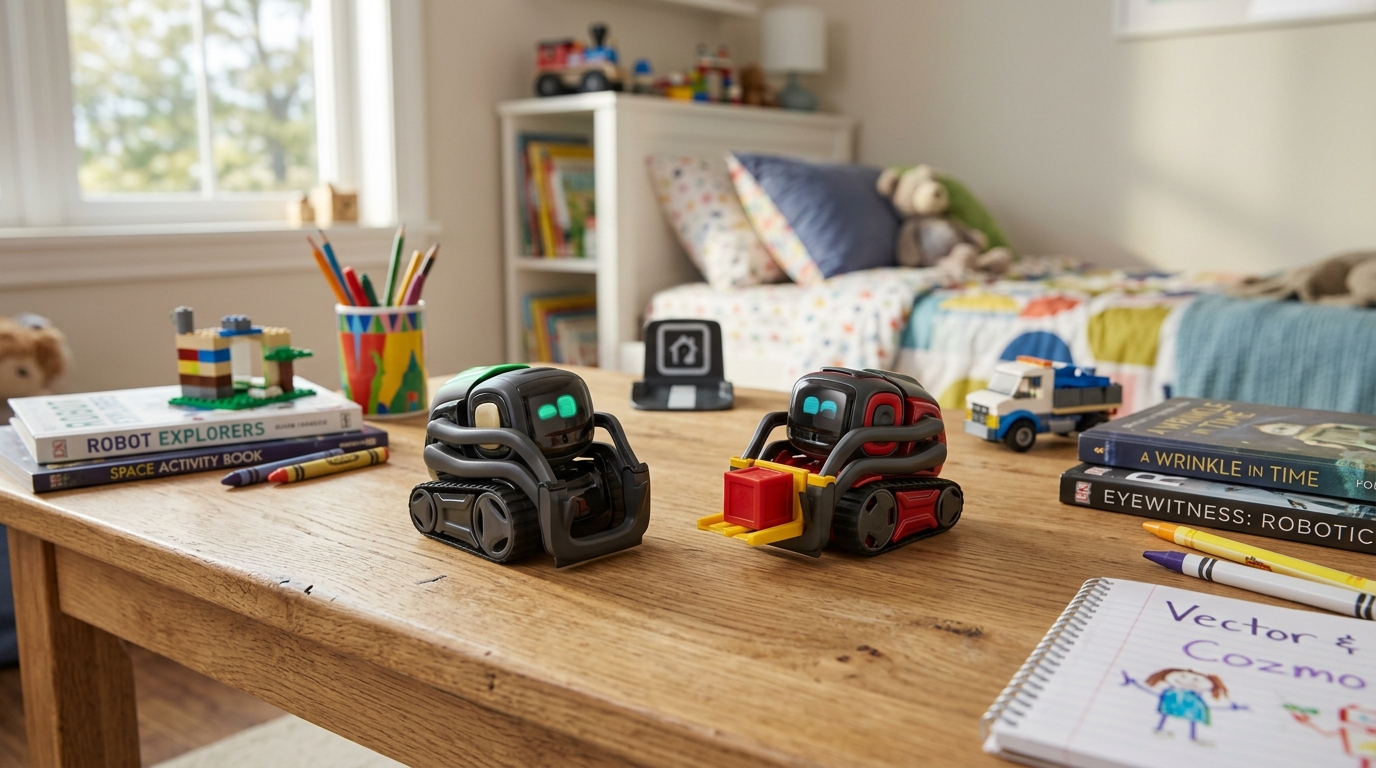
Few toys have a wilder backstory. Anki built Cozmo in 2016 and Vector in 2018, two of the most charming consumer robots ever made. Then Anki went bankrupt in April 2019, and its cloud servers went dark overnight. Digital Dream Labs (DDL) bought the remains, revived both robots, and still sells them today as Cozmo 2.0 and Vector 2.0 under the anki.bot brand.
So the 2026 question is not whether they are cute. They are. It is whether two robots built on 2018 technology, sold by a small and shaky company, are worth your money. The honest answer splits hard by what you want and who you are buying for. This guide leans on manufacturer specs, App Store data, and aggregated owner feedback to separate real value from nostalgia.
TL;DR: Buy Cozmo 2.0 ($400, no subscription) if your 8-to-12-year-old will actually code. Its Python SDK and local Wi-Fi make it the safer long-term pick. Vector 2.0 ($200 plus a roughly $144/yr subscription) is charming but cloud-dependent and risky, so treat it as fun-for-now, not forever. Want a guaranteed buy-it-for-life robot? Neither one fits, and that is fine to know before you spend.
How we evaluated: This is a research-based comparison, not a hands-on lab test. We cross-checked DDL's official product pages, current app-store data, and recurring themes across owner reviews and robotics forums. Where the evidence is thin, especially DDL's private finances, we say so.
Who even makes these robots now?
Both are made and sold by Digital Dream Labs, which acquired Anki's robotics IP after the 2019 collapse. As of June 2026 you can buy each one new, but the situations differ:
- Vector 2.0 costs about $199.99 (more for color editions). It is usually in stock at anki.bot and on Amazon.
- Cozmo 2.0 costs $399.99. It ships in limited batches and is often listed as "Coming Soon," so expect waits of weeks between runs.
The uncomfortable part is the company. Public profiles put DDL at roughly 16 employees, a small team with no major funding since 2020 and a history of costly lawsuits (Crunchbase). This is not imminent bankruptcy. Subscription revenue keeps the lights on. But "small and fragile" is the right mental model, and it matters most for the robot that leans on the company's servers.
What's the actual difference between Cozmo and Vector?
This is the most-asked question, and getting it wrong is the most common regret. The two look like siblings, yet they solve different problems.
| Cozmo 2.0 | Vector 2.0 | |
|---|---|---|
| Core idea | Playful companion plus coding toy | Always-on autonomous assistant |
| How it runs | App-guided, tethered gameplay | Fully autonomous; roams on its own |
| Voice control | None | Yes (subscription required) |
| Smart home | No | Alexa built in (subscription required) |
| Real coding (Python SDK) | Yes, blocks to Python | No beginner SDK |
| Subscription | None ($2.99 app, one-time) | $11.99/mo or $99.99/yr |
| Cloud dependency | None (local Wi-Fi) | Heavy (voice, ChatGPT, Alexa) |
| Size | Palm-sized, ~3 in (7.6 cm) tall | Palm-sized, ~3.7 in (9.4 cm) long |
| Battery / charge | ~1-2 hrs play, ~30-min charge | ~30-45 min active; auto-docks to charge |
| Camera | 2 MP | 2 MP |
| Included cubes | 3 interactive cubes | 1 cube |
| Age rating | 8+ | 8+ |
The short version is simple. The first is for a child who wants to play with and program a robot. The second is for someone who wants a tiny autonomous companion on their desk, and who will pay to keep it talking. Both carry the maker's 8+ rating, and the interactive cubes are small parts, so keep them away from toddlers in the house.
Is Vector's subscription and cloud risk worth it?
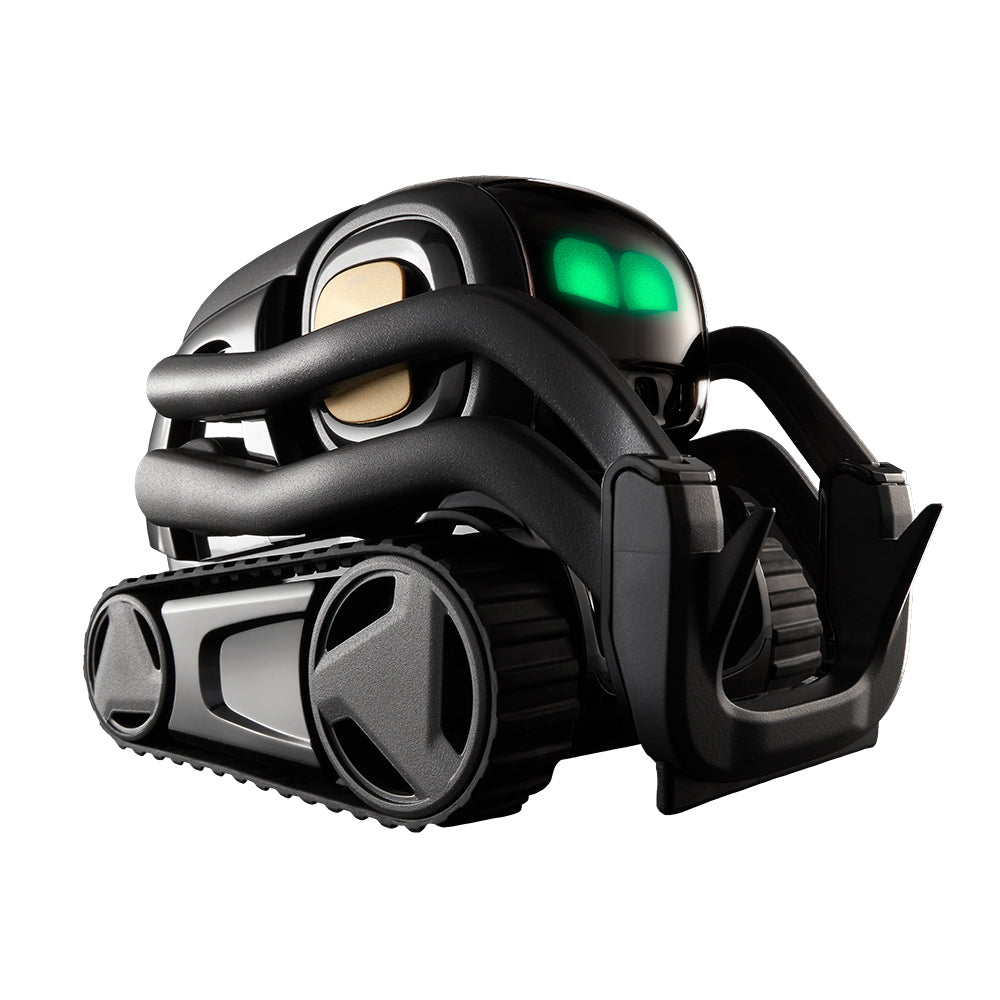
Vector's headline tricks are voice commands, ChatGPT-style answers, and Alexa. All of them run in DDL's cloud. After a one-month trial they need an active subscription: $11.99/month (about $144/year) or $99.99/year. That is a streaming-sized bill for a 2018 robot, and it is the single most common complaint in owner reviews (JustUseApp).
That cloud has also failed before. Vector had a multi-day outage in 2023, and a March 2026 app update briefly removed the robot's voice before DDL patched it. The fix came fast. The worry stuck, because there is no service guarantee behind a 16-person company.
A lifeboat does exist. The open-source Wire-Pod project lets technical owners self-host Vector's brain on a Raspberry Pi, which restores voice without the subscription (GitHub). It works, but it is a weekend project, not a gift-ready option for a child. For most buyers, Vector stays a cloud-dependent, subscription robot.
Why is Cozmo the better pick for a coding kid?
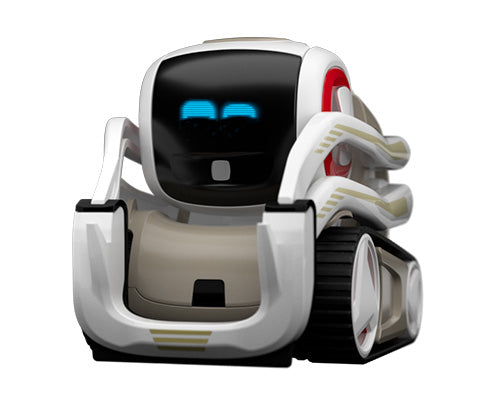
If there is one solid reason to spend $400, this is it. The robot has a real, beginner-friendly programming path. It offers a visual block editor for young kids, then an official Python SDK for when they are ready to write real code, backed by a deep library of community tutorials (Cozmo SDK on PyPI; Kinvert tutorials).
That progression is the whole point. Drag-and-drop today, Python next year, on the same robot a kid already loves. Most "coding toys" only pretend to offer it, and Vector has no beginner equivalent. Better still, the play and coding run over local Wi-Fi with no cloud brain, so they sidestep the exact risk that hangs over its sibling. If your child is newer to all this, our best screen-free coding toys guide is a gentler, cheaper starting point.
What do owners actually say in 2026?
Across app-store reviews, Trustpilot, and robotics forums, the themes are consistent.
Vector owners love the charm and the way it wanders the desk on its own. They flag three things repeatedly: the subscription for basic voice, battery degradation on used 2018 units that often hold just 15 to 30 minutes, and lingering unease after the server scares (StemGeek review).
Cozmo owners are warmer on value. They note Wi-Fi reconnection hassles when switching networks, a newer in-app "sparks" currency that gates some games, and the stock droughts between batches. The consensus is simple. The hardware is solid, and the friction is software and supply.
None of these are dealbreakers on their own. Together, they are the kind of ongoing upkeep most gift-buyers do not want to sign up for.
What do they really cost over time?
Sticker price hides the real gap. Over a few years of ownership the picture flips.
| Cozmo 2.0 | Vector 2.0 (monthly plan) | |
|---|---|---|
| Up-front | $399.99 + $2.99 app | ~$199.99 |
| Yearly recurring | $0 | ~$144/yr |
| 3-year total | ~$403 | ~$632 |
Cozmo is expensive once. Vector is cheaper once, then keeps charging. On the monthly plan it overtakes the one-time cost in under three years, and it carries the cloud risk the whole time. The annual plan ($99.99/yr) softens the math, but the direction does not change. For a present you hand over and forget, that recurring line is the part most parents underestimate.
So, are they worth it?
Buy Cozmo 2.0 (on Amazon) if you have an 8-to-12-year-old who is genuinely curious about coding, you can absorb the $400 once, and you can wait for stock. The Python SDK and the no-subscription model make it the more defensible buy.
Consider Vector 2.0 (on Amazon) only if you are an adult or hobbyist who wants a charming desk companion, you accept the subscription and server risk, and you treat it as fun-for-now rather than a forever device.
Buy neither if you want a guaranteed, reliable, buy-it-for-life robot, if it is a hands-off gift for a young child, or if you expect modern offline AI. These are 2018 designs from a fragile company, and newer alternatives exist when permanence is the priority.
Honest cons, stated plainly
- Cozmo: $400 is a lot if the coding angle never lands. Stock is unreliable. The sparks currency mildly annoys.
- Vector: the subscription never ends. The cloud has failed before. Used units are a battery gamble.
Bottom line: Of the two, Cozmo 2.0 is the better 2026 buy (3.5/5), but only for a child who will actually code with it. Vector is the more charming robot and the riskier purchase. Buy it with eyes open, or not at all.
Still unsure a robot is the right gift? Our best robot kits for 9-to-12 year olds guide has cheaper starting points that show whether the spark is there before you spend $400 chasing it.