stem-kits · ages 4-12
Best Circuit Kits Under $50 for Beginners (2026): 6 Real Picks Ranked by What They Teach
Most 'cheap circuit kit' lists rank by price alone and ignore whether a $30 kit actually teaches electronics.
Published 2026-06-01 · 9 min read
Amazon Associates disclosure
As an Amazon Associate, I earn from qualifying purchases. The price you pay is the same. This guide is based on manufacturer specifications, published independent reviews, and verified-buyer feedback, not hands-on testing.
TL;DR
- For most beginners aged 8-12, start with Snap Circuits Jr. SC-100 (~$25, screen-free): cheapest, most independent, and it teaches real electronics by making mistakes visible.
- Younger kids (5-7) do better with Snap Circuits Beginner SCB-20 (~$32): picture-led manual, chunkier parts, gentler learning curve.
- Two picks (Snap Circuits Classic SC-300 and Makey Makey Classic) sit right at or above the $50 line depending on the day; buy them only on sale, and treat Electro Dough (~$30) as the craft-science trial for a kid who is not yet sure they like electronics.
Picking a cheap circuit kit is a bet on whether "cheap" also means "teaches something." This research-based guide ranks six real beginner kits priced around or under $50 for ages 4-12 by what your kid learns, how independent the play is, and what happens when a budget part fails. Verdicts are synthesized from manufacturer specs, expert reviews, and published safety standards, not from a personal hands-on test. Safety claims are checked against the U.S. Consumer Product Safety Commission and the American Academy of Pediatrics.
As an Amazon Associate, I earn from qualifying purchases made through product links in this review. This does not affect the price you pay.
How did these 6 kits make the list under $50?
The shortlist kept only kits that genuinely teach circuit fundamentals (current, polarity, conductivity) rather than branded building blocks that happen to light up, and that a beginner can run with minimal adult setup. Price was a hard filter: the kit must plausibly land at or under ~$50, with two borderline picks flagged for a price-watch.
The six: Snap Circuits Beginner SCB-20 (ages 5-9 on-ramp), Snap Circuits Jr. SC-100 (the value champion), Snap Circuits Classic SC-300 (more projects, price-watch), Thames & Kosmos Easy Electric Circuits (a non-Snap alternative), Tech Will Save Us Electro Dough (the craft-science trial), and Makey Makey Classic (the invention-platform wildcard, also price-watch). Elenco's line is 8+ except the Beginner SCB-20 at 5+, and Electro Dough is sold for ages 4 and up, so the band spans 4 through 12.
This is a synthesis guide: the verdicts below come from published specs, expert reviews, and safety standards rather than a single reviewer's playroom. Where a claim is about learning value, age fit, or safety, it is cited to a named source so you can check it yourself.
Which beginner circuit kit teaches the most for the money?
The cleanest signal is what skill the kit builds and how reusable it is, not how many parts are in the box. Here is the lineup side by side, drawn from each product's listing and learning spec.
| Pick | Age fit | Price tier | Screen-free? | Projects | Reusable? | What it teaches |
|---|---|---|---|---|---|---|
| Snap Circuits Beginner SCB-20 | 5-9 | ~$32 | Yes | 20+ | Yes | First circuits, conductivity, picture-led logic |
| Snap Circuits Jr. SC-100 | 8+ label; 6-7 with help | ~$25 | Yes | 100+ | Yes | Current, polarity, series vs parallel |
| Snap Circuits Classic SC-300 | 8+ | ~$50-90 (price-watch) | Yes | 300+ | Yes | Deeper circuits: AM radio, alarms, logic |
| Thames & Kosmos Easy Electric Circuits | 8+ | ~$30-45 | Yes | 15 experiments | Yes | Motors, LEDs, voltage with motorized models |
| Tech Will Save Us Electro Dough | 4+ | ~$30 | Yes | Open-ended | No — consumable | Conductivity via homemade dough circuits |
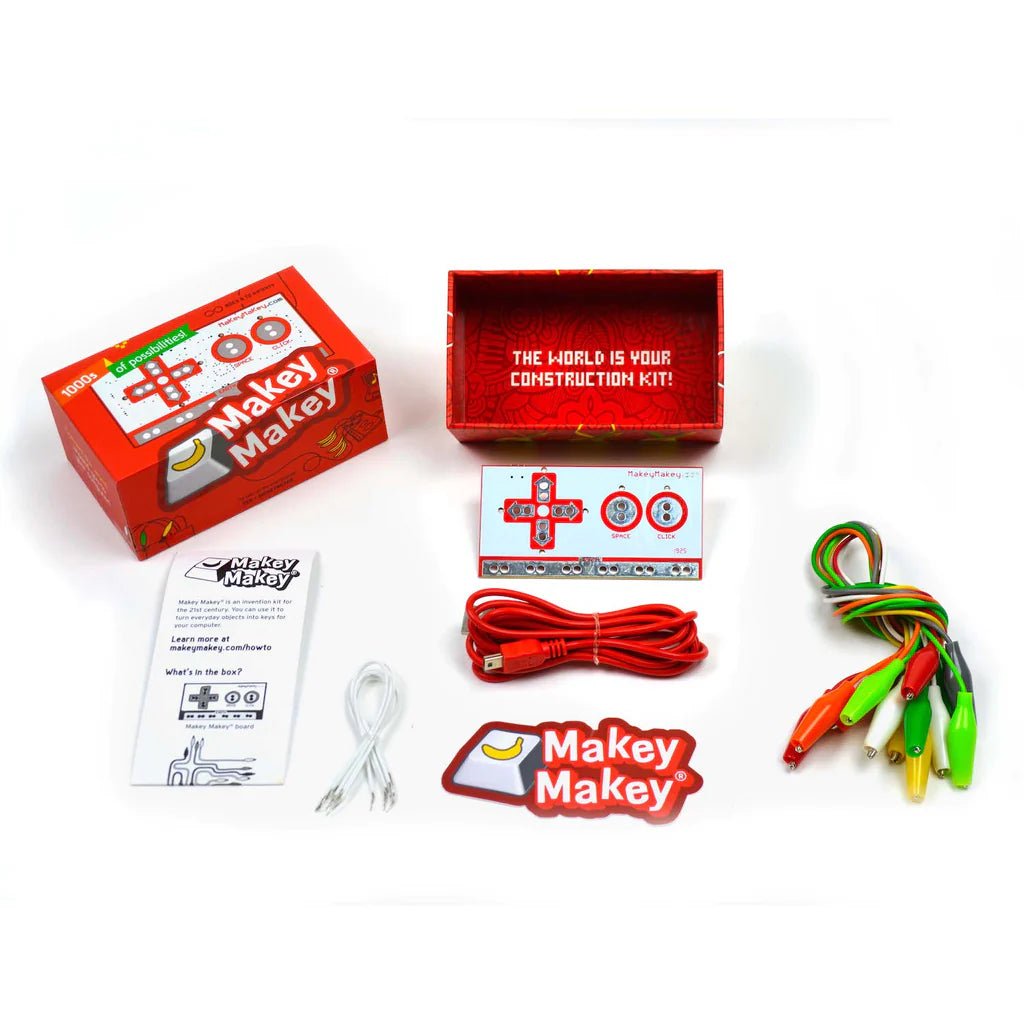
| Makey Makey Classic | School-age | ~$50 (price-watch) | Yes (needs a computer) | Open-ended | Yes | Conductivity + invention; banana keyboards |
A few things jump out from the specs alone. The Jr. kit delivers over 100 guided projects with 28 parts for ~$25 and no device: it is the strongest learning-per-dollar on the list. The SC-300 roughly triples that with over 300 projects, but it frequently retails near $90 at specialty sellers, so it only belongs on an under-$50 list when on sale. Electro Dough is the only fully consumable pick; you build with conductive dough, not a reusable set. On learning-per-dollar, the screen-free, reusable Jr. kit is hard to beat.
Snap Circuits Beginner or Jr. — which is the right first kit?
This is the decision most parents of a 6-8 year old actually face, and it comes down to reading level more than age.
Snap Circuits Beginner SCB-20 is built for ages 5-9 with a picture-heavy manual written for younger engineers, around 20 projects, and 14 parts. Per its listing it runs on three AA batteries and adds extra childproofing features. It is the gentlest on-ramp: a reluctant reader can follow the step-by-step diagrams without much text. It typically sells around $32.
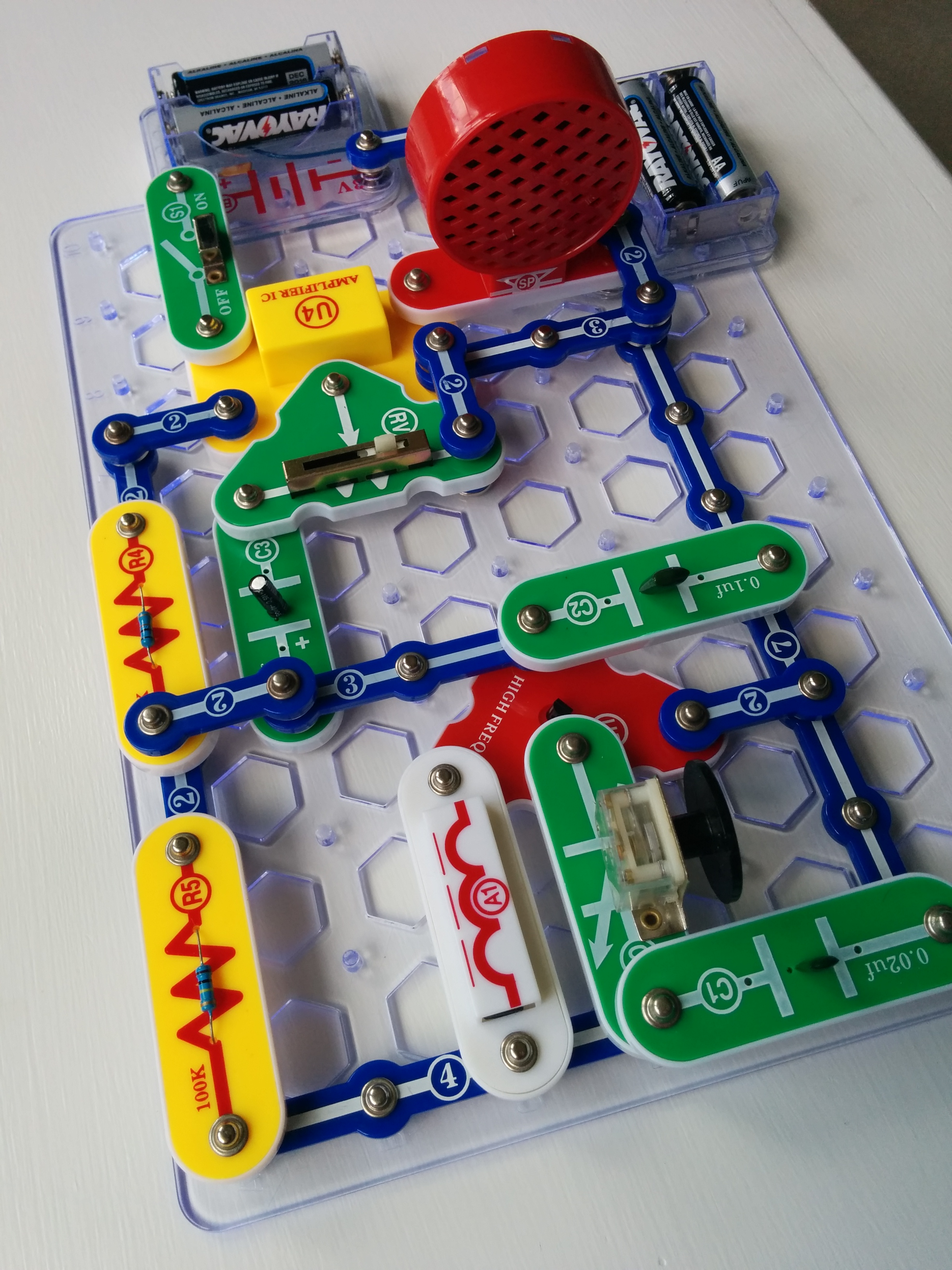
The Jr. SC-100 is labeled 8+ but delivers far more: 100+ projects for roughly $25, building up to a basic AM radio and a sound-activated switch. A strong-reading 6-7 year old can do it with a parent nearby. Dollar for dollar and project for project, the Jr. kit is the better value. The Beginner kit's advantage is purely the gentler reading and chunkier first experience.
Honest framing: buy the Beginner kit for a 5-7 year old or a kid who gets frustrated by text; buy the Jr. kit for almost everyone else, including budget-conscious families, because the value gap is large.
What happens when a cheap kit's part breaks or won't work?
Every circuit kit eventually produces a build that fails. On a budget kit, a broken or missing part stings more because replacements are slower. The question is whether the failure teaches anything, and that comes down to how each kit surfaces an error.
With the Snap Circuits kits, every component is visible on the pegboard. When a circuit does not light, the kid can trace the path, spot a part placed backwards, flip it, and watch the LED come on. That mistake itself surfaces polarity and current. The real budget risk is physical: the clear blocks can crack if a frustrated kid forces them at the wrong angle, and single Elenco replacement parts can be slow to source. With Makey Makey, a build that won't trigger is a different, invisible failure (usually a grounding or USB issue), so it leans on a parent who understands "complete the circuit through your body." Electro Dough rarely breaks, but a too-dry batch simply stops conducting, which is itself a tidy conductivity lesson. If your kid gets frustrated easily, the visible-error Snap Circuits kits are the safer bet.
How safe are budget circuit kits for a 6-12 year old (and a younger sibling in the house)?
Two safety facts matter here, both well-documented.
Small parts and choking. Toys intended for children under 3 that contain small parts are banned hazardous substances under CPSC's small-parts rule, 16 CFR Part 1501; a part counts as "small" if it fits inside a test cylinder 2.25 in long by 1.25 in wide (16 CFR § 1501.4). Kits labeled 4+, 5+, or 8+ are not required to pass that test, which means the resistors, snap blocks, LEDs, and crocodile clips here are choking hazards for any child under 3 in the home. With a toddler sibling, treat the box warning as binding and store kits up high.
Batteries. Per their listings, the Snap Circuits kits and Electro Dough run on AA cells, and Makey Makey draws power over USB from the computer. AA-powered kits avoid the highest-risk loose coin/button-cell hazard, but CPSC toy-safety guidance still calls for battery compartments to be secured against small children — so check that each compartment closes with a screw and keep any spare cells out of a toddler's reach.
Screen time. Every kit on this list is functionally screen-free. Even Makey Makey, which needs a computer, is about physical conductivity rather than staring at a display. For ages 6+, the AAP no longer sets a fixed daily minute limit; it recommends consistent limits on time and type of media via a Family Media Plan. That makes circuit kits an easy "yes" if your kid's screen budget is already tight.
Is the Thames & Kosmos or Electro Dough kit worth a look over Snap Circuits?
These two are the "different flavor" picks for a kid who might bounce off the Snap Circuits format.
Thames & Kosmos Easy Electric Circuits is a non-Snap alternative with 15 experiments and 5 motorized models, focused on current, voltage, and LEDs through its own building system. It typically lands in the ~$30-45 range. Where it fits: a kid who wants motors and moving models, not just lights and sound.
Tech Will Save Us Electro Dough is the outlier: a conductivity kit for ages 4+ at roughly $30 where the child makes conductive dough from the included recipe, shapes it, and lights LEDs or buzzes the included beeper via crocodile clips. It is consumable and craft-forward, which makes it a low-commitment way to learn whether a young kid even likes hands-on electronics before spending on a reusable kit.
Honest cons — what each budget pick gets wrong
- The Beginner SCB-20: only ~20 projects, so a curious kid outgrows it fast; the value-per-dollar is weaker than the Jr. kit, which costs less and offers far more builds.
- The Jr. SC-100: the clear blocks can crack if forced, and the 8+ label means 6-year-olds need a co-pilot for the first sessions; single Elenco replacement parts can ship slowly.
- The Classic SC-300: frequently priced near $90 at specialty retailers and around $50 on Amazon, so it only counts as "under $50" on sale. Do not assume the sticker.
- Thames & Kosmos Easy Electric Circuits: smaller project count (15) than Snap Circuits, and its parts are not cross-compatible with the Snap line.
- Electro Dough: consumable, with nothing to rebuild once the dough dries out, and it leans on a parent for the dough-making step.
- Makey Makey Classic: list price hovers right at ~$50 and it needs a computer to do anything, so it is an invention platform, not a self-contained circuit kit; a beginner needs guidance to grasp the grounding concept.
For cross-checking these picks against another lens, see our deeper Snap Circuits Jr. vs littleBits comparison and, for the broader gift-guide context at this age, our best STEM toys for 6 to 8 year olds.
So which circuit kit under $50 should you actually buy?
For most beginners aged 8-12: start with Snap Circuits Jr. SC-100. It is the cheapest, the most independent, fully screen-free, and it teaches electronics by making mistakes visible. It is the lowest-regret first circuit kit.
For a 5-7 year old or a reluctant reader: Snap Circuits Beginner SCB-20, for its gentler picture-led manual. Want motors and moving models instead of lights and sound? Easy Electric Circuits. Not sure your young kid even likes electronics? Trial it with Electro Dough. And treat SC-300 and Makey Makey as buy-on-sale upgrades: both are genuinely good, but neither reliably stays under $50, so wait for the price to cooperate.