stem-kits · ages 6-8
Best Educational Toys for 7-Year-Olds (2026): A Readiness-Based Guide
Best educational toys for 7-year-olds, picked by a 3-signal readiness check, not the box label. 5 honest picks, 2 to skip, and why.
Published 2026-07-28 · 11 min read
Amazon Associates disclosure
As an Amazon Associate, I earn from qualifying purchases. The price you pay is the same. This guide is based on manufacturer specifications, published independent reviews, and verified-buyer feedback, not hands-on testing.
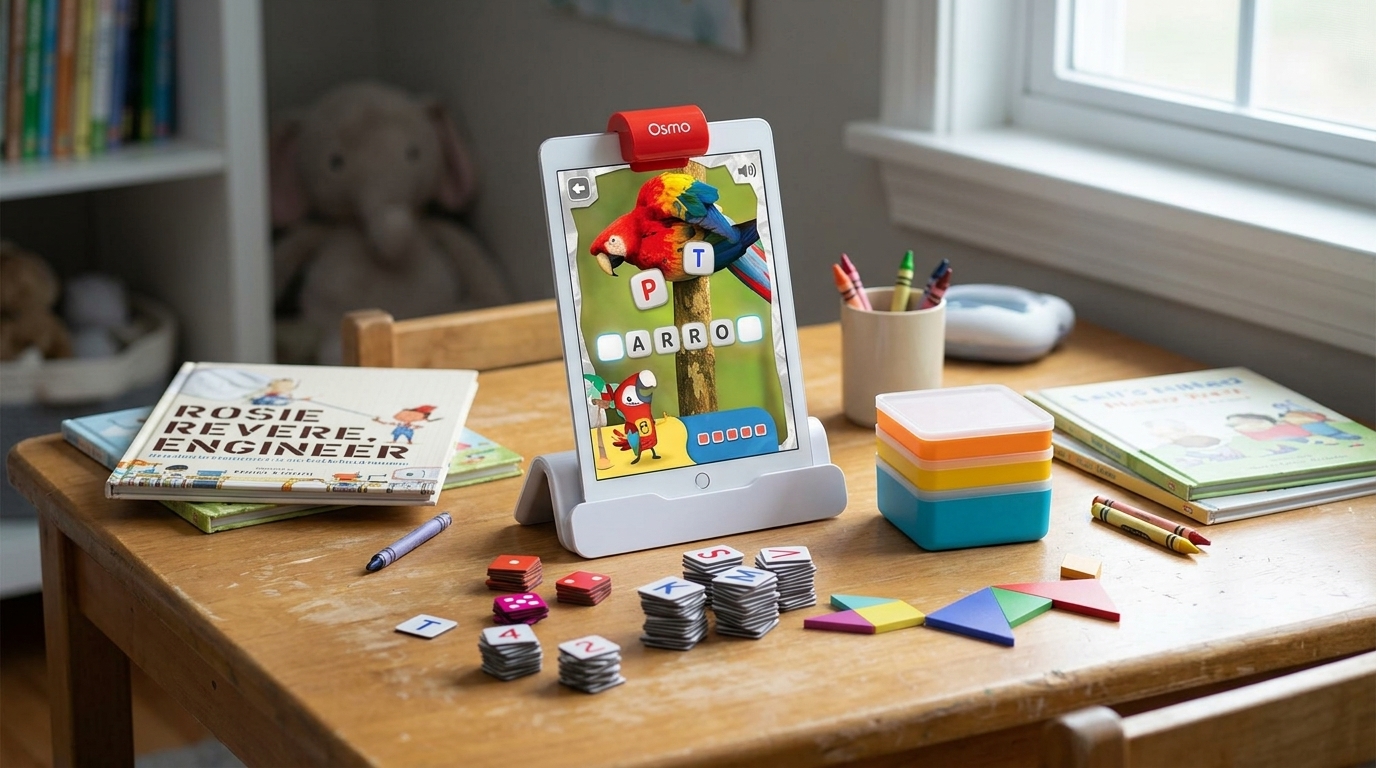
A 7-year-old who has outgrown every shape-sorter and stacking toy in the house is asking for something real, and the toy aisle is not much help. Shelves are full of "ages 6+" and "ages 8+" labels that rarely match what a specific 7-year-old can actually do alone. Reading is starting to click. Math homework mentions numbers past 20. Focus still comes in short bursts, not long stretches. The five picks below were chosen against three concrete readiness signals, not marketing copy, plus two well-known names we are telling you to skip and why.
TL;DR
- For real circuitry with no screen, the Snap Circuits Jr. SC-100 (~$25-35) is the clearest entry point: 28 parts, 100+ guided builds, no soldering.
- For short hybrid sessions that double as school practice, the Osmo Genius Starter Kit (~$100, plus a compatible iPad you already own) covers math, spelling, and creativity.
- Skip LEGO Education SPIKE Essential and the Moxie AI robot entirely. One stopped selling June 30, 2026. The other has been bricked and refund-less since January 2025.
As an Amazon Associate we earn from qualifying purchases. Each pick was checked against a 3-signal age-7 readiness framework (reading fluency, attention scaffolding, math ceiling) built on peer-reviewed attention research and CPSC/manufacturer safety data. This is research-based, not hands-on testing. Prices are July 2026 USD and change often.
| Toy | Price | Core skill | Screen required | Age-7 fit | Status |
|---|---|---|---|---|---|
| Snap Circuits Jr. SC-100 | $25-35 | Circuits/electronics | No | Needs scaffolding (label 8+) | Current |
| Osmo Genius Starter Kit | $100 + iPad | Math, spelling, creativity | Yes (iPad/Fire) | Ideal | Current |
| Ooze Labs Chemistry Station | $40 | Basic chemistry process | No | Ideal | Current |
| ThinkFun Gravity Maze | $25-30 | Spatial/logic reasoning | No | Needs scaffolding (label 8+) | Current |
| NatGeo Break Open Geodes | $10-25 | Earth science/geology | No | Ideal | Current |
| LEGO Education SPIKE Essential | $280 | Block coding + building | Yes (app) | Ideal age band, do not buy | Discontinuing 6/30/26 |
| Moxie AI Companion Robot | $799 | Social-emotional (AI) | Yes (cloud) | N/A | DO NOT BUY, bricked |
Every kit above except the geodes and Gravity Maze carries small snap-together or vial-sized parts that fall under CPSC's small-parts choking rule, even at a 6-8+ age label; more on that below. If your 7-year-old is pulled toward screens and robots specifically, our coding robots for 7-year-olds guide covers that narrower lane. This post covers the wider educational-toy spectrum around it.
Is your 7-year-old actually ready for an 8+ label?
Yes, if a toy passes three tests: can your child read (or be read) the instructions, does the activity break into short chunks instead of one long build, and does any math claim stay realistic for a first-grader.
- Reading fluency: first-grade readers decode simple instructions with support, but a dense multi-page manual (Snap Circuits, Ooze Labs) still needs a parent or older sibling reading alongside for a typical 7-year-old.
- Attention scaffolding: sustained, self-directed executive control of attention is not yet a stable, adult-like skill at 7-8. Peer-reviewed research finds that construct only stabilizes around age 9. A 7-year-old can complete a focused task but tires fast on long unbroken ones, so tiered, bite-sized activities beat single marathon builds.
- Math ceiling: Common Core's Grade 1 standard caps expected fluency at addition and subtraction within 20. Any toy claiming to teach "advanced math" to a 6-7-year-old is overselling. Use this as your sanity check against the box copy.
Scored against that framework, here is how the five current picks hold up:
| Toy | Reading needed | Attention scaffolding | Math ceiling |
|---|---|---|---|
| Snap Circuits Jr. | Parent reads the manual | Yes, 100+ short, discrete builds | N/A (not a math toy) |
| Osmo Genius Kit | Minimal, games narrate | Yes, 5 separate short games | Stays inside addition/subtraction range |
| Ooze Labs Chemistry | Parent reads steps | Yes, 20 discrete experiments | N/A |
| ThinkFun Gravity Maze | Card-based, low reading | Yes, 4 tiers, start at beginner | N/A |
| NatGeo Geodes | None | Yes, one geode at a time | N/A |
Snap Circuits Jr. SC-100: the best budget entry into real circuits?
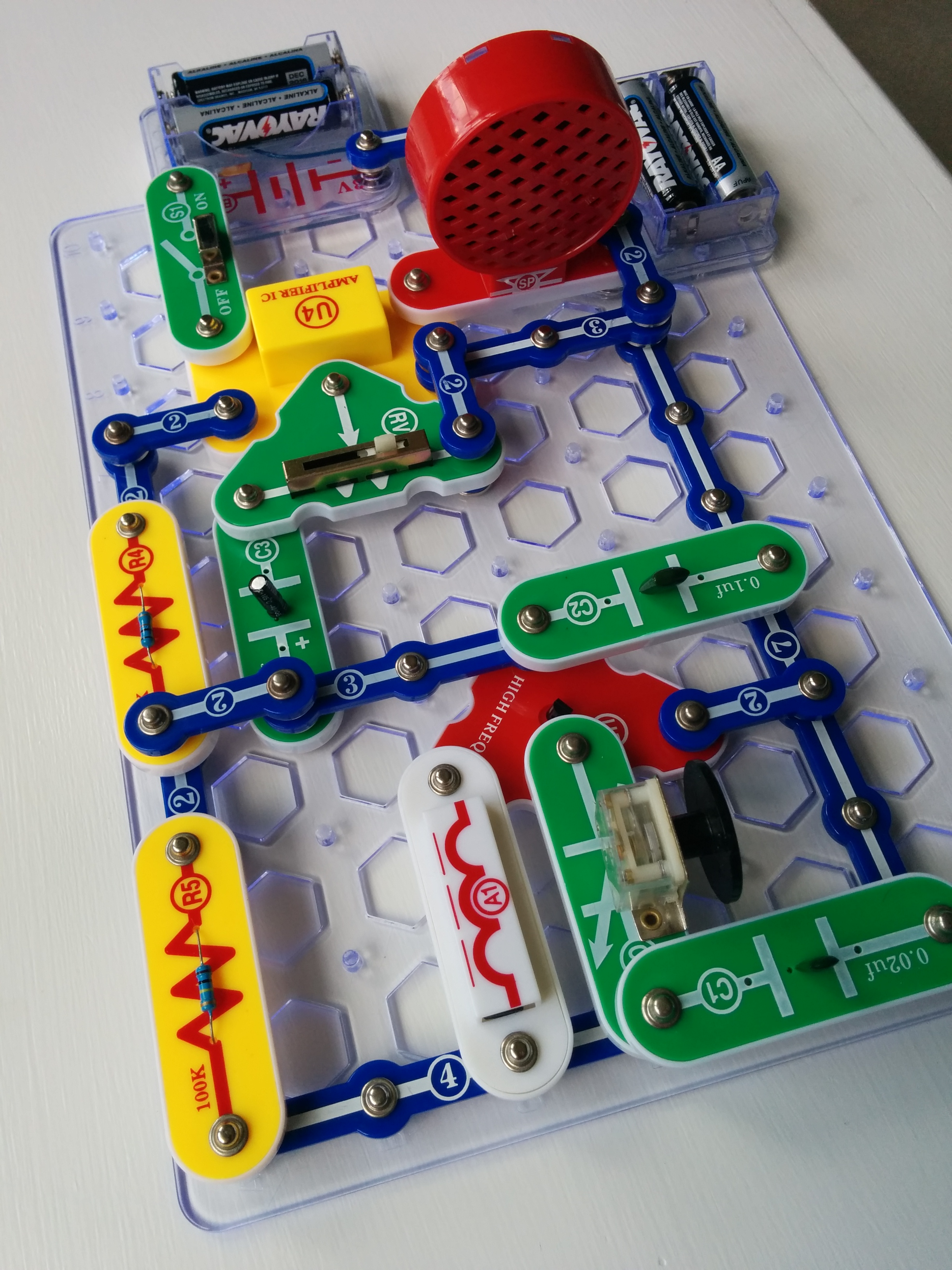
This is the pick for a kid who wants to build something that actually works. The Snap Circuits Jr. SC-100 has 28 snap-together parts and a manual with 100-plus guided projects, no tools required. Amazon showed it at 4.8 out of 5 stars at the time of this research (checked 2026-07-28); we could not confirm the exact review count in this pass, so treat that star average as directional, not a huge-sample guarantee.
The catch is real electronics knowledge, not toy scale. ScienceBasedKids titles its review "Does It Actually Teach Real Electronics?", a fair signal that snap-together circuits simplify away from breadboard or soldered wiring (the article itself blocked our fetch, so we can't quote past the title). The box also says ages 8+, one year above this post's target, so a 7-year-old will likely need a parent for the first several builds.
- Deciding spec: 28-29 parts, 100+ projects, no tools.
- Skip if: your child wants app-based or coding-first STEM (this is 100% analog); you already own the larger Snap Circuits Extreme set; or your child is under 5 given the small parts.
Osmo Genius Starter Kit: worth it if you already own an iPad?
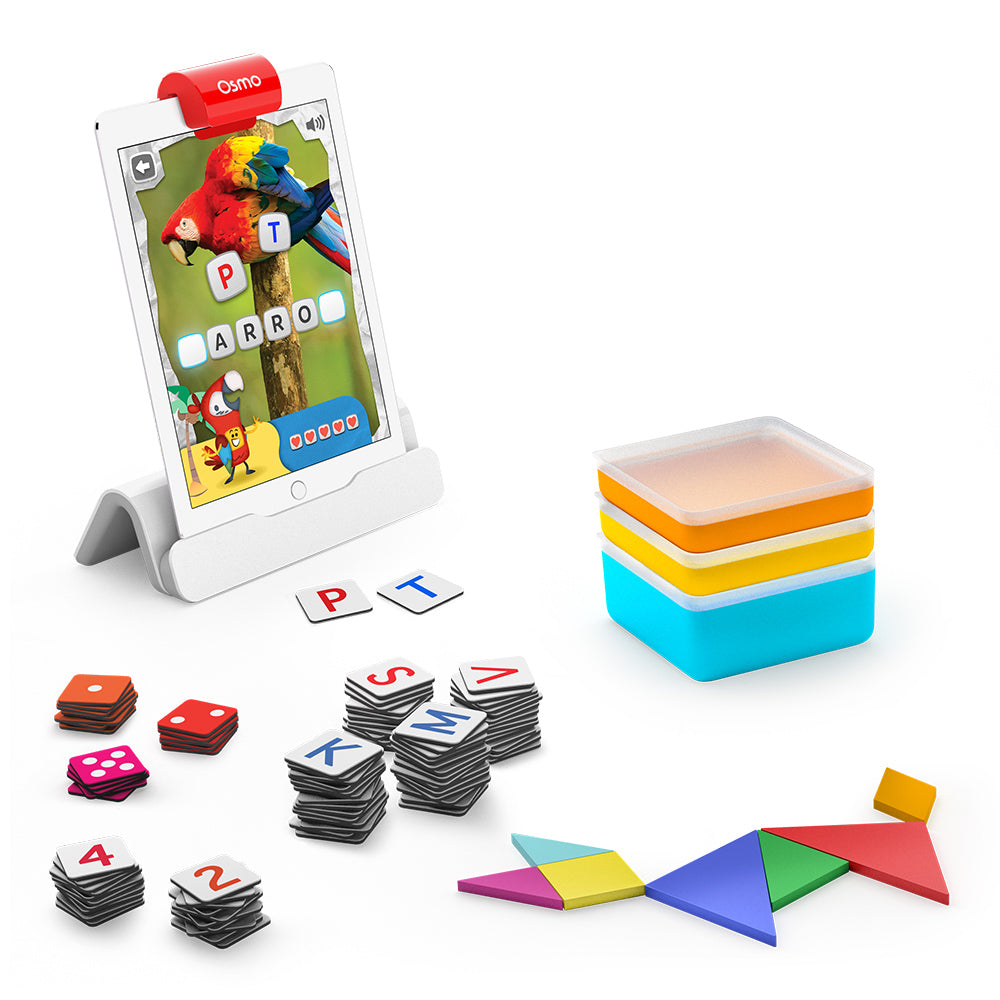
The Osmo Genius Starter Kit (manufacturer page) bundles five hands-on games, math, spelling, drawing, and more, around a physical base and reflective mirror that clips onto a compatible iPad or Fire tablet. A reviewer aggregated through Amazon and Best Buy called it "every penny worth at the price $99.99," and the five-game format matches the short-session attention pattern 7-year-olds actually have.
Two honest catches. First, the sticker price is not the real price: you need a tablet the family already owns, or this becomes a $100-plus-hardware purchase. Second, Osmo's headline "learn 6x faster" marketing claim, per ScienceBasedKids' April 2026 review, "is built on a single company-funded study with significant methodological concerns," worth discounting before you buy on that line alone. Reviewers also note that extra game packs cost more once the starter set feels familiar.
- Deciding spec: 5 games, physical base + mirror, requires a separately owned iPad/Fire tablet.
- Skip if: you do not already own a compatible tablet; you are trying to minimize screen-adjacent toys on principle; or you are buying purely on the "6x faster" claim.
Ooze Labs Chemistry Station: what do 20 real experiments ask of you?
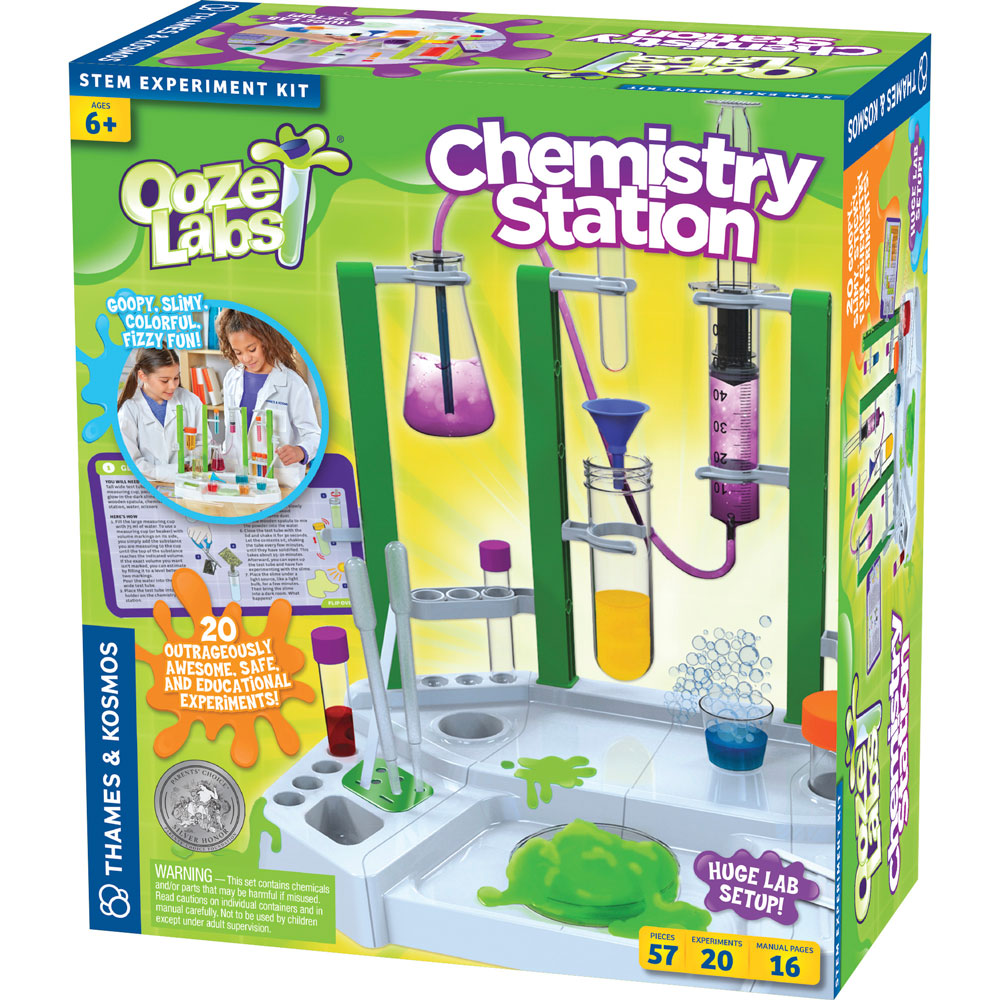
The Thames & Kosmos Ooze Labs Chemistry Station (manufacturer listing) packs 20 non-hazardous chemistry experiments into a real apparatus: vials, pipette, funnel, petri dish, syringe. It is actively sold on the manufacturer's own site as of this research, and retailers consistently market it for ages 6-12 with a guided, hands-on framing.
Reviewers flag two specific, avoidable moments. The laminated experiment cards are not waterproof, a real problem in a kit built around liquids. And the box assumes a "well-stocked kitchen" for household add-ins like cornstarch that some buyers feel should have shipped in the box. Note: this is a currently sold product distinct from the older "Kids First Chemistry Set" SKU, which shows spotty stock elsewhere; confirm you're ordering the Ooze Labs Chemistry Station specifically.
- Deciding spec: 20 experiments, physical apparatus, ages 6-12 per manufacturer.
- Skip if: you want a fully hands-off activity (supervision and some pantry items are still required); or your child is under 6 given the small vial and pipette parts.
ThinkFun Gravity Maze: why start at the beginner tier?
ThinkFun's Gravity Maze (manufacturer page) is a single-player spatial-logic puzzle: 9 towers, 1 target piece, 3 marbles, and 60 challenge cards spread across 4 difficulty tiers from beginner to expert. Search-aggregated results put it at 4.6 out of 5 stars across 32,743 ratings, a large sample if accurate, though Amazon blocked our direct fetch, so treat the count as unconfirmed pending a recheck.
No significant complaint pattern surfaced. The ages-8+ label is the real caveat, not a product flaw. Start a 7-year-old at the beginner tier of the 4-tier deck, not mid-deck, and the difficulty curve tracks age well.
- Deciding spec: 60 cards, 4 tiers, single-player.
- Skip if: your child is not yet ready for multi-step spatial-logic puzzles (start beginner tier, not mid-deck); or you want a multiplayer, social game.
National Geographic Break Open Geodes: what should you expect before cracking one?
The National Geographic Break Open Geodes (15-geode kit page) kit ships real, uncut geodes plus safety goggles and display stands; the activity is cracking each one open with the included tool. Small-sample retailer reviews run positive: Target shows 4.4 out of 5 across 28 reviews on the 15-geode kit, Walmart 4.4 out of 5 across 49 reviews on the 5-geode kit.
The honest catch is real geology, not a defect. A recurring complaint across multiple retailers is that roughly half the geodes in a box turn out solid, or agates and concretions rather than hollow crystal-filled geodes. Tell your 7-year-old up front that not every rock is a jackpot; it turns a "dud" into a lesson about how geodes actually form.
- Deciding spec: real uncut geodes (count varies by kit size), goggles, display stand.
- Skip if: your child (or you) gets frustrated by inconsistent, anticlimactic results, or you want a guaranteed-wow craft kit rather than real-variance geology.
Which two big-name toys should you skip?
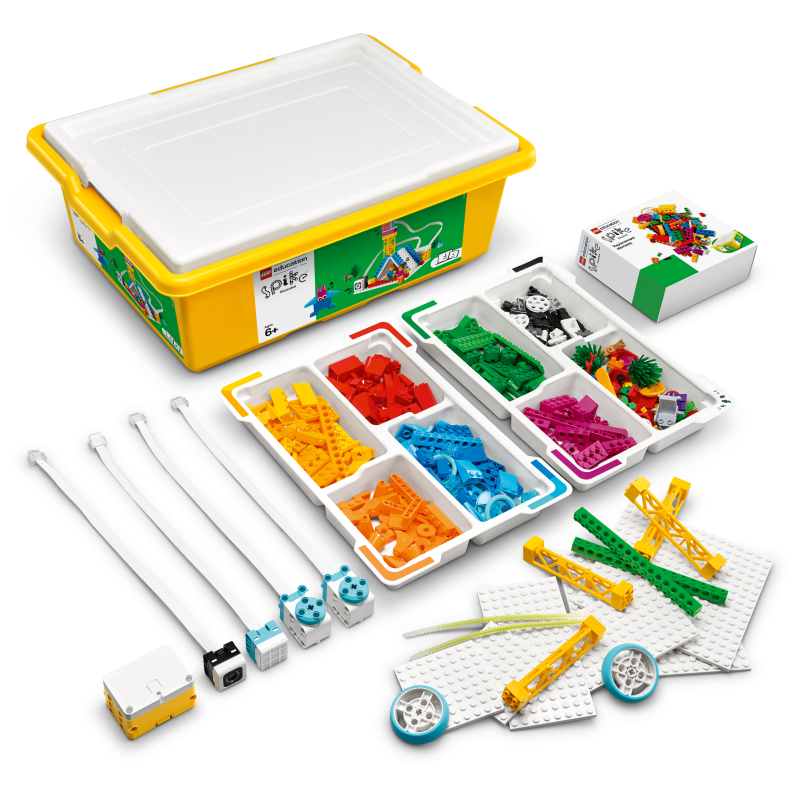
We do not affiliate-link products we are warning you away from. Both of these clear the age-7 readiness bar on paper. Neither is a safe buy right now.
LEGO Education SPIKE Essential (Set #45345, ~$280). Reviewers call it "a genuinely well-engineered STEM platform with real pedagogical structure," and the hardware and app do work. The problem is timing: LEGO Education's own retirement notice sets June 30, 2026 as the official end-of-sale date, with app support running out entirely by June 30, 2031, and FIRST LEGO League competition eligibility ending after the 2027-2028 season. A $280 set with a shrinking support window is not a good new purchase in July 2026, whatever an older "best of" list says.
Moxie AI Companion Robot (~$799 original retail). Every unit went dark on January 30, 2025, when maker Embodied Inc. shut down after a funding round collapsed, killing the cloud servers its core features depend on. Gizmodo reported that Embodied offered no refunds. A volunteer "OpenMoxie" project can partially restore function via a self-hosted server, well beyond typical parent tech comfort. The lesson outlasts this one robot: cloud-dependent toys carry business-continuity risk on top of normal product risk. Our smart toy safety checklist covers what to ask before buying any connected toy.
What safety notes matter before you buy?
Most kits here carry small parts (snap-together circuit pieces, chemistry vials, geode fragments) that fall inside CPSC's small-parts choking cylinder, which requires a choking-hazard warning for children under 3, even on boxes marked ages 6-8+. Keep these away from toddler siblings. Ooze Labs specifically needs adult supervision throughout, not just setup: "non-hazardous" still means vials and a pipette.
We searched cpsc.gov directly for each brand (Elenco, Tangible Play/Osmo, Thames & Kosmos, ThinkFun/Ravensburger, Blue Marble) and found no active recalls as of 2026-07-28. Recalls post continuously, so check CPSC.gov/Recalls again before you buy.
Our picks
Bottom line: For real circuitry with zero screen time, the Snap Circuits Jr. SC-100 is the safest place to start a 7-year-old: 28 parts, 100+ guided builds, no tablet required.
If your family owns a compatible iPad, the Osmo Genius Starter Kit fits a kid who wants variety across math, spelling, and drawing in 15-20-minute sessions. If chemistry is the hook, the Ooze Labs Chemistry Station delivers 20 real experiments for about $40, with an adult nearby. For a logic-minded kid, start ThinkFun's Gravity Maze at its beginner tier, not the box's 8+ label. If your 7-year-old loves rocks more than robots, the Break Open Geodes work, just set the "not every geode is hollow" expectation first.
None of these five are gendered by design, so the same readiness signals apply whether you're shopping for a 7-year-old girl or a boy, and the picks hold up whether your child just turned 6-7 or is closer to 7-8. Skip LEGO Education SPIKE Essential and the Moxie robot regardless of budget: one is past its sell-by date, the other doesn't turn on. For more hands-on science options at other price points, see our best science kits for kids roundup.
FAQ
What makes a toy actually "ready" for a 7-year-old, not just labeled for one?
Three things: your child can follow (or be read) the instructions, the activity breaks into short chunks rather than one long build, and any math claim stays realistic for a first-grader, addition and subtraction within 20, not beyond. Manufacturer age labels mark safety minimums, not readiness.
Snap Circuits and Gravity Maze are both labeled ages 8+. Is that too advanced for a 7-year-old?
Not with scaffolding. Both are built in tiers: Snap Circuits' 100+ projects range simple to complex, and Gravity Maze's 60 cards span 4 difficulty levels. Start at the easiest tier with an adult nearby and a 7-year-old handles both fine; the harder end will not.
Is LEGO Education SPIKE Essential still worth buying?
No, not as a new purchase in 2026. LEGO Education's own retirement notice ends sales June 30, 2026, with app support running out entirely by 2031. It's a well-built kit, but you'd be buying into a shrinking support window for around $280.
What happened to the Moxie robot, and is it safe to buy used?
Maker Embodied Inc. shut down January 30, 2025, and the cloud servers Moxie depends on went dark with it. No refunds were offered. A community "OpenMoxie" workaround exists but needs self-hosting a server, well past typical parent tech comfort. Skip secondhand units unless you can verify that fix is applied.
Do these picks work for 6-7-year-olds and 7-8-year-olds, or just girls or just boys?
Yes to both. None of the five current picks are gendered, and the readiness framework, not a gender or a single birthday, is what determines fit. A reading-confident 6-7-year-old can handle Ooze Labs or the geodes; a 7-8-year-old ready for more scaffolding can start Snap Circuits or Gravity Maze.
▶ How To Play: Gravity Maze by ThinkFun (official)