Building sets · Ages 3-5
Best Building Toys for 4-Year-Olds: Magnetic Tiles to Wooden Blocks (2026)
The best building toys for 4-year-olds, ranked by play style, durability, and safety: magnetic tiles, LEGO DUPLO, marble runs, and wooden blocks compared.
Published Jul 20, 2026 · 9 min read
As an Amazon Associate, I earn from qualifying purchases. Your price stays the same.
TL;DR
- Buy Magna-Tiles Classic 100 if you want the safest, most durable all-in-one pick for ages 3–5+ with light-play appeal and 25+ years of proven reliability.
- Buy PicassoTiles 100 for the same magnetic-tile experience at roughly one-third the price; durability is slightly lower but still solid for multi-year use.
- Buy Learning Resources Gears Deluxe 100 or Marble Genius Super Set if your 4-year-old is curious about how mechanical things work; both introduce physics without overwhelming.
As an Amazon Associate I earn from qualifying purchases. This guide is based on manufacturer specs, published expert reviews, verified-buyer feedback across 37,000+ reviews per brand, CPSC safety standards, and multi-generational use data, not personal testing. Where safety claims appear, they cite CPSC regulations and brand construction details. When comparing building toys, we weight durability, ease-of-use at age 4, and real attention-span fit heavily.
What's actually going on at age 4 that matters for building toys?
At four, a child has moved past simple stacking into intentional three-dimensional thinking. They can execute planned structures (not random topples), understand cause-and-effect (tower falls, so it was too tall), follow multi-step visual instructions, and collaborate with a peer on a joint build. The frustration window is narrow, about 10 to 15 minutes before attention spans drift. Toys that reward quick wins (magnetic tiles snapping into instant 3D shapes) or offer endless creative reinvention (wooden blocks, open-ended building) work best. Guided kits with step-by-step instructions can frustrate if pieces don't fit easily; the same kits delight if magnet strength or click-together design is forgiving.
Safety is straightforward at 4: the CPSC small-parts rule applies to toys for ages 3 and up. All building toys in this roundup (magnetic tiles, LEGO DUPLO, wooden blocks, even marble runs) meet that standard with pieces larger than 1.25 inches. The distinction at 4 is supervision level: magnetic tiles and plastic blocks need normal watching; marble runs need 1:1 adult co-play due to small glass marbles; wooden blocks need space so towers don't topple onto siblings.
Which magnetic tiles: Magna-Tiles or budget alternatives?
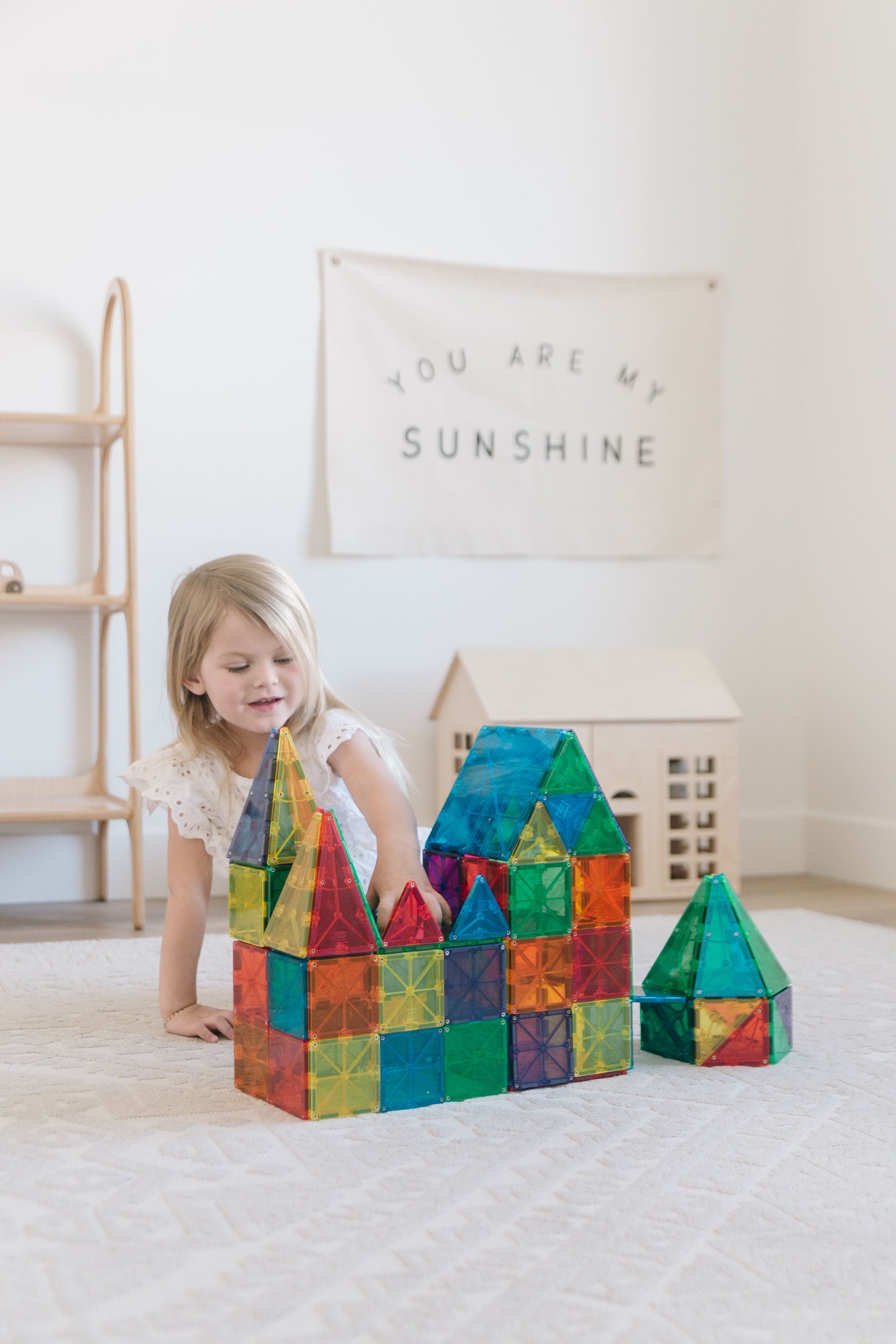
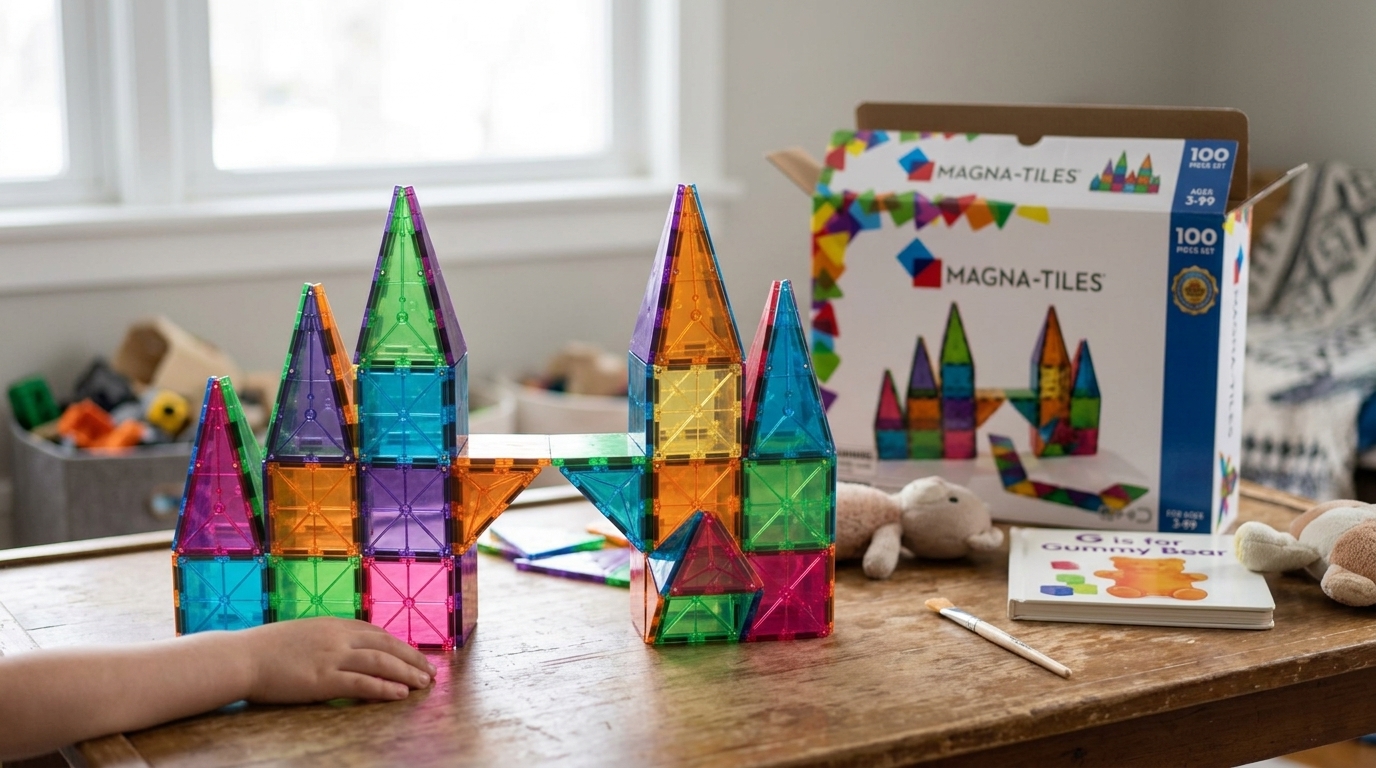
Magna-Tiles Classic 100 ($120) and PicassoTiles 100 ($40–60) are the two poles of the magnetic-tile category for 4-year-olds. Both have 4.8-star ratings across 37,000+ verified reviews. Both use 100 clear and colored tiles (roughly 2–3 inches each) that snap together magnetically into 3D structures in seconds.
Magna-Tiles' edge: Riveted and welded magnet construction (a dual seal that reviewers report surviving years of rough play), ceramic magnets stay sealed through multi-child use, and the brand has a 25+ year zero-recall track record. Owners consistently report: "Kids return to them for years," "Magnetic strength holds tall structures," "Develops spatial reasoning." The plastic is slightly more rigid, and the magnet strength is moderate; a 4-year-old can separate tiles with intentional effort, which is developmentally right for learning how to rebuild.
PicassoTiles' edge: Same shapes and colors as Magna-Tiles, nearly identical magnet strength per verified-buyer reports, but at roughly one-third the price. The plastic is slightly less rigid (owners report occasional cracking after 6+ months of heavy use), and magnets are glued rather than riveted (weaker seams over multi-year timescales). For a 4-year-old in their first year of play, the durability gap doesn't show. After two years and a second child, Magna-Tiles pulls ahead.
The verdict: Start with Magna-Tiles if cost permits and you plan multi-child use; start with PicassoTiles if you want to test the magnetic-tile concept before committing $120, knowing you'll upgrade to Magna-Tiles later for long-term durability. Both are safe, both hold 4-year-old attention equally well, and both reward fast creative wins.
Classic building blocks: LEGO DUPLO vs Mega Bloks vs Wooden
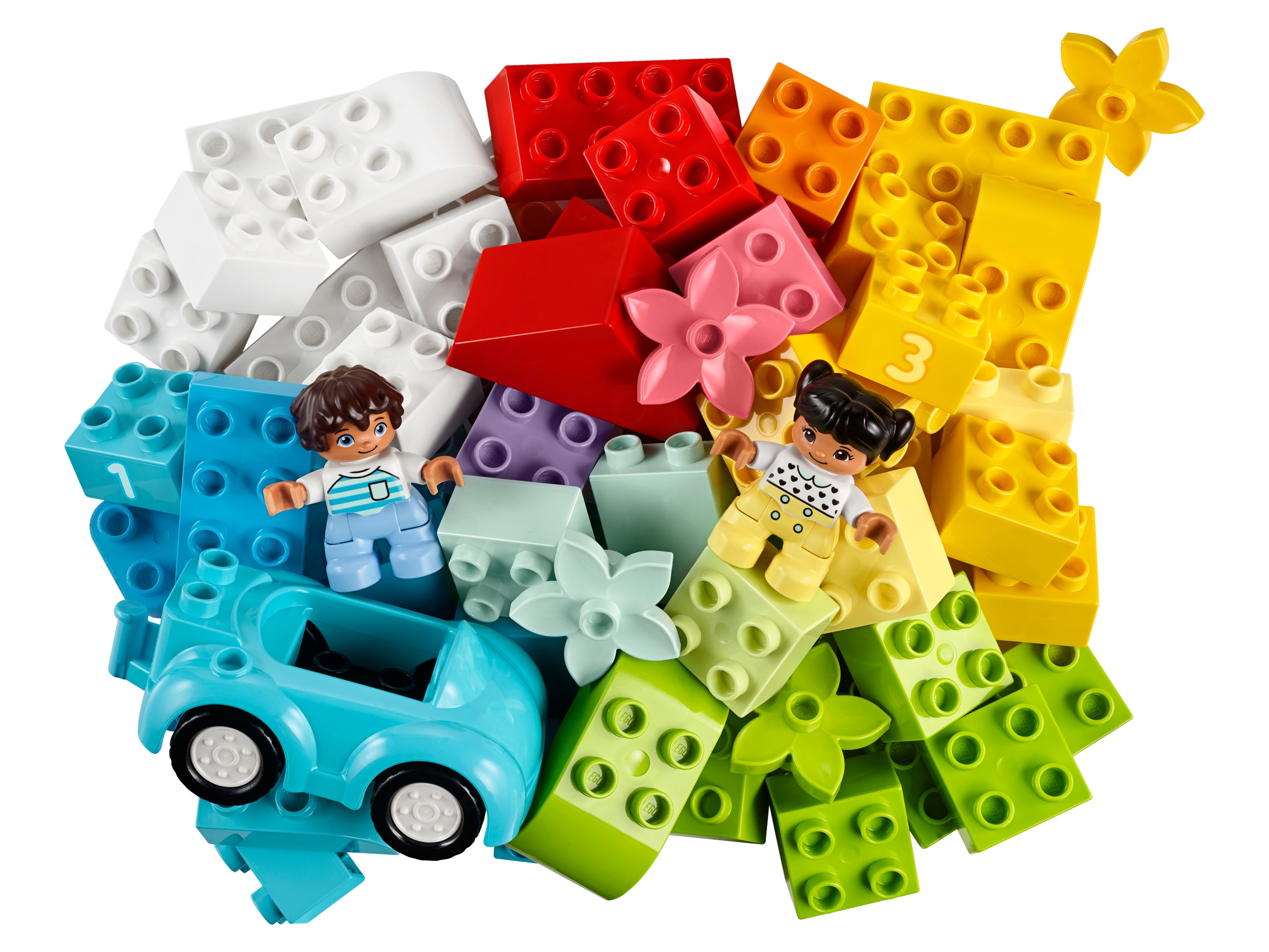
LEGO DUPLO Brick Box 10913 (~$30–45) is the structured option: 65 large bricks, storage box, and included instruction cards for houses, cars, creatures. The brick interlocking requires more fine-motor precision than magnetic tiles; the payoff is durability (LEGO quality is heirloom-level) and the satisfaction of following a plan and seeing it build successfully.
For 4-year-olds, DUPLO's main friction is piece count. One set limits creative reinvention after two weeks. Parents report needing 2–3 sets for sustained interest. The per-piece cost is higher than competitors, and designs get repetitive with a single box.
Mega Bloks First Builders 80-Piece Blue (~$25–35) clicks together with half the force DUPLO requires. For kids with low frustration tolerance or developing hand strength, Mega Bloks is the better entry point. The plastic feels cheaper than LEGO, and blocks stack less stably than wooden ones, but parent feedback is consistent: "4yo can build independently," "Less precision required," "Less frustration."
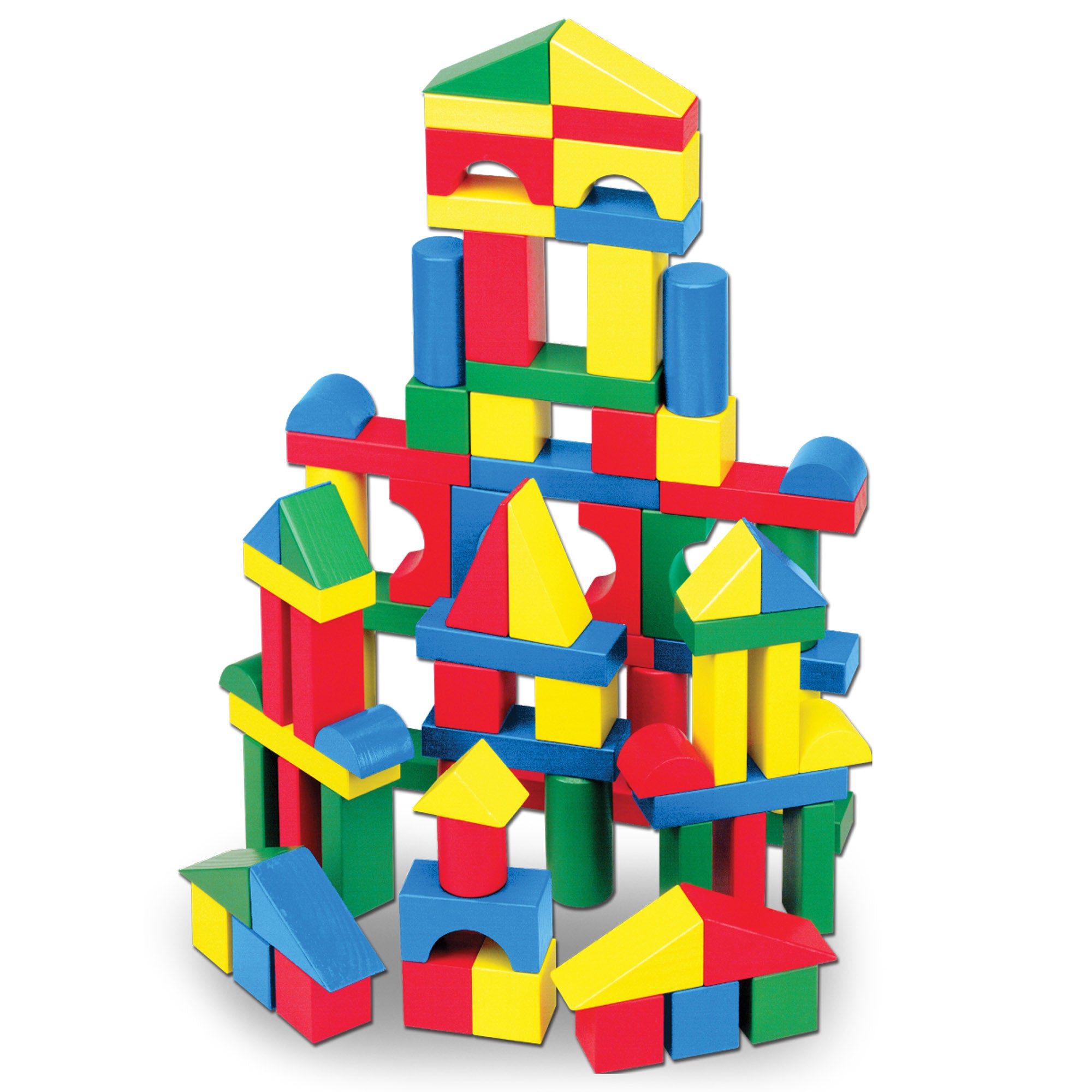
Melissa & Doug 100 Wooden Blocks (~$11–28) are the open-ended physics teacher. Solid hardwood, nine shapes, four colors, no magnets or instructions. A 4-year-old stacking blocks learns balance and gravity directly, and learns faster by knocking the tower down and rebuilding. Owners report: "Teaches balance & gravity," "Lasts decades," "Kids build without instructions," "Natural sensory experience." The trade-off: requires hand strength to stack, blocks roll and fall (the point), and they take up more shelf space.
STEM building: Marble runs and gears for the curious 4-year-old
Marble Genius Marble Run Super Set 150 Pieces (~$35–50) comes with 150 translucent track pieces and 65 small glass marbles. A 4-year-old watches marbles roll through tunnels, loops, and spirals, and learns gravity and momentum through play. The 4.6-star rating (15,000+ reviews) reflects genuine fascination: "Kids fascinated by gravity," "Hours of engagement," "Marbles rolling captivates 4yos." Setup is complex (requires adult assembly of complex builds), and builds can topple, but the learning is real.
Safety note: Marbles are a CPSC choking hazard; they fit the small-parts test cylinder. A 4-year-old can use the set only with constant adult supervision and 1:1 co-play while complex tracks are being built. Marbles must be stored separately and kept inaccessible during unsupervised play. This toy is better suited to age 5+ or a very responsible 4-year-old.
Learning Resources Gears! Gears! Gears! Deluxe 100 Pieces (~$25–40) introduces mechanical cause-and-effect. Gears actually mesh and spin; cranks transfer rotational motion visibly. Parent feedback: "Gears actually mesh & spin," "Teaches gear ratios intuitively," "Keeps 4yo engaged for 20+ mins," "Mechanical feedback is addictive." Setup can be fiddly (gears jam if aligned wrong), and the kit requires a flat, stable build surface, but the engineering intuition is unmatched in this age range.
How do these compare side-by-side?
| Building Toy | Price (USD) | Type | Piece Count | Best For | Durability | Attention Span |
|---|---|---|---|---|---|---|
| Magna-Tiles Classic 100 | $120 | Magnetic tiles | 100 | Open-ended, light-play appeal | 25+ years, zero recalls | 20–30 min |
| PicassoTiles 100 | $40–60 | Magnetic tiles | 100 | Open-ended, budget-friendly | 3–5 years with heavy use | 20–30 min |
| LEGO DUPLO 10913 | $30–45 | Interlocking bricks | 65 | Structured + free play | Heirloom-level durability | 15–20 min per build |
| Mega Bloks 80-Piece | $25–35 | Click-together blocks | 80 | Easy assembly, less frustration | 2–4 years | 15–20 min |
| Melissa & Doug Wooden 100 | $11–28 | Hardwood blocks | 100 | Physics, open-ended | Decades | 20–30 min (+ rebuilds) |
| Marble Genius 150pc | $35–50 | Marble run track | 150 pieces + 65 marbles | Gravity/physics, supervised STEM | 3–5 years | 20–30 min (needs adult setup) |
| Learning Resources Gears 100 | $25–40 | Gear + crank system | 100 | Mechanical engineering, curious kids | 3–5 years | 20+ min |
Who should actually skip most of these options
Skip Mega Bloks if: Your child already has strong hand strength and shows patience with more complex interlocking (try DUPLO instead). The plastic-y feel and lower stability won't engage a more advanced 4-year-old.
Skip magnetic tiles if: Your child is under 3 or still exploring toys primarily by mouthing them. Magnetic-tile magnets can escape if tile construction is compromised; unsupervised under-3 play carries real magnet-ingestion risk. See our best magnetic tiles for toddlers guide for supervised under-3 context.
Skip Marble Genius if: Your 4-year-old can't follow "don't put marbles in your mouth" or you can't commit to 1:1 supervision during play. Adult co-building is non-negotiable, not optional. Glass marbles are small enough to pose a choking hazard if swallowed; storage must be inaccessible when the child is unsupervised.
Skip all of these if: Your child has shown zero interest in how things work or building spatial structures yet. A 2–3 year-old focused entirely on pushing toy cars may tune out building toys entirely; wait another year, then revisit.
Recommended pick
For most 4-year-olds, Magna-Tiles Classic 100 is the all-in-one pick. It requires no instructions, rewards creativity instantly, teaches spatial reasoning through 3D stacking, and the light-play effect (colors glowing on a sunny window or light table) holds attention longer than plastic alone. The 25+ year track record means magnets stay sealed through rough toddler play, and the durability math works across multiple children. At $120, it's an investment, but owners consistently report kids returning to the set for years.
But the caveat is real: If your child is more into following instructions than open-ended play, LEGO DUPLO teaches step-by-step building and offers heirloom-quality durability; just budget for 2–3 sets for sustained interest. If durability or budget is the constraint, Melissa & Doug wooden blocks last decades and teach physics more intuitively than any plastic set. If your 4-year-old is already asking "how do things work," Learning Resources Gears introduces mechanical thinking directly.
Bottom line: For ages 3–5 seeking the safest, most durable all-in-one pick with proven multi-child longevity, Magna-Tiles Classic 100 (4.7/5) wins: 25+ years of zero-recall history, moderate magnets that 4yo hands can work with, and light-play appeal that outlasts most plastic sets. For guided structured play, choose LEGO DUPLO. For physics intuition, choose wooden blocks. For early STEM curiosity with close adult support, choose Gears or marble runs.
FAQ
What building toy is best for a 4-year-old?
It depends on learning style and attention. For open-ended creativity without instructions, magnetic tiles (Magna-Tiles or PicassoTiles) or wooden blocks win. For structured building with step-by-step guidance, LEGO DUPLO is the pick. For kids curious about mechanics and gravity, Learning Resources Gears or Marble Genius teach physics hands-on, though marble runs require 1:1 supervision.
Are magnetic tiles safe for a 4-year-old?
Yes. Magnetic-tile pieces are 2–3 inches (safe per CPSC choking-hazard standards for ages 3+). Both Magna-Tiles and PicassoTiles seal magnets inside with rivet or weld construction; magnet escape is rare if tiles are inspected for cracks. A 4-year-old can safely use magnetic tiles under normal play conditions and supervision typical of any building toy.
LEGO DUPLO vs magnetic tiles: which is better for a 4-year-old?
They teach different skills. DUPLO offers guided instruction (following picture steps) plus free building; the brick interlocking teaches fine-motor precision. Magnetic tiles reward fast creative wins and teach spatial reasoning through instant 3D structures. Both are excellent at 4; pick DUPLO if your child likes following steps and instructions, magnetic tiles if they prefer pure open-ended play.
Are marbles safe in a marble run for a 4-year-old?
Marbles are a CPSC choking hazard; they fit the small-parts test cylinder. A 4-year-old can use marble runs only with constant 1:1 adult supervision during play, and marbles must be stored separately and inaccessible when unsupervised. Marble Genius is labeled "4+," but parent reviews focus on 5–6yo use. The toy is better suited to age 5+ unless you're doing co-directed adult-child building of simple tracks.
For more magnetic-tile comparisons, see our best magnetic tiles for toddlers guide (for safer under-3 context) and Magformers vs Magna-Tiles comparison (for skeletal frame building as kids approach 5–6). For broader STEM toy exploration, check our reviews on engineering toys and construction kits as your child's interests sharpen. If your 4-year-old is also working on early reading, our best phonics tablets for ages 3-5 guide covers hands-on and near-screen-free options for letter sounds.
Sources:
Shopping for a gift? Start here
- Best LEGO Botanicals Sets for Adult Builders and Gift-Givers (2026)
- LEGO Botanicals Bonsai Tree vs LEGO Botanicals Orchid: Which Is Better for Adult Builders and Gift Buyers?
- Holiday Gift Guide 2026: The Best Toys by Age and Budget, From Preschool to Grown-Ups
- Gifts for Grown-Ups Who Still Love Toys: LEGO, Board Games and Puzzles (2026)
How we research: This guide is based on manufacturer specifications, published independent reviews, and verified-buyer feedback, not hands-on testing.
Holiday gift guide drops every Friday in Q4
One email a week with the newest review and the toys our community is actually buying. No spam, unsubscribe anytime.