robotics · ages 10-14
LEGO SPIKE Prime vs Mindstorms Robot Inventor: Which Is Actually Worth It in 2026?
Both LEGO's flagship robotics kits for ages 10-14 are now on the way out — Mindstorms Robot Inventor retired in 2022, and SPIKE Prime retires June 30, 2026. This head-to-head ranks them by availability, price tier, coding path, and what your kid actually learns, then names the kit worth buying in 2026 instead. Safety-checked against CPSC and AAP guidance.
Published 2026-06-01 · 9 min read
Amazon Associates disclosure
As an Amazon Associate, I earn from qualifying purchases. The price you pay is the same. This guide is based on manufacturer specifications, published independent reviews, and verified-buyer feedback, not hands-on testing.
TL;DR
- Availability is the whole story in 2026. LEGO Mindstorms Robot Inventor 51515 was retired at the end of 2022 (resale-only now), and LEGO Education SPIKE Prime 45678 retires June 30, 2026 — so neither is a future-proof buy.
- The hardware and coding experience are close cousins: both run a Scratch-based drag-and-drop language plus Python, both target ages ~10-14, both sit at a premium (~$360-430) price tier.
- Mindstorms was the consumer/home kit; SPIKE Prime is a LEGO Education classroom system sold mainly direct via LEGO Education (quote/account path), not general retail.
- For a 2026 purchase, the honest answer is "neither, if you can wait": LEGO Education's successor, Computer Science & AI (~$339.95, shipping from April 2026), is the supported forward path. If you must pick today, see the use-case verdict at the end.
Most SPIKE-vs-Mindstorms comparisons treat both as live products you can grab off a shelf. In 2026 that's broken: one is already retired, the other is weeks from it. This head-to-head ranks the two flagship robotics kits for ages 10-14 by what actually decides the purchase (availability, price tier, coding path, age fit, durability, and what each teaches), then tells you what's worth buying instead. Safety claims are checked against the U.S. Consumer Product Safety Commission and the American Academy of Pediatrics.
As an Amazon Associate, I earn from qualifying purchases made through product links in this review. This does not affect the price you pay.
Why does "which is worth it" depend entirely on the year?
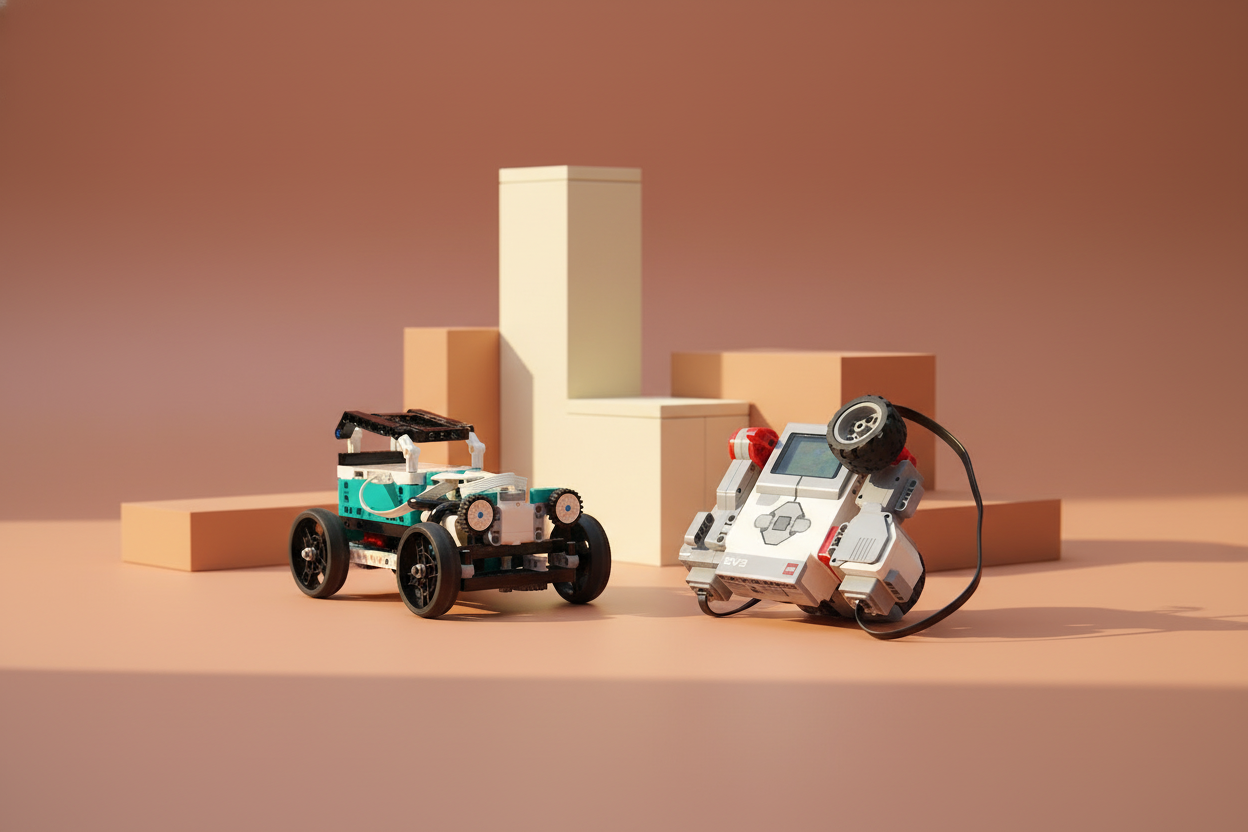
Both kits are end-of-life, and the dates decide the answer. LEGO sunset the Mindstorms brand and the 51515 Robot Inventor at the end of 2022, about two years after its October 2020 launch (The Brothers Brick). At the time, LEGO promised to keep "Build & Code" alive through SPIKE Prime instead.
Then in January 2026, LEGO Education announced it is retiring the entire SPIKE portfolio on June 30, 2026, replacing it with a Computer Science & AI line (SPIKE Portfolio Retirement). So SPIKE Prime is "current" for only a few more weeks. That reframes the whole question. It is less "which robot is better" and more "which end-of-life kit, if any, still makes sense to buy in 2026. And what replaces them."
What's the difference between these two kits, really?
Here is the side-by-side. The original element of this review is the availability-and-purchase-path matrix. Spec sheets are everywhere. What decides a 2026 purchase is whether you can buy it, where, and how long it'll be supported.
| Criterion | LEGO Education SPIKE Prime (45678) | LEGO Mindstorms Robot Inventor (51515) |
|---|---|---|
| Availability (2026) | Current but retires June 30, 2026; LEGO Education direct (quote/account), limited 3rd-party resale | Retired end-2022; resale/secondary market only |
| Price tier | Premium — ~$400+ direct (LEGO Education lists $429.95) | Premium — launched ~$359.99 (LEGO Shop); resale prices vary |
| App / coding language | SPIKE App: icon blocks → word blocks (Scratch-based) → Python (LEGO Education) | Robot Inventor app: Scratch-based drag-and-drop + Python for advanced users (LEGO Shop) |
| Curriculum | Structured classroom lesson plans, designed for grades 6-8, 2 students per set | Consumer build-and-play: 5 hero models + 50+ activities, home-oriented |
| Age fit | Grades 6-8 (~ages 11-14) | Labeled 10+; commonly described ages 10-15 |
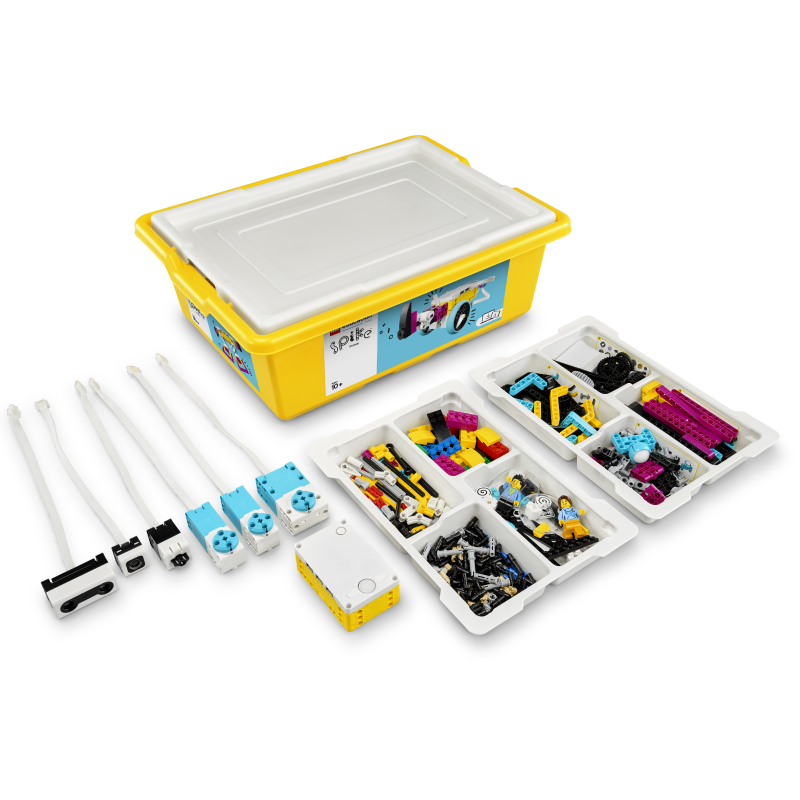
| Pieces / hardware | 528 elements: hub, 3 motors, sensors (45678 product page) | 949 pieces: hub, 4 motors, sensors (Brickset 51515) |
| Durability | LEGO Technic — high; rechargeable Li-ion hub battery | LEGO Technic — high; rechargeable Li-ion hub battery |
| What it teaches | Coding progression + robotics, tied to a teaching curriculum | Robotics + coding via guided activities, self-directed at home |
| App support horizon | SPIKE App supported through June 30, 2031 (LEGO Education) | Uncertain — no published end-of-support date after the brand's 2022 retirement |
A few things jump out from the specs alone. The kits are close on hardware and coding language. Both are Scratch-based with a Python step up. The real differences are structural. SPIKE is a classroom system: lesson plans, two-student design, quote-based purchase. Mindstorms was a home toy: more pieces, more out-of-box "hero" builds, a consumer app. The decisive 2026 factor is availability plus support horizon, not robot specs. SPIKE's support runs to 2031 and Mindstorms' is undefined, so the premium price buys very different amounts of remaining supported life.
Is the coding experience actually different?
Not as much as the branding implies. Both teach the same ladder. The SPIKE App moves a learner from icon blocks (for non-readers) to Scratch-based word blocks, then to text Python (SPIKE App). Some word blocks are identical to Scratch 3.0; others are custom for the hub and sensors. The Mindstorms Robot Inventor app likewise uses Scratch-based drag-and-drop plus Python for advanced users (LEGO Shop 51515). The headline coding skills transfer between the two.
Honest framing: if your goal is "my kid learns block coding then graduates toward Python," either delivers that ladder. Per the SPIKE App documentation, SPIKE's edge is the structured progression wrapped in a teaching curriculum. Mindstorms' published flow is a more playful, self-directed home experience with more pieces for bigger models. Which on-ramp suits your kid depends on whether they read fluently and how much structure they want. The structured curriculum is a plus in a classroom and can feel like overhead for a self-directed kid at home.
How do you even buy SPIKE Prime (and is the Amazon listing legit)?
This trips up a lot of parents. SPIKE Prime 45678 is a LEGO Education product, not a consumer toy. Its product page uses an "Add to cart / quote" flow aimed at schools, lists it at $429.95, and notes each set supports two students. That's why it rarely shows up at normal toy retailers, and why the Amazon listings you find are third-party resale, not a first-party storefront. Mindstorms 51515 was a consumer product sold at LEGO.com and major retailers. After its end-2022 retirement, those are gone too, leaving resale.
Practical takeaway: for SPIKE Prime the primary path is LEGO Education direct at $429.95. Treat any Amazon listing as a third-party resale fallback, and confirm it is a complete, genuine 45678 set before trusting the price. For Mindstorms you're in the secondary market either way. Watch for inflated prices and counterfeit or incomplete sets.
What happens when a robot build or program fails?
Every robotics kit eventually produces a build that drives off course or a program that does nothing. The kit that helps diagnose the failure is the one that teaches.
Per their specs, both hubs have a 5x5 light matrix and a speaker to surface program state, and both apps run programs step by step. So in principle a failed program is diagnosable: the robot's behavior plus the hub display show where the logic broke, rather than only an opaque "incomplete" error. A build failure (a gear not meshing, a sensor mounted backwards) is visible on the Technic structure itself. That is a structural advantage of a brick-based robot over a sealed plastic toy, where the wiring and mechanics are hidden. For a kid who gets frustrated easily, that visible-error design favors either LEGO kit over a closed robot.
How safe are these for a 10-14 year old (and a younger sibling in the house)?
Two safety facts matter here, both documented.
Small parts and choking. Both kits hold hundreds of small Technic elements. Toys for children under 3 containing small parts are banned hazardous substances under CPSC's small-parts rule, 16 CFR Part 1501. A part is "small" if it fits a test cylinder 2.25 in long by 1.25 in wide (16 CFR § 1501.4). Kits labeled 10+ aren't required to pass that test. So the gears, axles, and sensor pins are choking hazards for any child under 3 in the home. With a toddler sibling, treat the box warning as binding and store the kit up high.
Rechargeable lithium-ion battery. Both hubs use a Li-ion battery pack, not loose coin/button cells. The SPIKE Technic Large Hub battery is a 2,100 mAh pack charged via micro-USB. Enclosed in-device packs are far lower-risk than loose cells. The CPSC's standing warning targets loose lithium cells separated from their packs. Per CPSC toy-safety guidance, keep the pack in the hub, charge with the supplied cable, and don't let a younger child pry it out.
Screen time. Both require an app on a tablet, phone, or computer to code. For ages 6+, the AAP sets no fixed daily minute limit; it recommends consistent limits and protecting sleep, activity, and family time via a Family Media Plan. Robotics coding is arguably "good" screen time, but it's still screen time. Count it in your kid's budget.
Note on third-party reviews: as of this writing there is no dedicated Common Sense Media review for the physical Robot Inventor 51515 set (their catalog carries a separate Mindstorms app review, a different product), so the age guidance above is drawn from manufacturer labeling rather than an independent expert age rating.
Honest cons — what each kit gets wrong in 2026
- SPIKE Prime 45678: retires June 30, 2026, so you're buying a sunsetting product; the $400+ price and quote/account purchase path are awkward for a single home buyer, and the education checkout is built for schools rather than individuals; only 528 pieces at a premium price. Offsetting upside: app support committed through June 30, 2031.
- Mindstorms Robot Inventor 51515: retired since end-2022, so it's resale-only — prices volatile, counterfeit and incomplete sets exist; long-term app support is uncertain now the brand is shelved, and if the Robot Inventor app stops installing on current devices the kit loses most of its value. Upside: 949 pieces and a consumer-friendly build-and-play app, provided you verify a genuine, complete unit.
For the wider set of age-appropriate options at this level, see our best robot kits for 9 to 12 year olds (2026) roundup, and for a deeper look at the home option, our LEGO Mindstorms Robot Inventor hands-on review.
So which LEGO robotics kit should you actually buy in 2026?
The honest, use-case answer:
- Classroom / school / homeschool co-op (and you can buy direct before June 30, 2026): SPIKE Prime 45678. The structured curriculum, two-student design, and app support through 2031 make it the more defensible end-of-life buy; just move fast and buy from LEGO Education, not a resale markup.
- A single kid at home who specifically wants the consumer Mindstorms experience: Robot Inventor 51515, only if you verify a genuine, complete unit at a fair price and confirm the app still works on your device. More pieces, more playful builds, but real availability and support risk.
- Most 2026 families wanting a current, supported path: wait for / buy the Computer Science & AI successor (~$339.95, shipping from April 2026, covering grade bands incl. 6-8) per the retirement notice. Buying a kit that's already dead or dying is the thing this comparison exists to talk you out of.