robotics · ages 10-14
LEGO Mindstorms Robot Inventor (51515) Review: It's Retired — Here's What to Buy Instead
The LEGO Mindstorms Robot Inventor 51515 is a brilliant robotics kit for ages 10-14 that LEGO discontinued in 2022 — and its app is being switched off in late 2026. This review covers the specs, the resale-price reality, the support risk, and the live alternative (LEGO Spike Prime) worth buying in its place.
Published 2026-06-01 · 10 min read
Amazon Associates disclosure
As an Amazon Associate, I earn from qualifying purchases. The price you pay is the same. This guide is based on manufacturer specifications, published independent reviews, and verified-buyer feedback, not hands-on testing.
TL;DR
- The Mindstorms Robot Inventor 51515 is an excellent robotics kit for ages 10-14 (949 pieces, a smart hub, 4 motors, color + distance sensors), but LEGO retired it at the end of 2022 and is sunsetting its companion app, pointing owners to the Spike Prime app instead.
- Retired means it sells only on the resale market at a premium, with no first-party stock and a finite software life. That is a support risk, not a bargain.
- Buying new for a 10-14 year old today, buy Spike Prime instead: nearly the same hub and sensors, a similar skill range, and the app LEGO is actually maintaining.
If you came expecting to add the Robot Inventor to a cart, this review's main job is to stop you before you overpay for a discontinued kit. The hardware is great; the situation around it is the problem. Below: what it is, why retirement matters, how it compares to the live alternative, and what to buy instead. Safety and age claims are checked against U.S. Consumer Product Safety Commission and pediatric guidance.
As an Amazon Associate, I earn from qualifying purchases made through product links in this review. This does not affect the price you pay.
What is the LEGO Mindstorms Robot Inventor 51515?
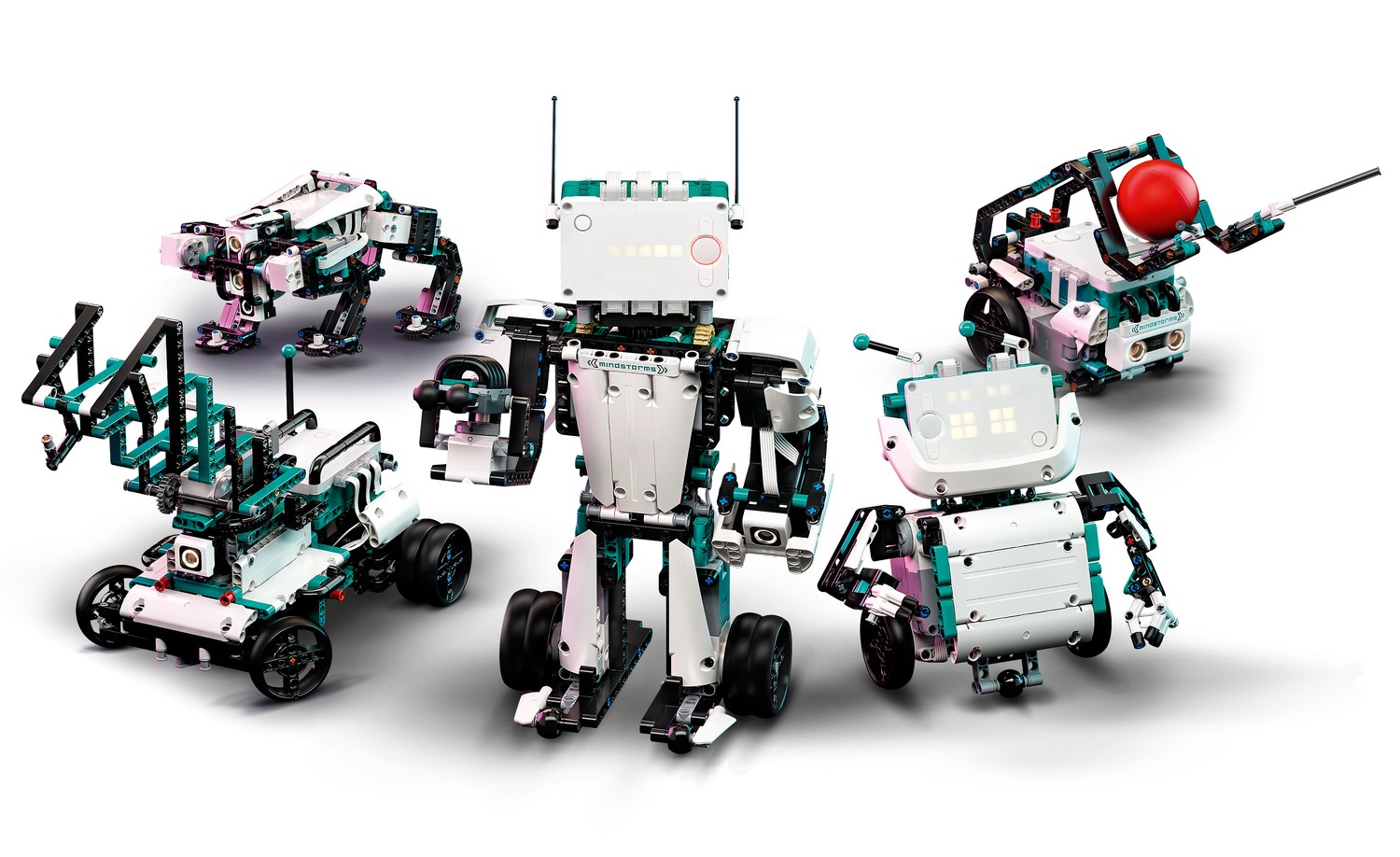
The Robot Inventor is the last consumer Mindstorms kit, aimed at builders and coders roughly ages 10-14. It ships 949 pieces and centers on a programmable "intelligent Hub" with six input/output ports, a customizable 5x5 light matrix, a built-in 6-axis gyro and accelerometer, and storage for up to 20 programs. In the box: 4 medium motors with integrated rotation sensors, plus a color sensor and a distance sensor, all powered by a 2100mAh rechargeable Li-ion battery charged over USB (set contents, Brothers Brick review).
You build one of five flagship robots, then program behaviors with a drag-and-drop block app (with a Python path for older kids). On the merits it is one of the better home robotics kits in this band. The catch is everything that happened to it after launch.
Why does it matter that the set is retired?
Because a retired robotics kit is a different purchase than a current one. LEGO confirmed it was discontinuing the Mindstorms brand and sunsetting the 51515 at the end of 2022 (Jay's Brick Blog). The set is now marked retired on the official product page, meaning no first-party stock.
Three consequences follow:
- No new supply. Production stopped, so the only units are existing inventory and used kits.
- Resale pricing, not retail pricing. With fixed supply and ongoing hobbyist/educator demand, sealed sets often sell above the old retail price on markets like eBay. That is the opposite of a clearance discount.
- A finite app life (next section). A robotics kit with no app is a very expensive bin of Technic.
The set's original LEGO retail price was $359.99. Supply is fixed but educator and hobbyist demand persists, so sealed sets often sell at or above that figure. Before buying, check live resale listings. Treat any price near or under the old retail as the ceiling, not a bargain. If the only options are well above retail or from a seller you cannot vet, the live alternative below is the safer spend.
What happens to the app, and your kid's projects?
This is the decisive issue. LEGO has signaled it will discontinue the Mindstorms Inventor app, after which there are no further updates, and it directs owners to transition to the Spike Prime app instead. App support was promised only into the mid-2020s window after retirement (Antons Mindstorms on hub/app compatibility).
Good news buried in the bad: the Robot Inventor hub is essentially the same hardware as the Spike Prime hub (same shape, same six ports, same gyro), differing mainly in color and firmware (hub comparison). So a migration path exists. The bad news: app-version compatibility has not been smooth. Community guides report that newer Spike releases have broken older Mindstorms-hub workflows, so "just switch apps" is not guaranteed friction-free. If you already own a 51515, confirm current Spike-app compatibility for your hub before the Mindstorms app reaches end of support, while a known-good downgrade path still exists.
Robot Inventor vs Spike Prime vs mBot: which should you buy?
For a 10-14 year old in 2026, the real choice is rarely "this retired kit or nothing." Three options side by side, weighted toward the factors that actually bite (availability and software support), not piece count.
| Criteria | LEGO Mindstorms Robot Inventor 51515 | LEGO Spike Prime 45678 | Makeblock mBot (entry alt) |
|---|---|---|---|
| Availability | Retired (2022); resale only | Current; sold as education set | Current; widely sold |
| Price tier | Resale premium, volatile | Mid-high (education channel) | Budget-to-mid |
| App / support | App being sunset; migrate to Spike | Actively maintained app | Vendor app, maintained |
| Age fit | 10-14 (label 10+) | ~10+ / 8-12 range | ~8-12, simpler |
| What it teaches | Block + Python, sensors, gyro, multi-motor robots | Same hub: block + Python, sensors, motors | Block coding, basic robotics intro |
| Durability | High (LEGO Technic) | High (LEGO Technic) | Good; fewer reconfigurations |
A few things jump out from the specs alone. The 51515 and Spike Prime are near-twins in capability because they share the hub, motors, and the color/distance sensors. The deciding columns are availability and support, and on both, Spike Prime wins for a new buyer. mBot sits a tier down: cheaper and simpler, a better fit for a younger or first-time builder than a 13-14 year old ready for Python. The most useful way to weigh the columns is cost per supported year: a resale 51515 may cost as much as Spike Prime up front yet carry a shorter, finite app life, so its real cost per year of supported use runs higher than the sticker suggests.
What happens when a build or the app fails?
Every robotics kit eventually produces a robot that won't do what the kid programmed. The question is whether the failure is diagnosable.
The mechanical half is the strength: a robot that drives crooked usually has a visible cause (a motor in the wrong port, a gear not meshed, a sensor facing the wrong way), and a 10-14 year old can reason from the physical build. The software half is weaker: when a program doesn't run as the block preview suggested, the drag-and-drop app tends to surface a vague "incomplete" or connection state rather than naming the broken block, so kids retry blindly. With a retired kit this gets worse over time. An unmaintained app accumulates exactly the pairing and firmware-mismatch errors that community guides describe, and once support ends those have no official workaround. That is the structural reason the live, actively maintained Spike Prime app is the lower-frustration choice for years of use, even though the physical building experience is near-identical.
How safe is it for a 10-14 year old (and younger siblings)?
Two safety facts matter, both well-documented.
Small parts and choking. The 51515 is full of small Technic pins, gears, and electronic parts. Toys for children under 3 that contain small parts are banned hazardous substances under CPSC's small-parts rule, 16 CFR Part 1501; a part is "small" if it fits a test cylinder 2.25 in long by 1.25 in wide (16 CFR § 1501.4). A kit labeled 10+ need not pass that test, so every pin and sensor is a choking hazard for any child under 3 in the home. With a toddler sibling, treat the box warning as binding and store builds up high.
Rechargeable battery. Per the published specs, the hub uses an enclosed 2100mAh Li-ion pack charged over USB. Enclosed packs are lower-risk than loose coin cells, but CPSC toy-safety guidance still calls for battery enclosures secured against small children: charge on a hard surface rather than bedding, unplug when done, and keep the hub out of a toddler's reach.
Screen time. The build is screen-free but programming needs a tablet or computer. For ages 6+, the AAP sets no fixed daily minute limit; it asks families to place consistent limits and protect sleep, activity, and family time via a Family Media Plan. Budget for app time on top of build time.
Honest pros and cons
What it gets right:
- Excellent hardware: the hub, 4 motors, and gyro support capable multi-motor robots, with a block-to-Python on-ramp that grows with a 10-14 year old.
- Durability and reconfigurability: unlike single-build kits, parts rebuild endlessly.
- Real coding logic: sequencing, loops, sensor-driven conditionals. This is the actual mental model behind programming.
What it gets wrong (mostly about status, not engineering):
- Retired: no first-party stock; you buy used or sealed-on-resale.
- Resale premium: discontinued demand pushes prices up, not down.
- App support is ending: the headline risk. The out-of-box experience has a finite life and migrating to Spike is not guaranteed to go smoothly.
- Tablet/computer required to program, on top of the build.
For the live, lower-risk version of this decision, see Spike Prime vs Mindstorms: which is worth it, and for the coding-tool angle at this age, our best electronics kit for 10 year olds: Makey Makey vs micro:bit comparison.
So what should you actually buy?
Already own a 51515? Keep using it and plan your app migration to Spike before support ends. The hardware has years of life left. But buying new for a 10-14 year old today, buy Spike Prime instead of hunting down a retired Robot Inventor at a resale markup. It is nearly the same hub, motors, and sensors, covers a similar skill range, and runs on the app LEGO is actively maintaining and steering Mindstorms owners toward.
Choose the 51515 only in narrow cases: a genuinely fair-priced used set, comfort with migrating to the Spike app, and a kid who cares about the specific included robot models. For a younger or first-time builder, step down to a simpler kit like mBot rather than paying a premium for capability they are not ready to use.
This assessment is a synthesis of published specs, LEGO's own retirement and app-support announcements, community migration guides, and U.S. safety standards. It is not a personal hands-on test. The bottom line holds either way: the hardware is excellent, but the retirement and finite app life make a new purchase of the 51515 the higher-risk choice, and Spike Prime the one to buy in its place.