Best Soldering Kits for Teen Makers: A Safety-First Buyer's Guide (2026)
A teen's soldering kit needs temperature control, not wattage: PID prevents the cold joint that kills the hobby. Plus the lead-free solder and fume safety most skip.
Published Jun 17, 2026 · 9 min read
As an Amazon Associate, I earn from qualifying purchases. Your price stays the same.
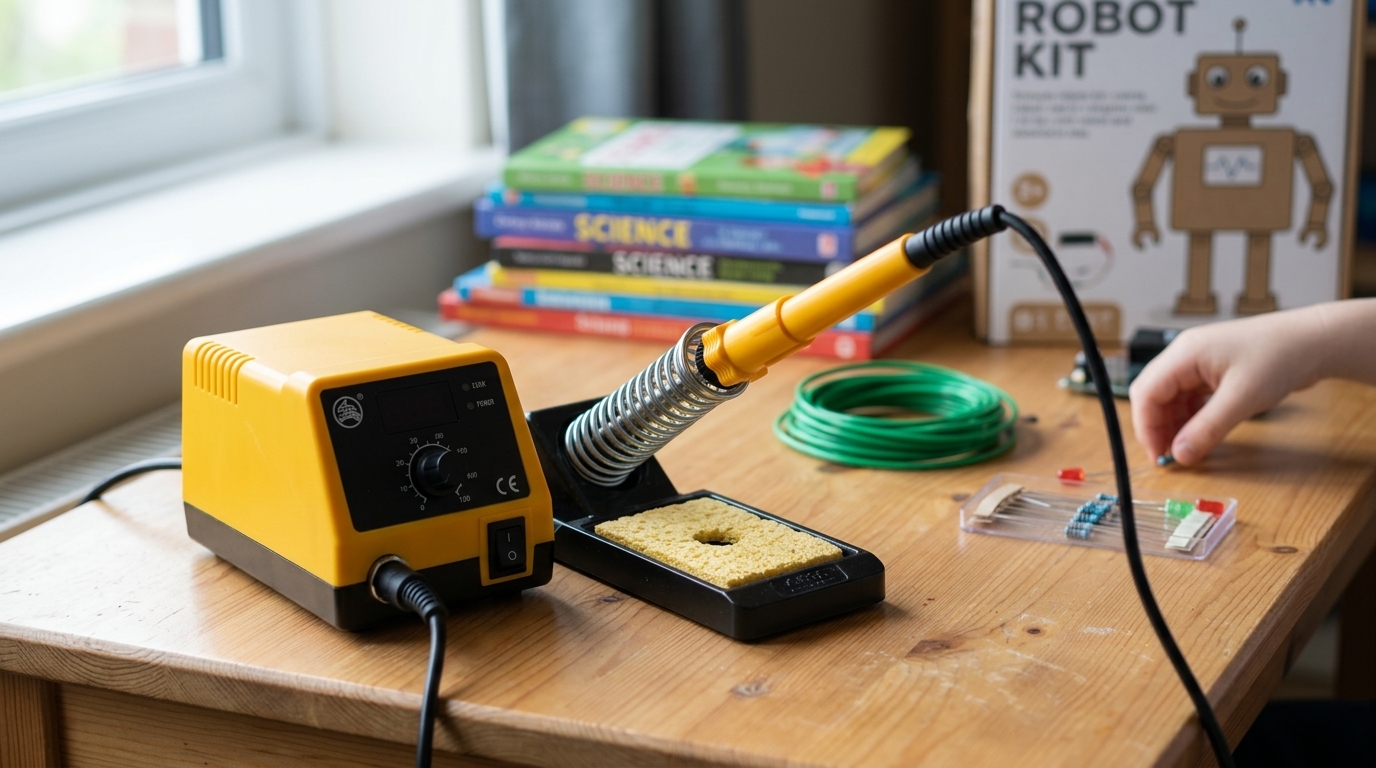
TL;DR
- Best overall (serious/career-track): the Hakko FX-888D, 70W, digital PID temperature control, 4.7/5 across 2,000-plus reviews, holds its resale value well.
- Best value (committed beginner): the X-Tronic 3020-XTS ($55-75), 60W PID, ships with solder sucker, tweezers, and 5 tips.
- Best first-timer confidence kit: the Learn to Solder Blink board ($14), lead-free solder included, no iron needed.
- The rule that matters: temperature control beats wattage. A temperature-controlled budget station prevents the cold joint that kills the hobby.
- Two required extras: lead-free solder (~$5-10/yr) and a fume fan ($30-50). No kit under $200 includes fume extraction.
As an Amazon Associate I earn from qualifying purchases made through links in this review. It doesn't change the price you pay. This guide is based on manufacturer specifications and published independent reviews, not personal hands-on testing.
A teen wants to start soldering, and you want a safe first kit that won't put them off. Picking a best-fit soldering kit for teens comes down to one rule: buy temperature control, not wattage. A cold joint on the first project is what kills the hobby, and a station that holds a steady heat is what prevents it. Below are six kits across every budget, plus the lead-free-solder and fume safety that most listicles skip.
| Product | Price | Wattage | Temp control | What's included | Best for |
|---|---|---|---|---|---|
| Hakko FX-888D | $130-184 | 70W | Digital PID | Station, iron, 1 tip, stand, sponge | Serious / career-track |
| X-Tronic 3020-XTS | $55-75 | 60W | Digital PID | Iron, 5 tips, sucker, tweezers, case | Best value, committed |
| Weller WE1010NA | $150-200 | 70W | Digital PID | Station, iron, safety rest, 1 tip | Career-track step-up |
| Elenco AK-100 | $30-45 | 25W | None (basic iron) | 25W iron, cutters, solder, siren board | First practice project |
| Learn to Solder Blink | $14 | N/A (no iron) | N/A | PCB, LEDs, lead-free solder | First-timer confidence |
| Plusivo 60W | $20-35 | 60W | Analog (voltage) | Iron, sucker, accessories, case | Not recommended for serious teens |
Quick pick: Hakko FX-888D. Best for serious or career-bound teen makers who want long-term temperature control and resale value. See it on Amazon (affiliate link)
Which soldering kit is best for a teen beginner?
The Hakko FX-888D is our top pick for a serious teen, and the X-Tronic 3020-XTS is the smarter buy for most. Pick by commitment level, not by spec sheet.
The FX-888D is a 70W digital station with PID temperature control, the feature Hakko builds the iron around. That control holds the set heat even when you press cold solder to the tip. It warms up in about 30 seconds and stays steady to within a couple of degrees. It runs on T18 tips, which are cheap and everywhere. Reviewers back this: 4.7 out of 5 across more than 2,000 Amazon ratings, with praise for stable heat and no burnt pads on tight traces.
The honest con is price. At $130-184 it's overkill for a teen who isn't sure yet. The upside: it holds its resale value well, and it's the iron makerspaces and repair shops actually use. Who should skip it: a first-timer on a tight budget. Start cheaper, then upgrade when the hobby sticks.
Is the X-Tronic 3020-XTS the value pick?
Yes. For a committed beginner, the X-Tronic 3020-XTS ($55-75) is the value sweet spot. It gives a teen the one feature that matters, steady regulated heat, without the Hakko price tag.
The 3020-XTS is a 60W station with a digital LED display and PID stabilization, which X-Tronic calls Magic Temperature Compensation on its product page. Its PID loop holds the tip at the set temperature when you press cold solder to a joint instead of letting the heat sag, so through-hole joints come out clean on the first try. The kit is complete: 5 spare tips, a solder sucker, tweezers, a brass cleaner, and a case. That's the hidden value. A teen starts with no follow-up costs.
It's rated 4.5 out of 5 across roughly 800 reviews. The trade-offs are minor: generic tips, slightly slower heat-up than the FX-888D, and a plastic stand that feels cheaper. None of that matters for a teen learning through-hole work. Who should skip it: anyone with a $130 budget who plans to solder for years. Buy the Hakko once and be done.
Which soldering station suits a career-track teen?
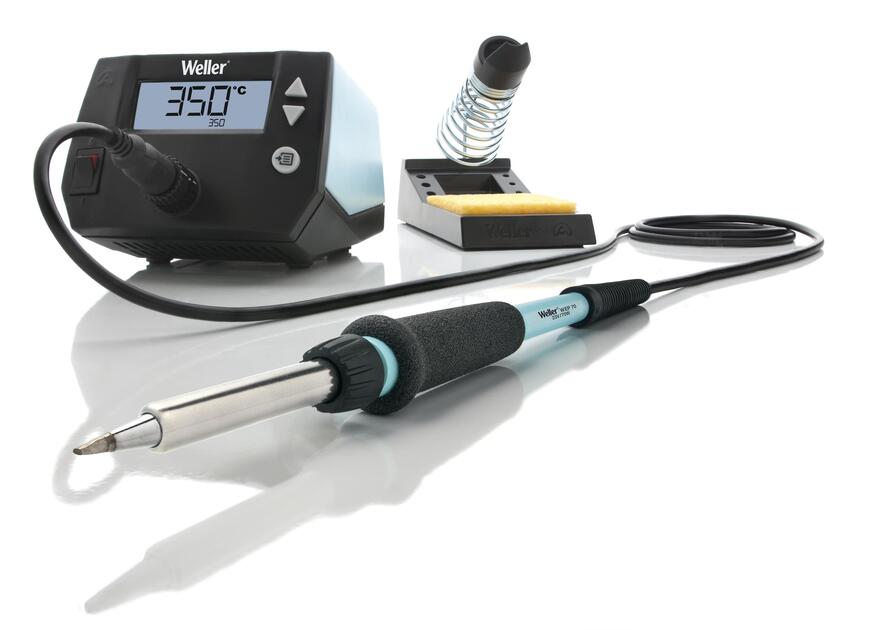
The Weller WE1010NA ($150-200) is the pick for a teen who's serious about electronics as a career. Weller is the brand in repair shops, and it's the station they'll meet in labs and makerspaces.
The WE1010NA is a 70W digital station with an LCD and a simple three-button interface, built on Weller's industrial heritage. It heats in about 45 seconds and recovers fast after wet solder, which suits fine-pitch hobby work. It earns 4.6 out of 5 across roughly 500 reviews, with the recurring note that it's "built like a tank."
The con is value for a hobbyist. You pay a premium for industrial durability you may not need, and the tips cost a touch more than the T18s. For a casual learner, the FX-888D is the better first station. Who should buy it: the teen on a repair-technician or electronics-engineering track who will use it for a decade.
What's a good first-timer confidence kit?
For a true first-timer, start with the Learn to Solder Blink board ($14), or step up to the Elenco AK-100 ($30-45). Both build confidence before you spend on a station.
The Blink kit is a forgiving practice board, not a station. It ships with a PCB, three LEDs, push-button switches, and lead-free solder, the only kit here that includes it. The thick pads survive a beginner's excess heat, so a kid succeeds even with sloppy technique. It's a 10-joint, 30-to-60-minute project that ends with LEDs lighting up, and success on joint one is what keeps a kid soldering. It's rated 4.6 out of 5, aimed at ages 8-12, and needs a separate iron.
The Elenco AK-100 goes a step further. It bundles a basic 25W iron, cutters, solder, and a working-siren circuit board with about 20-30 joints, so a teen learns soldering and a bit of circuit logic at once. It's rated 4.4 out of 5, aimed at ages 12 and up. The catch: the 25W iron is underpowered for anything beyond this kit, so it forces an upgrade once the hobby deepens. Treat both as stepping stones, not destinations.
Why does temperature control matter more than wattage?
Because wattage only tells you how fast an iron heats, while temperature control tells you whether it stays hot when it counts. That difference decides whether a teen's first joints succeed or fail.
Here's the mechanism. Touch cold solder and a cold component to a hot tip, and they pull heat away fast. A PID station senses the drop and pumps power back in to hold the set heat. An analog voltage iron can't. It feeds a fixed voltage, so the tip cools, the solder doesn't flow, and you get a cold joint: a dull, weak, cracked connection that fails. On hobby forums, cold joints from voltage irons are the single most cited beginner frustration.
This is why a $65 PID X-Tronic beats a $40 voltage iron at the same wattage. It also explains the case against the Plusivo 60W ($20-35). On paper it's a deal: 60W, a desoldering pump, a full accessory bag, a 4.3/5 rating. But the analog knob gives no true heat feedback, and its handle gets hot. For a serious teen, that's a hobby-killer. If a kid is only dabbling, fine. For a committed maker, spend $30 more and skip it.
What safety extras does every kit leave out?
Two things every serious teen needs that no affordable kit includes: lead-free solder and fume extraction. Budget for them as required, not optional.
- Lead-free solder: only the Blink kit includes it. Lead is a chronic neurotoxin, a real concern for young users, so every station needs a roll of lead-free solder bought separately. It runs about $5-10 for a year's supply. The University of Cambridge engineering safety guidance recommends lead-free for this reason.
- Fume extraction: no kit under $200 includes it. Flux fumes, not the solder itself, cause the eye and throat irritation parents report. An open window is the bare minimum. If a teen will solder more than 2 hours a week, add a fume absorber such as the Hakko model for about $30-50, in line with University of Illinois soldering safety guidance.
So the true starting cost is the kit plus roughly $35 in safety gear. Plan for it up front, and frame lead-free solder and a fume fan as part of the purchase, not an afterthought.
How old should a teen be to start soldering?
A child can start around age 8 on a guided practice board, and solo around 16, with supervision scaled to age in between. The iron reaches 400-500°C, so the supervision level is the safety feature.
A simple age-to-supervision ladder, drawn from the safety guidance above:
- Ages 8-12: practice boards like Blink with constant adult supervision and a lead-free, no-iron-handling-alone rule.
- Ages 12-13: a real iron with constant adult supervision, teaching "iron always in the stand" discipline.
- Ages 14-15: an adult nearby, the teen managing the iron, burn rules drilled.
- Ages 16 and up: solo, once they handle the burn and fume risks responsibly.
Most burns come from touching a hot tip, not molten solder, so a stable metal stand matters as much as age. The Hakko and Weller stands keep the iron upright; the cheaper Plusivo stand wobbles if bumped. Once a teen has the fundamentals down, soldering opens up real builds: beginner circuit kits to practice on, then robotics kits for teens and teen electronics projects once they're ready to wire their own boards, or a full Arduino kit from our best electronics starter kits for high schoolers roundup if they want a structured curriculum to work through first.
The verdict: our pick
Buy the X-Tronic 3020-XTS ($55-75) for most committed teens, it has the PID heat control that prevents cold joints and a complete accessory kit, at a price that doesn't sting. Step up to the Hakko FX-888D ($130-184) if the hobby is serious or career-bound; it's the long-term iron and it resells well. For a true first-timer, start with the $14 Learn to Solder Blink board, then climb. Skip the analog Plusivo for any serious teen, and budget about $35 for lead-free solder and a fume fan whatever you buy.
Bottom line: Temperature control beats wattage. Top value: X-Tronic 3020-XTS. Overall pick: Hakko FX-888D (4.7/5). First step: the $14 Learn to Solder Blink board. Lead-free solder and a fume fan are required extras, not optional.
▶ Hakko FX-888D: official temperature-setting demo (HakkoUSA)
Shopping for a gift? Start here
- Best LEGO Botanicals Sets for Adult Builders and Gift-Givers (2026)
- LEGO Botanicals Bonsai Tree vs LEGO Botanicals Orchid: Which Is Better for Adult Builders and Gift Buyers?
- Holiday Gift Guide 2026: The Best Toys by Age and Budget, From Preschool to Grown-Ups
- Gifts for Grown-Ups Who Still Love Toys: LEGO, Board Games and Puzzles (2026)
How we research: This guide is based on manufacturer specifications, published independent reviews, and verified-buyer feedback, not hands-on testing.
Holiday gift guide drops every Friday in Q4
One email a week with the newest review and the toys our community is actually buying. No spam, unsubscribe anytime.