stem-kits · ages 13-18
Best STEM Gifts for Teenagers in 2026: A Buyer's Guide by Interest and Budget
The best STEM gifts for teenagers in 2026, picked by interest and budget for ages 13-18. Robotics, coding, drones, and 3D printing — plus the one gift to skip.
Published 2026-06-15 · 11 min read
Amazon Associates disclosure
As an Amazon Associate, I earn from qualifying purchases. The price you pay is the same. This guide is based on manufacturer specifications, published independent reviews, and verified-buyer feedback, not hands-on testing.
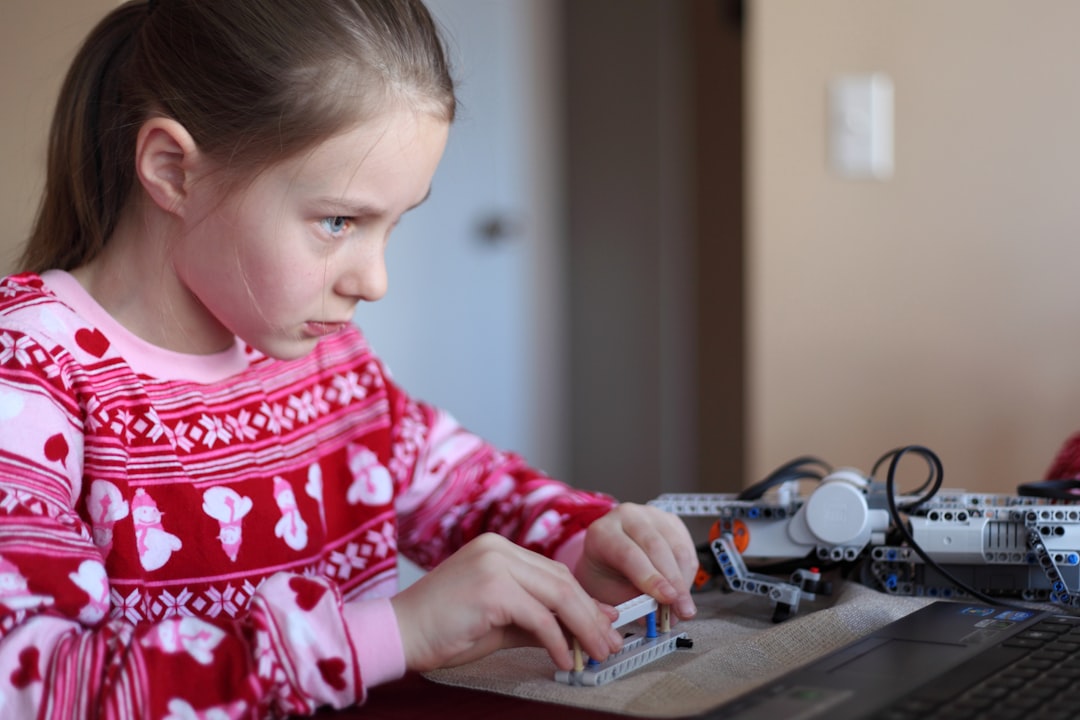
Picture the relative who wants to give a teenager something that means something, not another gift card or a hoodie they already own. They've heard "get them something STEM," so they're staring at robot cars, coding kits, and 3D printers, scared of spending $200 on a box that ends up under the bed by February. That fear is the problem this guide solves.
The best STEM gifts for teenagers aren't the most advanced kit. They're the one that matches what the teen already loves and a budget you're comfortable with. A coder, a builder, and a fly-a-drone teen each want a different box. So this hub sorts the picks by interest and budget for ages 13-18, and points you to our full reviews when you want more.
TL;DR
- Most giftable all-rounder: Makeblock mBot Ranger (~$75-120). Block coding that grows into real Arduino.
- Best under $50: BBC micro:bit V2 GO (~$16-70). Real coding, zero soldering.
- Best splurge: Sphero RVR+ (
$339) for robotics, or Creality Ender 3 V3 SE ($249-280) for makers.- Skip: LEGO Mindstorms, discontinued in 2022, app shuts off October 1, 2026.
How we evaluated: This is a research-based guide, not a hands-on lab test. We cross-checked manufacturer specs, published expert reviews, retailer listings, and verified-buyer feedback. Prices are USD as of June 2026 and shift with retailer, sales, and tariffs. Where no clean review aggregate exists, we say so.
How do you choose a STEM gift for a teenager?
You don't need to understand Arduino to buy well. Just answer three questions.
What does the teen actually love? This predicts whether the present gets used more than anything else. Builders want robotics. Coders want a micro:bit or Arduino starter. Makers want a 3D printer. A teen who'd rather fly than sit at a desk wants a programmable drone. Buy for the interest, not the buzzword.
How much have they coded? Match skill, not just age. A teen who has never written a line of code should start on a block-to-text ramp like the mBot Ranger or a micro:bit, not a bare Arduino board. One who has already done Scratch, Python, or a starter kit can jump to the deeper picks.
What's your budget, and is there room for it? These picks span about $25 to $437. Pick a tier first, then choose inside it. For a 3D printer, confirm there's space; its ~45×50cm footprint makes "we have no table for this" a real gift-day failure. If you can, ask the teen's parent or STEM teacher, who know the real skill level and the space at home.
If you already know your budget, start here, then read the matching section below.
| Budget | Best pick | Runner-up | Why it works |
|---|---|---|---|
| Under $50 | BBC micro:bit V2 GO (~$16-70) | Snap Circuits (~$25-35) | Real coding, no soldering, instant visual wins |
| $50-100 | Elegoo Smart Robot Car (~$45-55) | DJI Tello drone (~$99) | First autonomous robot, or hands-on flight plus coding |
| $100-200 | Makeblock mBot Ranger (~$75-120) | Creality Ender 3 V3 SE (on sale) | Modular robotics that grows from blocks to real code |
| $200+ | Creality Ender 3 V3 SE (~$249-280) | Sphero RVR+ (~$339) | A year of maker projects, or a premium expandable rover |
What's the best STEM gift under $50?
The BBC micro:bit V2 GO is the easiest real-programming present to give, at roughly $16-70 (the GO kit drops to about $16 on promotion; fuller bundles run $40-70). Best for ages 12+ and beginners.
It's a credit-card-sized board with a built-in speaker, microphone, touch sensor, LED matrix, accelerometer, and gyroscope, programmed in block-based MakeCode or Python on PC, Mac, or Chromebook. It needs zero soldering, gives instant visual and audio feedback, and carries deep classroom credibility, so a teen lands a working project the first afternoon, and it's cheap enough to buy without overthinking the budget.
Honest caveat: the built-in features are deliberately simple, so a teen who wants hands-on circuit-building or robotics will eventually want add-ons (like a Maqueen robot base) not in the basic bundle. For how the micro:bit sits next to a genuine Arduino, see our micro:bit vs Arduino starter kit comparison.
Which robots make good gifts in the $50-100 range?
Two picks split this tier by personality.
Elegoo Smart Robot Car V4 (~$45-55, an ELEGOO $20 coupon is often clippable; ages 13+; ASIN B07KPZ8RSZ). The Elegoo Smart Robot Car V4 is the cheapest way to put a genuine Arduino in a teen's hands. Built on an UNO R3 with a line-tracking module, ultrasonic sensor, and IR remote, it teaches sensor integration, obstacle avoidance, and autonomous movement in real C/C++, the same skill used in a college course. Honest caveat: it isn't plug-and-play. It expects some breadboard wiring and tutorials (not all included), so it suits a patient tinkerer, not a complete novice. Weighing it against a block-programming rival? Our Makeblock mBot Neo vs Elegoo UNO R3 starter breakdown covers that head-to-head.
DJI Ryze Tello (~$99; ages 13+; ASIN B078XV32CJ). For the teen who'd rather fly than sit still, the DJI Ryze Tello is the gateway. It's an 80g drone with a 720p camera, around 13 minutes of flight time, and 8D stunts, programmable in Scratch, the same block language a micro:bit uses. Flying is instantly fun, so the coding lessons land with a payoff most desk-bound kits can't match, and the small size is safe enough indoors. Honest caveat: that ~13-minute battery means you'll want spares, and props break (a set runs about $10), so budget another $30-50 over time. Skip it for indoor-only spaces with no room to fly. For the fuller field of teen drones, including sub-250g camera options like the DJI Neo and the FAA rules that actually apply to a 13-year-old pilot, see our best drones for teenagers guide.
Is the Makeblock mBot Ranger the most giftable robot?
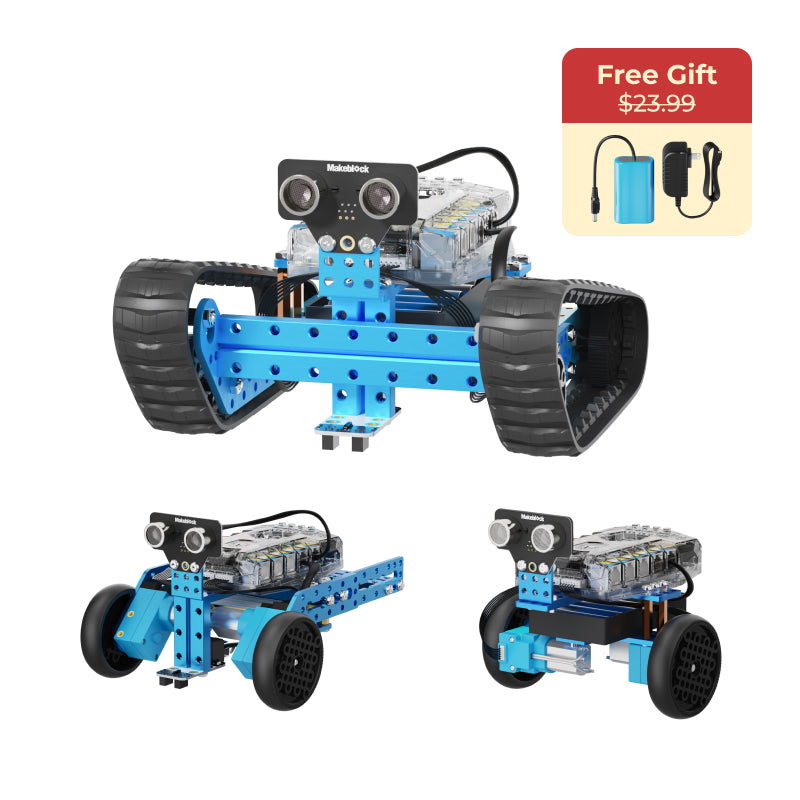
The Makeblock mBot Ranger is our top overall pick, earning a 4.5/5 as the most giftable all-rounder. It runs roughly $75-120 and suits ages 13+, beginner to intermediate (ASIN B01DY3OTHO).
It's a 3-in-1 transformable robot (a land raider, a dashing raptor, and a self-balancing build) on a durable aluminium frame rather than the plastic of cheaper kits. The metal chassis survives a teen's handling, and the programming ramps from Scratch-based mBlock up to genuine Arduino C, so it grows with their skill instead of being outgrown in months. It can also be driven from an iPhone or iPad app.
Honest caveat: owners call it "pretty pricey compared to generic Arduino robots with similar function," and a few report occasional sensor-connector issues. It's a premium choice, so budget-tight buyers may prefer the Elegoo car or a micro:bit. For how it stacks up against rivals, see our best robotics kits for teenagers (13+) guide. Robotics isn't gender-coded either; our best coding toys for girls roundup covers the same skills for younger learners.
What's the best STEM splurge over $200?
Past $200, the choice comes down to what they want to make: physical objects, or a robot that grows forever, plus a serious engineering option for college-track teens.
Creality Ender 3 V3 SE (~$249-280; ages 14+; ASIN B0DD7F2BH9). For the teen who loves making physical objects, the Creality Ender 3 V3 SE unlocks a year of projects. It has a 220×220×250mm build volume, 250mm/s max speed, auto-leveling (CR Touch), auto-load filament, and a direct extruder supporting PLA, PETG, and TPU. Auto-leveling removes the biggest beginner frustration (Z-offset tuning), assembly takes roughly 30-40 minutes rather than days, and multiple 2026 reviews rate it the top budget 3D printer for beginners. Honest caveat: filament isn't included, bed adhesion has a learning curve, and the ~45×50cm footprint needs real desk space, so confirm there's room first. For the full field, read our best 3D printers for teen beginners 2026 guide.
Sphero RVR+ (~$339; ages 15+; ASIN B0BLF8CLQF). The Sphero RVR+ is the premium, grow-forever choice. It's an all-terrain rover with an improved color sensor, an enhanced gearbox, and light, IR, accelerometer, and gyroscope sensors. It runs the free Sphero Edu app (block-based) and steps up to a Python SDK, with expansion headers for micro:bit, Raspberry Pi, and Arduino, so a teen who goes deep won't run out of room. Reviewers praise its fit, finish, and out-of-the-box ease. Honest caveat: it's expensive and leans feature-rich rather than beginner-friendly, so it fits a teen who already has some programming interest; budget and coding-averse buyers should choose the mBot Ranger. If they specifically want an AI personality robot, read our take on Cozmo and Vector in 2026 first, since that's a different category.
Arduino Engineering Kit Rev2 (~$437; ages 15+; ASIN B08PCDH7KK). The Arduino Engineering Kit Rev2 is the most academically serious option, a mechatronics lab with a self-balancing bot, a motorized arm, and a temperature-controlled fan across eight guided projects, integrated with MATLAB and Simulink (one-year free license). It bridges hobby coding to engineering fundamentals and teaches professional tools, so it's a genuine college-prep choice. Read this before buying, though: owners report real software pain. Two-plus reviewers call the $300+ kit effectively unusable due to MATLAB connectivity failures, slow runtime, and no Arduino IDE option. Choose it only for a patient, software-comfortable 15+ teen on an engineering track.
Which STEM gift should you skip?
LEGO Mindstorms Robot Inventor, do not buy this. It was discontinued on December 31, 2022, and the Mindstorms app is scheduled to shut down on October 1, 2026, so a set bought today loses official support within its first year of use. Secondary-market sellers now charge two to three times the original price thanks to collector demand, so you'd overpay for a winding-down ecosystem, and LEGO's newer education hardware isn't compatible. Better alternative: for actively-supported, expandable robotics, choose the Sphero RVR+ ($339) or the Makeblock mBot Ranger ($75-120).
One more trap worth naming: the Arduino Engineering Kit Rev2 is real, but its MATLAB dependency makes it the easiest expensive present to get wrong, so buy it only for a teen who genuinely wants the engineering path and can tolerate the setup. For most teens, the money goes further on an mBot Ranger plus a separate starter kit.
So which STEM gift should you buy?
Bottom line: For most teens, the Makeblock mBot Ranger (4.5/5) is the most giftable STEM present of 2026: durable, transformable, and it grows from block coding to real Arduino.
By need:
- Best overall: Makeblock mBot Ranger (~$75-120). The all-rounder that survives handling and grows with skill.
- Best budget: BBC micro:bit V2 GO (~$16-70). Real coding, no soldering, instant wins, the safest sub-$50 pick.
- Best splurge: Sphero RVR+ (
$339) for a robotics-deep teen, or the Creality Ender 3 V3 SE ($249-280) for a maker.
The instinct that brought you here, wanting a teen to use what you give them, is the right one. Buy for the interest they already have and the budget you're comfortable with, skip any platform that won't be alive next year, and it won't gather dust. To go deeper on one path, follow its linked guide above.