Electronics kits · Ages 4-14
Audible for Kids: Is It Worth It, and How Do You Set It Up Safely? (2026)
Learn how Audible works for kids, set up a Kids Profile, choose listening devices by age, understand access after cancellation, and find award picks.
Published Sep 29, 2026 · 9 min read
As an Amazon Associate, I earn from qualifying purchases. Your price stays the same.
TL;DR
- Audiobooks can support comprehension and vocabulary, but younger children benefit most when an adult listens or reads along.
- An Audible Kids Profile limits children to titles you share, while a dedicated player may suit ages 3–6 better than a phone.
- The lowest-risk test is to start an Audible free trial (affiliate link) before choosing a long-term setup.
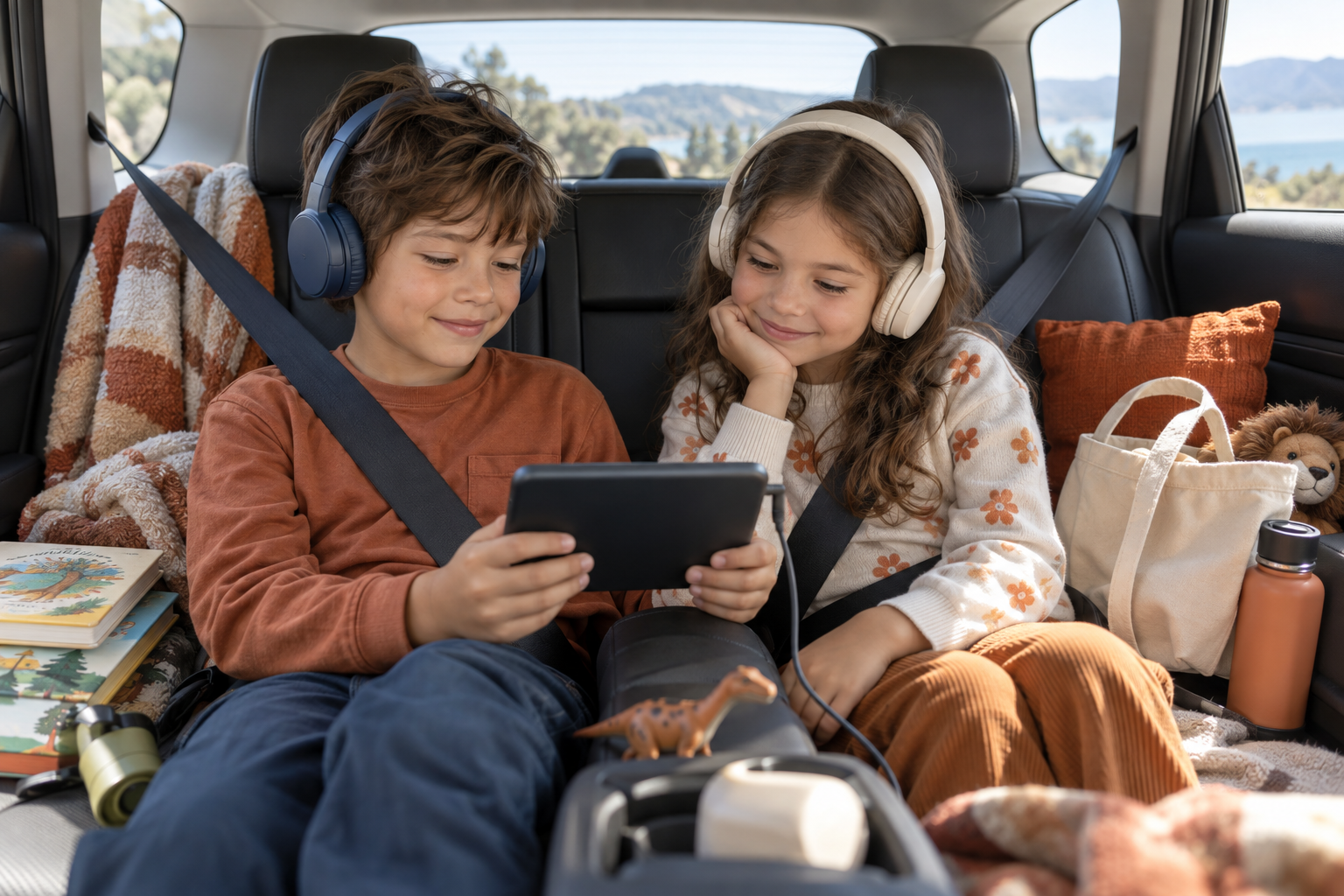
A long car ride can turn an audiobook into family entertainment, while a bedtime story can buy everyone a quieter landing. The real decision is whether your child needs a shared listening habit, an independent device or access to a large audiobook library.
How we evaluated: this guide is built from Audible's own help pages and plan page, the American Academy of Pediatrics' review of audiobook research, National Literacy Trust surveys and the American Library Association's Odyssey Award, not from hands-on testing.
Are audiobooks actually good for kids?
Yes, audiobooks can support language and reading comprehension. They work best as part of a broader reading habit, especially when parents ask questions or pair the audio with a printed book.
The American Academy of Pediatrics' review found encouraging evidence for older children. Audiobooks may support comprehension in kindergarten through sixth grade and offer a positive, screen-free activity.
But pressing play is not the whole job.
In one study summarized by the AAP, pre-readers ages 4–5 understood narrated e-books better than versions without narration. They did best when a parent read with them. Third- and fourth-graders also learned more new words when audiobook listening included periodic one-on-one check-ins, compared with listening alone.
Try questions that do not feel like a quiz:
- Before listening: “What do you think will happen next?”
- During a pause: “Why did that character do that?”
- Afterward: “Which part would you tell someone else about?”
Listening is popular for reasons beyond schoolwork. In a 2024 National Literacy Trust survey, 42.3% of respondents ages 8–18 said they enjoyed audio, up from 39.4% in 2023. Another 37.5% said listening sparked an interest in physical books.
The Trust also reported that 46.5% said audio helped them learn new words or new things. Meanwhile, 58.4% listened to relax, and 63.2% of parents said listening together strengthened their bond.
Those figures come from UK research, so they are useful indicators rather than a guarantee for every US child. The Trust's 2026 Annual Literacy Survey included 110,114 people ages 8–18.
What does an Audible membership give a family?
Audible Standard is the simpler option: you choose one audiobook each month and retain access while subscribed. Premium adds credits and the Plus Catalog, a selection of audiobooks, Originals and podcasts you can keep listening to while you are a member and the title stays in the catalog.
Here is the practical difference.
| What you get | Standard | Premium |
|---|---|---|
| Each month | One audiobook pick | Credits to spend on titles |
| Plus Catalog | No | Yes |
| Titles bought with cash or credits | Yours to keep | Yours to keep |
| Included titles after canceling | Monthly picks locked (back if you rejoin) | Plus Catalog titles locked |
| Free trial | 30 days | 30 days |
Standard's monthly selections do not roll over. If you cancel, those selections become unavailable, although access returns if you rejoin. Titles purchased separately with cash or credits remain in your library after cancellation, while Premium's included Plus Catalog titles do not. These terms appear on the Audible membership listing.
Both options currently show a 30-day free trial. Check the current price on the sign-up page rather than assuming the cost has stayed the same.
A limited-time Prime-member introductory offer for Audible Standard ends October 7, 2026, at 11:59 p.m. PT. The regular 30-day trial is the other way to test it. You can see Audible's current plans before deciding.
Bottom line: Start with Standard if your family wants one planned book each month; consider Premium if you expect to use its included catalog and purchase books with credits.
How do you set up a Kids Profile?
Create the profile in Audible's iOS app, Android app or website, then share only the children's titles you approve. Returning to the adult profile requires the Amazon email address and password.
- Open Audible on a supported platform. Kids Profile is available through the Audible app on iOS and Android and through Audible's website.
- Create or select the Kids Profile. An Audible account supports one Kids Profile.
- Choose the child's books. You can share eligible children's titles bought with cash or credits, plus eligible kids' titles included with the membership.
- Add as many eligible titles as needed. Audible says there is no limit on the number of titles shared to the Kids Profile.
- Switch into the Kids Profile before handing over the device. The child will see only the titles you selected.
- Protect the adult profile. Switching back requires your Amazon email address and password. Do not leave cached adult login credentials on the child's device.
These controls and platform rules come from Audible's Kids Profile help page.
A few limits matter:
- One profile: Each Audible account gets one Kids Profile, rather than a separate profile for every child.
- Children's titles only: Audible permits only eligible kids' books to be shared into that profile.
- Manual position reset: You must reset the listening position when moving between devices.
- Different setup on Amazon hardware: Fire tablets, Kindle devices and Echo speakers use a Child account in Amazon Family instead.
- Possible automatic switching: In certain US states, the app may default to Kids Profile when the app-store account belongs to someone under 18.
Several children can use the same Kids Profile on different devices without interrupting one another's progress, according to Audible. The single-profile design may still feel cramped if siblings have very different interests.
Phone, tablet, Echo or car: where should kids listen?
Use a phone or tablet for offline car listening, and use an Echo for hands-free listening at home. The right device is the one that keeps your child away from the adult account.
For car rides: Download the audiobook before leaving Wi-Fi. Audible says downloaded titles can be played offline, making this the dependable option for routes with weak cellular service.
For phones and tablets: Use the Kids Profile and share only approved titles. On Fire tablets and Kindle devices, create a Child account through Amazon Family rather than relying on Audible's standard Kids Profile.
For an Echo: Audible works on Alexa-enabled devices connected to the same Amazon account. Audible's Alexa instructions include these commands:
- “Alexa, read my book” resumes the current title.
- “Alexa, stop reading in 12 minutes” starts a sleep timer.
- “Alexa, read me a story” opens Audible Stories.
- “Alexa, switch profiles” changes to another Amazon Family library.
An Echo avoids handing over a phone at bedtime. It does not remove the need to configure the Amazon account and family profiles first.
For quiet time that does not involve audio, STEM subscription boxes are another screen-free option for older children.
Audible or a Toniebox/Yoto: which fits which age?
Choose a dedicated player for a young child who cannot independently manage a phone. Choose Audible when an older child can handle longer books and your family already listens through phones, tablets, a car system or Echo.
The AAP says dedicated players such as Toniebox and Yoto have not been studied in younger children. It also says they can provide a positive independent activity. That distinction matters: convenient does not automatically mean developmentally proven.
| If your child is… | Better starting point | Why |
|---|---|---|
| 3–5 and cannot work a phone | Dedicated player | More independent operation |
| 6–9 and often rides in the car | Audible | Offline phone or tablet playback |
| 10–14 and wants longer books | Audible | Broader library access |
| Sharing with siblings | Depends | One Kids Profile, multiple devices |
| In a family that uses Echo | Audible | Hands-free Alexa listening |
The youngest listeners still benefit from adult involvement. The AAP's guidance says narration is not a perfect replacement for reading together, particularly for pre-readers.
A dedicated player runs on its own content system, figurines for Toniebox and cards for Yoto, but it keeps the phone out of the child's hands. Read our Toniebox vs Yoto vs Storypod comparison if that independence is your main goal.
Bottom line: Audible is our pick for ages 6–14 and families already using phones, tablets or Echo; a dedicated player is the cleaner choice for many children ages 3–5.
How do you pick good kids' audiobooks without guessing?
Start with recognized audiobook production awards, then match the book's length and storytelling style to your child's attention span. A skilled narrator or full cast can make a complicated story easier to follow.
The American Library Association's Odyssey Award is a useful filter. It recognizes audiobook production for children ages 0–14 and young adults ages 12–18, rather than judging only the printed book.
The 2026 children's winner was Clack, Clack! Smack! A Cherokee Stickball Story. It is a read-along narrated by the author and a full cast. The 2026 honor list also included the full-cast production Soundtrack by Jason Reynolds.
Use award lists as a starting point, not a command. A younger child may prefer a familiar story heard repeatedly. An older child may care more about subject matter, series continuity or a narrator they already enjoy.
Before purchasing every title, ask your local library what digital audiobook borrowing it offers. Library access can complement Audible, especially while you learn which narrators and genres hold your child's attention.
What are the catches?
Audible works well for family listening, but its account rules create friction. The biggest drawbacks are device dependence, expiring membership access and a Kids Profile that is shared across the family.
- It still needs connected hardware. Listening usually runs through a phone, tablet, computer or Echo, although downloads work offline.
- Standard picks do not roll over. If you skip a monthly selection, you cannot bank it for later.
- Some content disappears after cancellation. Standard selections become unavailable, and Premium members lose Plus Catalog access. Cash and credit purchases remain.
- Amazon Family has sharing limits. Purchased Audible titles can be shared with one adult and up to four children. Premium credits and included-catalog titles cannot be shared through Amazon Family, according to Audible's Family Library guidance.
- Switching devices takes an extra step. Audible says the listening position must be reset when changing devices within Kids Profile.
- The profile is not separate for every sibling. One account supports one Kids Profile, though several children can use it across multiple devices.
- The trial becomes a paid membership. Set a calendar reminder before the trial ends if you have not decided whether to continue.
The adult login deserves particular attention. Audible advises against leaving cached credentials on the child's device because those credentials are needed to return to the adult profile.
FAQ
What is the minimum age for Audible?
Audible's cited Kids Profile guidance does not give one universal minimum listening age. For ages 4–5, the AAP evidence supports listening with a parent rather than treating narration as a substitute for shared reading.
Can siblings share one Kids Profile?
Yes. Audible says several children can use the single Kids Profile across several devices without interrupting one another's progress. However, you must reset the listening position when switching devices, and all siblings share the same pool of approved titles.
Does Audible work offline in the car?
Yes. Download the title to a phone or tablet before the trip, then play it without a live connection. Confirm that the entire book has downloaded before leaving home.
What happens after the trial?
The membership continues unless you cancel, so set a reminder before the trial ends. After cancellation, titles bought with cash or credits remain, while Standard monthly selections and Premium Plus Catalog access become unavailable under the applicable plan rules.
For families with children ages 6–14, Audible is worth trying if you already have a suitable device and will listen regularly. Start with the Audible free trial, choose one strong family title and see whether the habit sticks. For a preschooler who needs independent controls without access to a phone, buy a dedicated kids' audio player instead.
Shopping for a gift? Start here
- Best LEGO Botanicals Sets for Adult Builders and Gift-Givers (2026)
- LEGO Botanicals Bonsai Tree vs LEGO Botanicals Orchid: Which Is Better for Adult Builders and Gift Buyers?
- Holiday Gift Guide 2026: The Best Toys by Age and Budget, From Preschool to Grown-Ups
- Gifts for Grown-Ups Who Still Love Toys: LEGO, Board Games and Puzzles (2026)
How we research: This guide is based on manufacturer specifications, published independent reviews, and verified-buyer feedback, not hands-on testing.
Holiday gift guide drops every Friday in Q4
One email a week with the newest review and the toys our community is actually buying. No spam, unsubscribe anytime.