robotics · ages 6-11
Wonder Workshop Dash vs Cue (2026): Which Coding Robot Should You Actually Buy for Your Kid?
One of these robots you can still buy; the other was quietly discontinued and now sells for double on the secondary market.
Published 2026-06-04 · 9 min read
Amazon Associates disclosure
As an Amazon Associate, I earn from qualifying purchases. The price you pay is the same. This guide is based on manufacturer specifications, published independent reviews, and verified-buyer feedback, not hands-on testing.
TL;DR
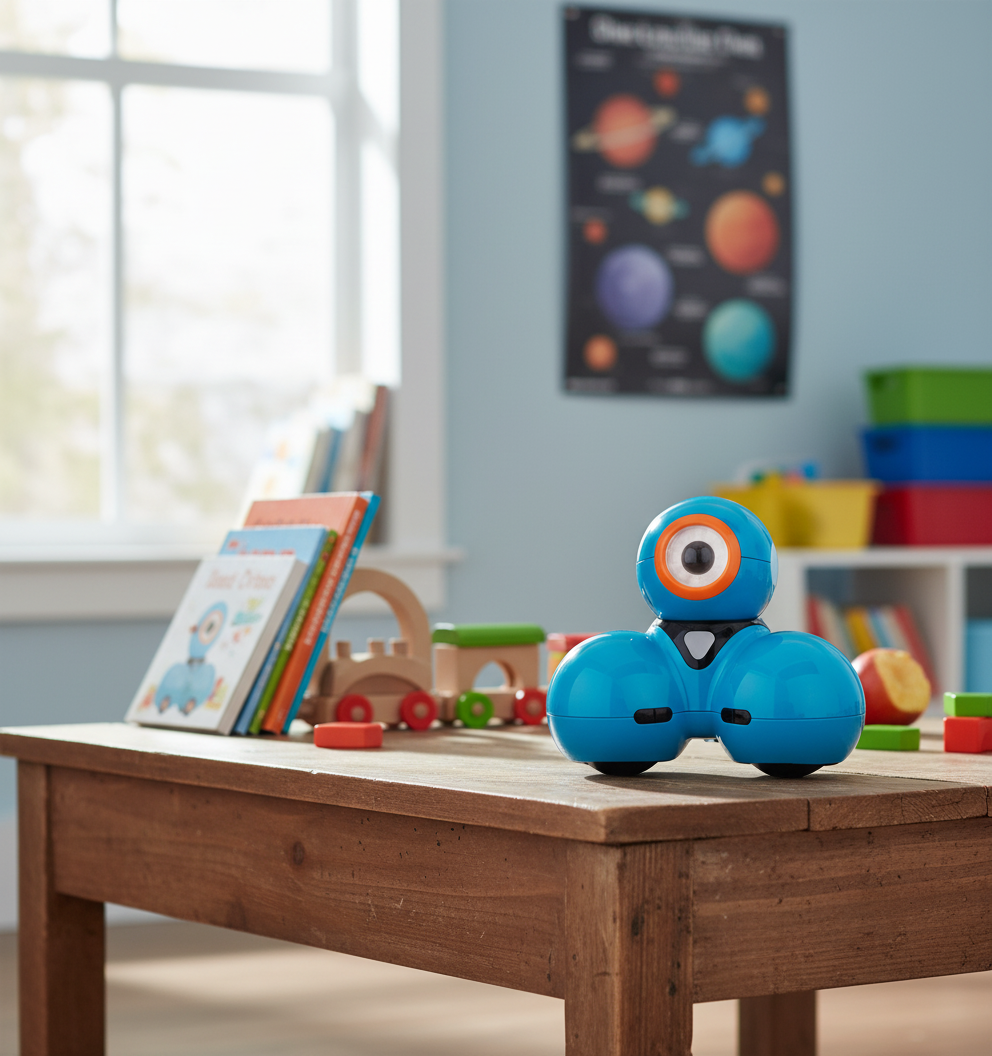
- The Wonder Workshop Dash (~$189.99, ages 6-11) is the one to buy. It codes with playful visual blocks and voice across several free apps, it's still sold new at a normal price, and it's used in 40,000+ schools.
- The Wonder Workshop Cue (was ~$199.99, ages 11+) is discontinued. It added a JavaScript text-coding bridge and a chatty personality, but production ended, so it now sells secondhand for roughly double — with uncertain long-term support.
- This comparison has a clear winner: Dash, because you can actually buy it and it stays supported. If you need the older-kid text-coding path Cue used to fill, buy a robot that's still made instead.
As an Amazon Associate I earn from qualifying purchases made through links in this review. It doesn't change the price you pay. This comparison is based on manufacturer specifications and published expert reviews, not personal hands-on testing.
Search "Dash vs Cue" and you'll find a hundred spec-sheet comparisons that treat them like two live products on a shelf. They aren't. One of these robots is still made and supported; the other was quietly retired by Wonder Workshop and now only turns up on the resale market at an inflated price. That single fact reshapes the whole decision, so I'm putting it up front instead of burying it under a feature table.
What do you actually get in the box?
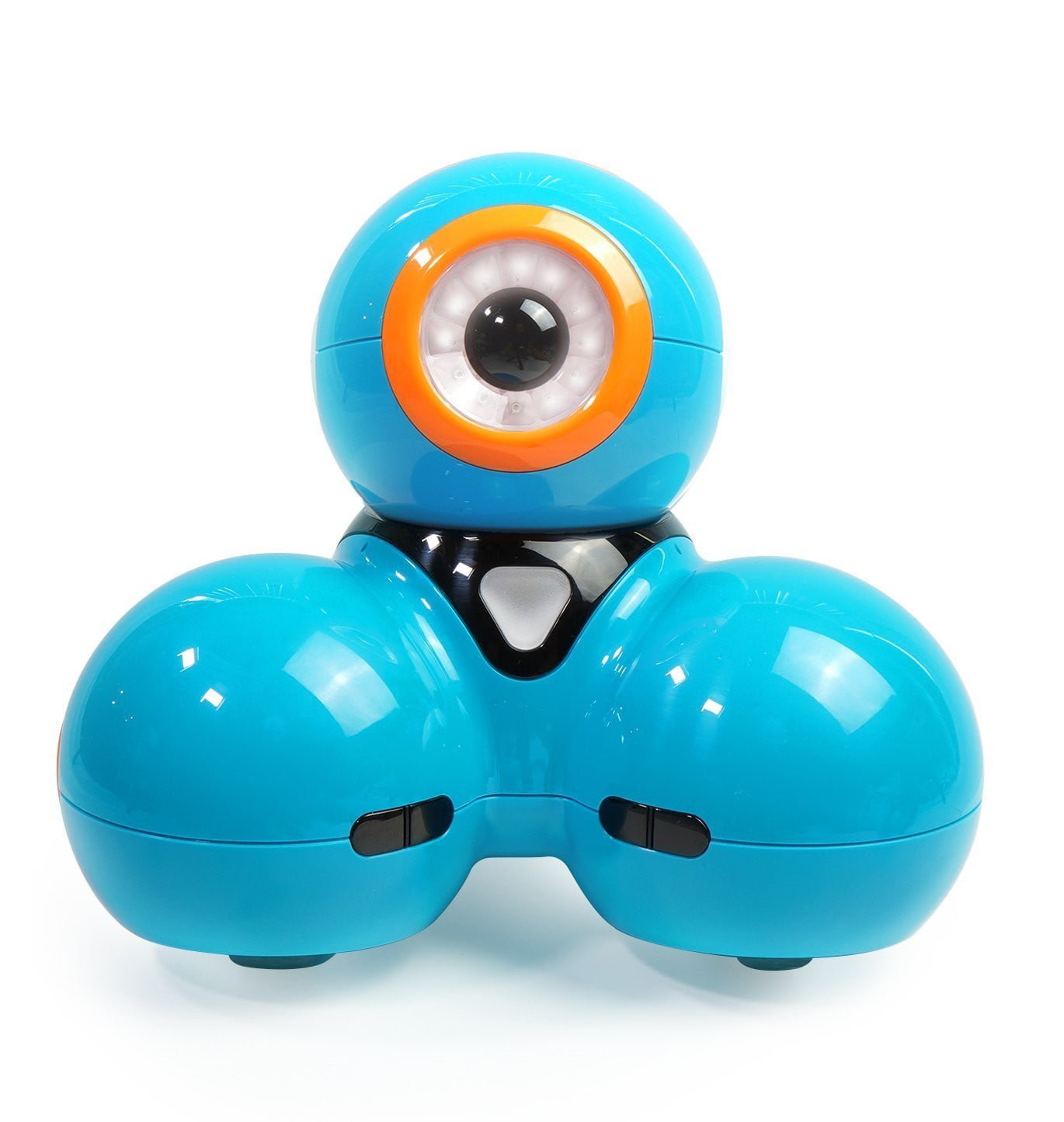
The Dash is a ready-to-roll robot the moment you charge it. It ships as the Dash robot plus a USB charging cable and two brick connectors (for attaching LEGO builds). Inside are a rechargeable Li-ion battery that delivers roughly 3 hours of active play on a 60-90 minute charge, an infrared "eye," and sound and proximity sensors. There's no assembly — it drives, lights up, makes noise, and reacts out of the box (Wonder Workshop support).
The Cue ships similarly — the Cue robot, a USB cable, two brick connectors, and a sheet of stickers — but it's a more sensor-rich machine under the shell: three proximity sensors, three microphones, a speaker, and an accelerometer/gyroscope, all coordinated by three onboard processors doing sensor fusion. That extra hardware is what powered its "personality," but as you'll see below, none of it matters much if you can't buy the robot at a sane price.
That single difference — playful starter vs sensor-heavy older-kid robot — drives everything else, including the awkward reality that only one of them is still on sale.
Which one teaches coding more gently?
For a younger child, the Dash has the gentler on-ramp by design. It's programmed through a family of free visual-block apps — Blockly, the Wonder app, plus Path, Go, and Xylo — and every one of them is drag-and-drop. There's no text to mistype, which is exactly why Dash is rated for ages 6 and up and why Tom's Hardware and Common Sense Media both treat it as a friendly first robot for early-elementary kids.
The Cue was built for the next step up. It still supports Blockly visual blocks, but it adds a real JavaScript bridge through Microsoft MakeCode — the block-to-text editor that lets a kid see their visual program rewritten as actual JavaScript and then start typing code themselves. That's a genuine on-ramp from blocks to a real language, and it's why Cue is labeled 11+ (Little Robot Shop comparison).
So the coding question maps almost perfectly onto age. A 6-to-10-year-old gets quick, frustration-free wins on Dash's blocks. An 11+ kid who's outgrown blocks gets a path toward typed code on Cue. The problem is that the second kid's robot is the one you can't readily buy.
Is Cue's chat personality worth chasing?
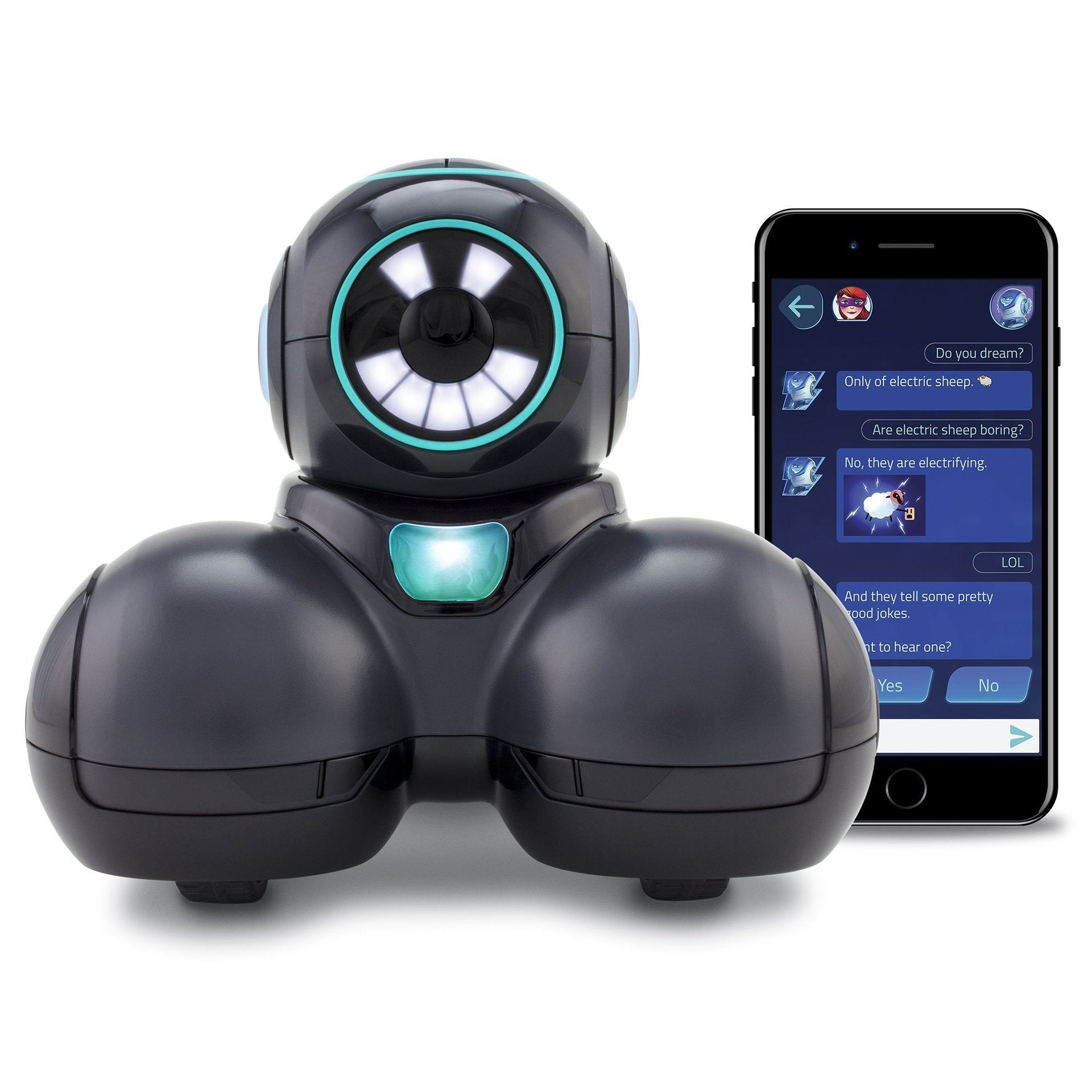
This is Cue's signature feature, so it's worth being honest about it. Cue ships with an AI-style "personality": more than 30,000 conversational responses and four customizable avatars (with names like Charge, Zest, Pep, and Smirk), each with its own attitude. Kids can chat with it through the app, and it talks back with jokes and reactions. On paper it's charming, and it's the thing Cue fans miss most.
But two cautions. First, it's a scripted-response personality, not a true open-ended AI — the novelty can fade. Second, and more important, all of it lives behind an app on a robot that's no longer manufactured. A personality that depends on ongoing app support is exactly the kind of feature that gets riskier as a product ages out of production. Charming, yes. A reason to overpay for a discontinued robot, no.
The discontinuation reality (read this before you buy Cue)
Here's the part most comparisons skip. Wonder Workshop discontinued the Cue robot — production ended around 2025 — so there are no new units coming. What's left is the secondary market, and prices there have climbed well above the old retail tag. Cue's original MSRP was about $199.99; resale listings have been seen around $438, roughly double.
Paying double would be one thing if the robot were future-proof. It isn't. With production ended, long-term firmware and app support is uncertain — a discontinued connected toy can lose its software lifeline whenever the maker decides to stop updating it. You'd be spending more than MSRP on a product with a shorter, unknown remaining life. That's the opposite of a smart STEM investment.
The honest takeaway: don't buy Cue new (you can't), and think hard before buying it used at inflated prices. If the older-kid text-coding capability is what you're after, there are robots that are still made and still supported — more on that in the recommended pick.
Dash vs Cue at a glance
| Feature | Dash | Cue |
|---|---|---|
| Status | Still sold new | Discontinued (secondary market only) |
| Typical price | ~$189.99 (MSRP) | Was ~$199.99 MSRP; ~$438 resale seen |
| Age label | 6-11 | 11+ |
| Coding entry | Visual blocks only (Blockly, Wonder, Path, Go, Xylo) | Blockly and JavaScript (MakeCode block→text bridge) |
| Personality | Playful, voice + sound | 30,000+ chat responses, 4 AI avatars |
| Sensors | IR eye + sound + proximity | 3 proximity, 3 mics, speaker, accelerometer/gyro |
| Processors | Single | 3 (sensor fusion) |
| Battery | Li-ion, ~3 hr play / 60-90 min charge | Rechargeable |
| Camera | None (privacy plus) | None (privacy plus) |
| Needs a tablet/phone | Yes (no screen-free mode) | Yes (no screen-free mode) |
| In box | Robot, USB cable, 2 brick connectors | Robot, USB, 2 connectors, stickers |
| Recognition | 40,000+ schools; Creative Child Toy of the Year 2017 | — |
Prices are approximate as of June 2026 and move with sales. Dash is sold direct and through retailers; Cue is no longer manufactured, so any listing is third-party resale.
Safety and screen-time check
Both robots earn a clean, honest report. Neither Dash nor Cue has a camera, which removes a common privacy worry with connected kids' toys. Both do contain small parts — the brick connectors and accessories — which the CPSC treats as a choking hazard for children under 3, so keep either robot away from toddlers (CPSC small-parts guidance). Respect the age labels: Dash is 6+, Cue is 11+.
One more honest note on screens. Neither robot has a fully screen-free coding mode — both are driven entirely through companion apps on a tablet or phone. That's worth knowing if you were hoping to dodge device time. The upside is that this is active screen time: your kid is building programs and watching a physical robot respond, not passively scrolling. It's closer to a coding workbench than to entertainment, but a device is part of the deal either way.
Recommended pick
For almost everyone, the answer is the Wonder Workshop Dash. It's the buyable, still-supported robot, it's pitched perfectly at ages 6-11, its visual-block apps make a first coding experience genuinely fun, and it has a long track record in 40,000+ schools plus a Creative Child Toy of the Year award. For a young kid getting into coding, it's the clear pick — and the one your money is safe on.
What about the older kid who wanted Cue's text-coding bridge? Don't overpay for a discontinued robot to get there. A robot that's still made and supported is the smarter route into block-to-text coding — our Sphero BOLT+ review covers a currently-sold option that takes an older child from visual blocks into real JavaScript without the resale-price gamble or the unsupported-firmware risk that comes with Cue.
And if your kid is leaning more toward building and circuits than toward a personality robot, a hands-on maker kit may fit better than either Wonder Workshop bot — see our Makeblock mBot Neo vs Elegoo UNO R3 starter guide for the build-it-yourself path.
One more practical note: if you're timing this purchase around a holiday sale, our Black Friday smart toy deals guide explains how to tell a real November markdown from an inflated one before you click buy.
Bottom line: Dash is the robot you can buy with confidence today. Cue was lovely, but "discontinued and double the price" isn't a recommendation — it's a warning, and an honest guide owes you that warning up front.