stem-kits · ages 5-14
KiwiCo vs MEL Science vs Little Passports (2026): Qual Caixa de Assinatura STEM é Certa para a Idade do Seu Filho?
Três das caixas de assinatura STEM para crianças mais recomendadas abrangem idades 5-14 com apostas bem diferentes — STEAM amplo, química/física aprofundada ou ciência com narrativa. Este comparativo baseado em pesquisa as classifica por adequação de faixa etária, faixa de preço mensal, orçamento de tela e o que acontece quando uma caixa decepciona. Segurança e tempo de tela verificados com base nas diretrizes da CPSC e AAP.
Publicado em 2026-06-01 · 9 min de leitura
Disclosures
Affiliate links + safety guidance. Informational only — see CPSC and AAP for authoritative kids product safety standards.
Resumo Rápido
- Para a maioria das crianças de 5 a 8 anos, comece com o KiwiCo Kiwi Crate (~US$24/mês, quase sem tela): STEAM prático amplo, os projetos mais bem elaborados e a assinatura inicial com menor risco de arrependimento nessa faixa etária.
- Quer ciência com narrativa que conquiste uma criança resistente? O Little Passports Science Junior (~US$25-32/mês, sem tela, 5-8 anos) combina cada experimento com um gibi — forte para quem aprende por narrativa, mais leve em rigor.
- Quer ciência aprofundada em uma única disciplina para um filho mais velho? A MEL Science (a partir de ~US$29,90/mês) vai mais fundo — STEM (5+), Física (8+), Química (10+) — mas adiciona o mais tempo de tela opcional via seu app/RV. Trate qualquer uma das três como um "meu filho gosta disso?" antes de se comprometer com um plano anual.
Escolher uma assinatura STEM é uma aposta em atenção, nível de leitura, orçamento de tela e — diferente de um brinquedo único — uma cobrança recorrente que você tem que lembrar de cancelar. Este guia baseado em pesquisa compara três das caixas de ciência mais recomendadas para crianças na faixa de 5 a 14 anos pelo que cada uma realmente ensina, quanto tempo de tela adiciona e o que acontece quando uma caixa decepciona — compilado a partir de especificações dos fornecedores, avaliações de especialistas e padrões de segurança publicados, não da mesa de uma única família. Segurança e tempo de tela são verificados com base na CPSC e na AAP.
Como Associado Amazon, ganho com compras qualificadas feitas por meio de links de produtos nesta avaliação. As caixas de assinatura são vinculadas pelo programa de afiliados de cada fornecedor, não pela Amazon. Isso não afeta o preço que você paga.
Como essas três assinaturas foram selecionadas?
A lista final manteve apenas assinaturas feitas para crianças na faixa de 5-14 anos, com um catálogo de múltiplas linhas para crescer com a criança, e uma abordagem distinta para que as três não se sobreponham. KiwiCo, MEL Science e Little Passports são as três que aparecem de forma mais consistente em listas comparativas para essa categoria.
As linhas em que este guia se concentra: KiwiCo Kiwi Crate (idades 5-8, STEAM amplo prático), MEL Science (STEM 5+, Física 8+, Química 10+, ciência aprofundada em disciplina única) e Little Passports Science Junior (idades 5-8, ciência com narrativa). A faixa de 5-14 vem das linhas mais velhas de cada marca também — o Tinker Crate vai de 9-16, a MEL Chemistry chega à adolescência, e o Little Passports World Edition é 6-10.
Nenhuma das três tem um ASIN da Amazon — são assinaturas diretas dos fornecedores, então cada link aponta para o programa de afiliados do próprio fornecedor.
Este é um guia de síntese: os veredictos abaixo vêm de especificações publicadas dos fornecedores, avaliações de especialistas e normas de segurança, e não da cozinha de uma única família. Quando uma afirmação é sobre valor de aprendizado, adequação de faixa etária ou segurança, ela é citada com uma fonte nomeada para que você possa verificar por conta própria.
Qual assinatura é certa para qual faixa etária — e qual linha?
O erro mais comum aqui é assinar a linha errada da marca certa. Aqui estão as três lado a lado, focando em suas linhas de ciência de entrada mais a linha mais velha que cada uma oferece.
| Caixa (linha) | Linha etária | Faixa de preço (mensal) | Foco de conteúdo | Sem tela? | Envolvimento dos pais | Cancelamento a qualquer momento? | O que ensina |
|---|---|---|---|---|---|---|---|
| KiwiCo Kiwi Crate | 5-8 (Tinker Crate 9-16) | ~US$24/mês (menos no anual) | STEAM prático amplo | Quase — a montagem principal não precisa de dispositivo | Médio (alguns cortes) | Sim (per KiwiCo) | Ciência aplicada + engenharia + arte, um projeto/mês |
| MEL Science | STEM 5+ / Física 8+ / Química 10+ | a partir de ~US$29,90/mês | Ciência aprofundada em disciplina única (química/física) | Não — empurra vídeos em app + RV | Médio-alto (reagentes de verdade) | Planos anuais pagam um ano adiantado | Conceitos reais de química/física, 2-3 experimentos/caixa |
| Little Passports Science Junior | 5-8 (World Edition 6-10) | ~US$25-32/mês (menos no anual) | Ciência com narrativa + geografia | Sim — sem tela por design | Médio (alguns cortes) | Sim (per Little Passports) | Ciência por narrativa + gibi, um tema/mês |
Alguns pontos se destacam só pelas especificações. O KiwiCo e o Little Passports ancoram suas linhas de ciência de entrada em idades 5-8 e permanecem essencialmente sem tela; a MEL Science é a única que empurra um app e RV como parte da experiência e a única que escala para química genuinamente aprofundada para um filho mais velho. A MEL também é a mais cara por mês. Todas as três são consumíveis — você recebe um novo projeto a cada mês, não um kit reutilizável. Em termos de orçamento de tela e preço de entrada, as linhas sem tela e mais baratas do KiwiCo e do Little Passports são o compromisso inicial mais suave nessa faixa etária.
KiwiCo ou Little Passports para uma criança de 5 a 8 anos?
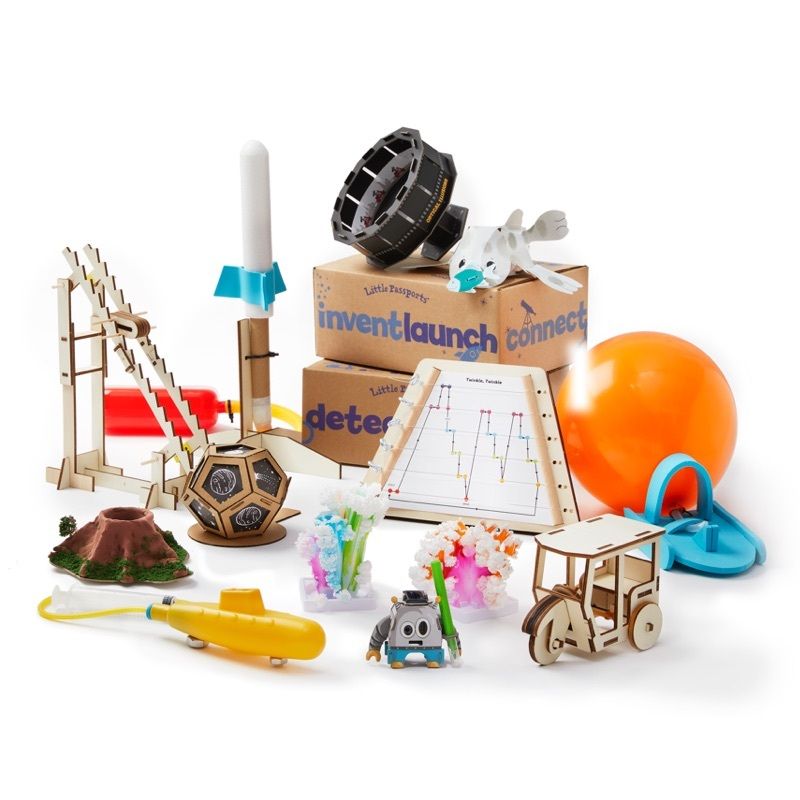
Ambas têm como alvo idades 5-8, ambas são quase sem tela e ambas enviam um projeto prático por mês com todos os materiais incluídos. A divisão está em como ensinam.
O Kiwi Crate aposta em engenharia e montagem: cada crate é um projeto STEAM autossuficiente (uma montagem, um mecanismo, um pouco de arte) com uma revista Explore que explica a ciência. É o mais bem elaborado das três em termos de materiais e instruções, e a marca que a maioria das listas trata como referência da categoria. A cerca de US$24/mês — mais barato em planos de 6 e 12 meses — também é a linha de entrada mais barata aqui.
O Science Junior aposta na narrativa: cada mês é um tema (vulcões, fundo do mar, foguetes) entregue como um experimento prático combinado com um gibi de aventura, mais cadernos de atividades, adesivos e cartões colecionáveis. Esse envoltório de história é o diferencial — a caixa mais provável de conquistar uma criança que resiste a "fazer ciência", mas ama uma boa história. O trade-off é uma ciência mais leve e temática do que o rigor prático do crate.
Sendo honesto: para o STEAM prático mais rigoroso nessa faixa etária, o Kiwi Crate ganha em profundidade de materiais e instruções. Para uma criança relutante ou que aprende por narrativa, a abordagem de gibi do Little Passports tem seu espaço. Ambas são sem tela, o que importa se o orçamento de tela do seu filho já estiver apertado.
A MEL Science vale o preço mais alto e as telas?
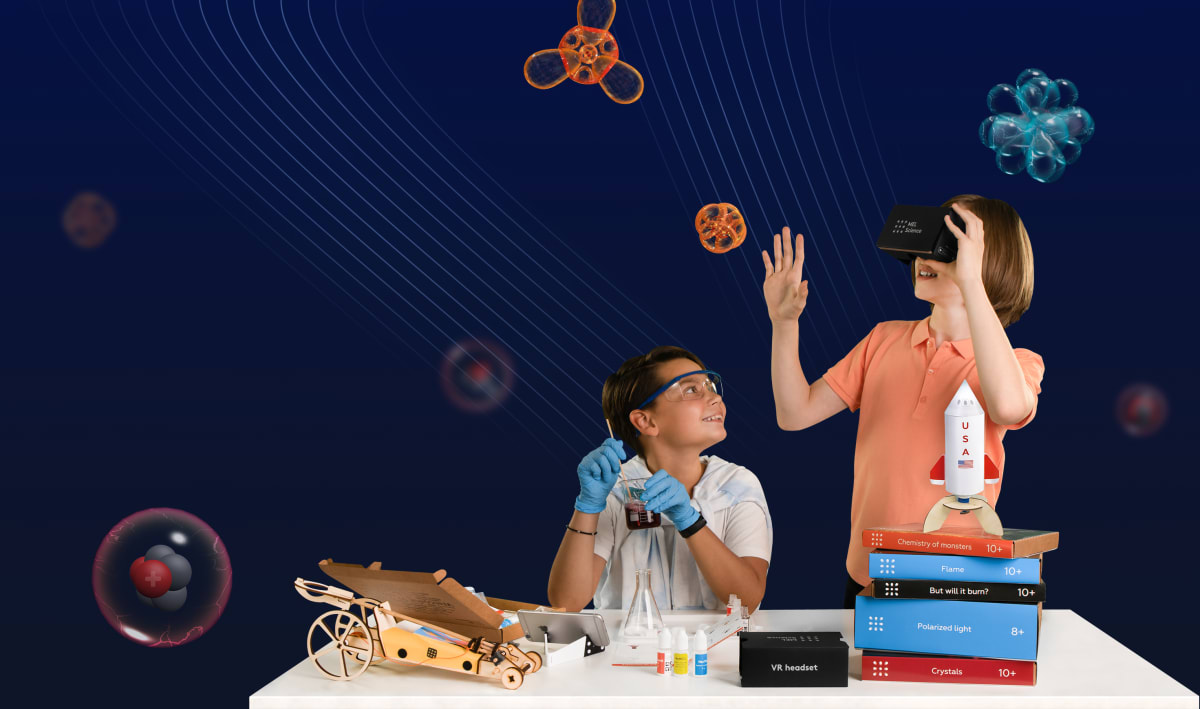
A MEL Science é o diferentão — ela vai fundo em uma disciplina em vez de amplo em STEAM. Sua linha STEM começa aos 5+, Física aos 8+ e Química aos 10+, com cada caixa enviando 2-3 experimentos reais com materiais suficientes para repeti-los. Para uma criança que já é fã de química ou física especificamente, nada aqui iguala essa profundidade.
O custo é duplo. Primeiro, preço: a MEL começa em ~US$29,90/mês e suas linhas de química/física custam mais do que as linhas de entrada do KiwiCo ou do Little Passports (planos anuais reduzem isso — a MEL anuncia algo como "12 meses pelo preço de 8"). Segundo, telas: a MEL empurra vídeos em app e experiências de RA/RV como parte da experiência. Os experimentos principais podem ser feitos de forma prática sem dispositivo, mas a explicação científica depende mais do app do que nas outras duas caixas.
Sendo honesto: a MEL é a escolha para uma criança mais focada e mais velha (10+ para química) que quer profundidade real e cujo orçamento de tela tem espaço para o app. Para uma criança mais nova ou com limite de tela, a amplitude do KiwiCo é o primeiro compromisso mais seguro.
Quão seguras são essas caixas (e um irmão menor em casa)?
Dois fatos de segurança importam aqui, ambos bem documentados.
Peças pequenas e engasgamento. Brinquedos destinados a crianças com menos de 3 anos que contêm peças pequenas são substâncias perigosas proibidas sob a regra de peças pequenas da CPSC, 16 CFR Parte 1501; uma peça é considerada "pequena" se couber dentro de um cilindro de teste de 5,7 cm de comprimento por 3,2 cm de largura (16 CFR § 1501.4). As três assinaturas são feitas para idades 5+, então seus componentes representam risco de engasgamento para qualquer criança com menos de 3 anos em casa. Com um irmão bebê, trate o aviso da caixa como obrigatório e guarde os kits em altura segura. A MEL Science merece cuidado extra: suas linhas de química/física enviam reagentes reais e vidraria, o que é uma categoria de risco diferente dos materiais de artesanato do KiwiCo ou do Little Passports, e a linha de química da MEL vem com instruções de manuseio e segurança que você deve seguir atentamente.
Tempo de tela. Para idades 6+, a AAP não define mais um limite diário fixo de minutos; recomenda estabelecer limites consistentes sobre o tempo e o tipo de mídia e garantir que as telas não substituam o sono, a atividade física e o tempo em família, por meio de um Plano de Mídia Familiar. O KiwiCo Kiwi Crate e o Little Passports Science Junior praticamente não adicionam tempo de tela; o app e a RV da MEL Science adicionam o mais. Leve isso em conta se o orçamento de tela do seu filho já estiver estendido.
O que acontece quando uma caixa decepciona ou uma criança perde o interesse?
Toda assinatura eventualmente envia uma caixa que não cai bem — um projeto que falha, ou um mês em que a criança simplesmente não está interessada. Com um brinquedo único isso é um problema de prateleira; com uma assinatura é um problema de dinheiro.
Como todas as três são consumíveis, uma caixa decepcionante está basicamente perdida — há pouco para remontar quando os materiais são usados ou o projeto é abandonado. O risco maior é a cobrança contínua: a criança perde o interesse silenciosamente, mas a caixa mensal continua chegando e sendo cobrada porque ninguém lembrou de cancelar. O KiwiCo e o Little Passports anunciam cancelamento a qualquer momento em seus sites; os planos anuais da MEL Science pagam um ano inteiro adiantado, o que é mais fácil de lamentar se o interesse sumir no segundo mês. Antes de se comprometer com qualquer plano anual, verifique os termos exatos de cancelamento e reembolso de cada fornecedor.
Essa é a diferença real entre uma assinatura e um kit único, e é onde uma caixa recorrente pode silenciosamente custar mais do que um brinquedo STEM reutilizável que você compra uma única vez.
Contras honestos — o que cada assinatura erra
- KiwiCo Kiwi Crate: consumível — nada para remontar quando o crate estiver pronto; a cobrança recorrente é fácil de esquecer de cancelar; a abordagem STEAM ampla pode parecer superficial para uma criança que quer ir fundo em uma disciplina.
- MEL Science: a entrada mais cara aqui; o empurrão do app/RV adiciona tempo de tela que alguns pais estão tentando reduzir; reagentes de verdade precisam de supervisão mais próxima; o pré-pagamento anual é o compromisso mais arriscado se o interesse sumir.
- Little Passports Science Junior: o envoltório de gibi e narrativa é o diferencial, mas a ciência é mais leve e temática do que o rigor prático do KiwiCo; consumível; cartões e adesivos colecionáveis podem parecer enchimento para uma criança mais velha.
Para alternativas únicas que valem ser pesadas em relação a uma assinatura, veja nossa lista de melhores brinquedos STEM para crianças de 6 a 8 anos e, para a questão de programação sem tela especificamente, Botley vs Code & Go para pré-escolares.
Então, qual assinatura STEM você deve comprar?
Para a maioria das famílias com uma criança de 5 a 8 anos: comece com o KiwiCo Kiwi Crate. É a linha de entrada mais barata, quase sem tela e o STEAM prático mais bem elaborado das três — a primeira assinatura com menor risco de arrependimento nessa faixa etária.
Escolha o Little Passports Science Junior se o seu filho de 5-8 anos aprende por narrativa e resiste a "fazer ciência" — os temas com gibi o conquistam. Escolha a MEL Science para um filho mais velho (Física 8+, Química 10+) que quer profundidade real em uma disciplina e cujo orçamento de tela tem espaço para o app/RV. Seja qual for sua escolha, trate o primeiro mês como um teste e evite o pré-pagamento anual até ver uma caixa cair bem — os planos mensais com cancelamento a qualquer momento existem exatamente para a pergunta "meu filho gosta disso?".