STEM and science · Ages 5
Best STEM Toys for 5-Year-Olds: 6 Picks Judged Against a 15-Minute Attention Span
Six STEM toys judged against what age 5 can really do: a 15-20 minute focus window, hands still learning precision, concrete thinking. Plus the 8+ kit to skip.
Published Aug 1, 2026 · 8 min read
As an Amazon Associate, I earn from qualifying purchases. Your price stays the same.
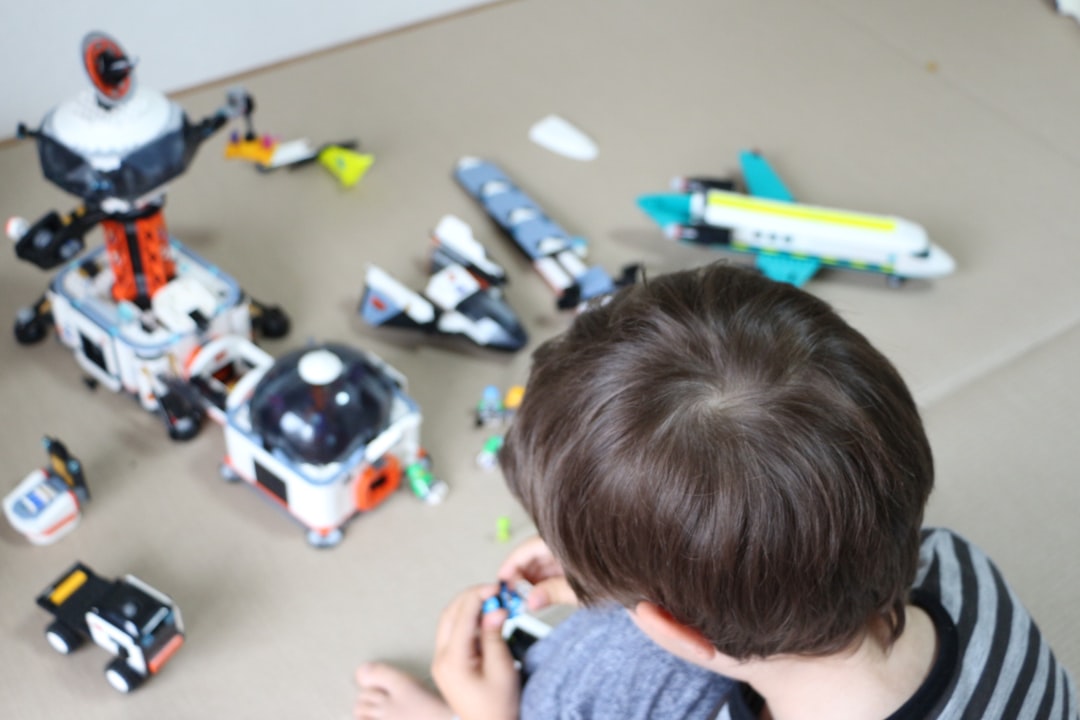
A kindergartner will stay with one toy for about fifteen minutes. Maybe twenty. That number decides which STEM toys get played with and which sit in a closet by February. Most gift lists skip it and recommend kits rated 8 and up anyway. Below: six toys and one subscription, judged against what age 5 can genuinely do.
TL;DR
- Best overall: Botley 2.0 (~$60-70), screen-free coding, maker age band 4-8.
- Best open-ended builder: Magna-Tiles Classic 32 (~$50-70), rated 3-99, no recalls in 25+ years.
- Best guided mechanics: LEGO DUPLO Early Simple Machines 9656 (~$40-60), pictorial cards a pre-reader can follow.
- Skip for now: Snap Circuits Jr.. Great kit, officially 8+, and the gap shows.
As an Amazon Associate we earn from qualifying purchases. Every pick was checked against manufacturer specifications, published developmental and safety sources (AAP, CPSC/ASTM, NGSS), and verified-buyer feedback patterns. Research-based, not hands-on testing. Star ratings move daily and price tiers are approximate.
What can a 5-year-old actually handle?
Roughly 15-20 minutes of focus, hands that manage scissors but not tiny snap connectors, and instructions that are pictures rather than paragraphs. Those three limits do more to predict whether a toy gets used than any "educational" label on the box.
- Fine motor: peer-reviewed research on fine motor development from ages 5 to 10 describes children this age tying shoes, zipping jackets, and doing craft work that needs folding, cutting and gluing. Precision with very small objects is still forming.
- Comprehension: the American Academy of Pediatrics' milestones for age 5 note a child can answer simple questions about a story and follow rules or take turns in a game. Rule-following is new. Abstract debugging is not on the list.
- The right learning target: NASA JPL's summary of the NGSS K-2 engineering standards puts K-2 learners on defining a simple problem, developing a solution, and comparing two designs. Design thinking. Not programming syntax, not circuit theory.
The bar, then: a visible result inside one short session, parts sized for imprecise hands, no reading required.
Which STEM toys fit that window best?
Four do it cleanly. The whole field first:
| Toy | Maker age | Price tier | Screen | Age-5 verdict |
|---|---|---|---|---|
| Botley 2.0 | 4-8 | ~$60-70 | No | Best overall fit |
| Magna-Tiles Classic 32 | 3-99 | ~$50-70 | No | Best open-ended |
| LEGO DUPLO 9656 | 5+ | ~$40-60 | No | Best guided build |
| Cubetto | 3-6 | ~$99 | No | Best for a young 5 |
| Wonder Workshop Dash | 6+ | ~$80-100 | Yes | Maybe, late 5 only |
| Snap Circuits Jr. SC-100 | 8+ | ~$30-40 | No | Wait until 7-8 |
| Kiwi Crate (subscription) | 5-8 | ~$25-35/mo | Optional | Only if variety is the point |
Botley 2.0 (~$60-70, Learning Resources, maker age 4-8). You program it from a handheld remote: forward, turn, loop, repeat. Teaches sequencing, loops, obstacle logic and spatial reasoning, mapping onto the K-2-ETS1 standards above. Listed around 4.5 stars across roughly 500 reviews. Wrong for children who need instant on-screen feedback, and for any kid you expect to graduate to Scratch. Botley caps at 150 steps per sequence and cannot save or name a program, so it runs out of room by age 6 or 7. Safety: no CPSC recall surfaced. Works better on hard floors than carpet. Our Botley vs Code & Go comparison covers the alternatives.
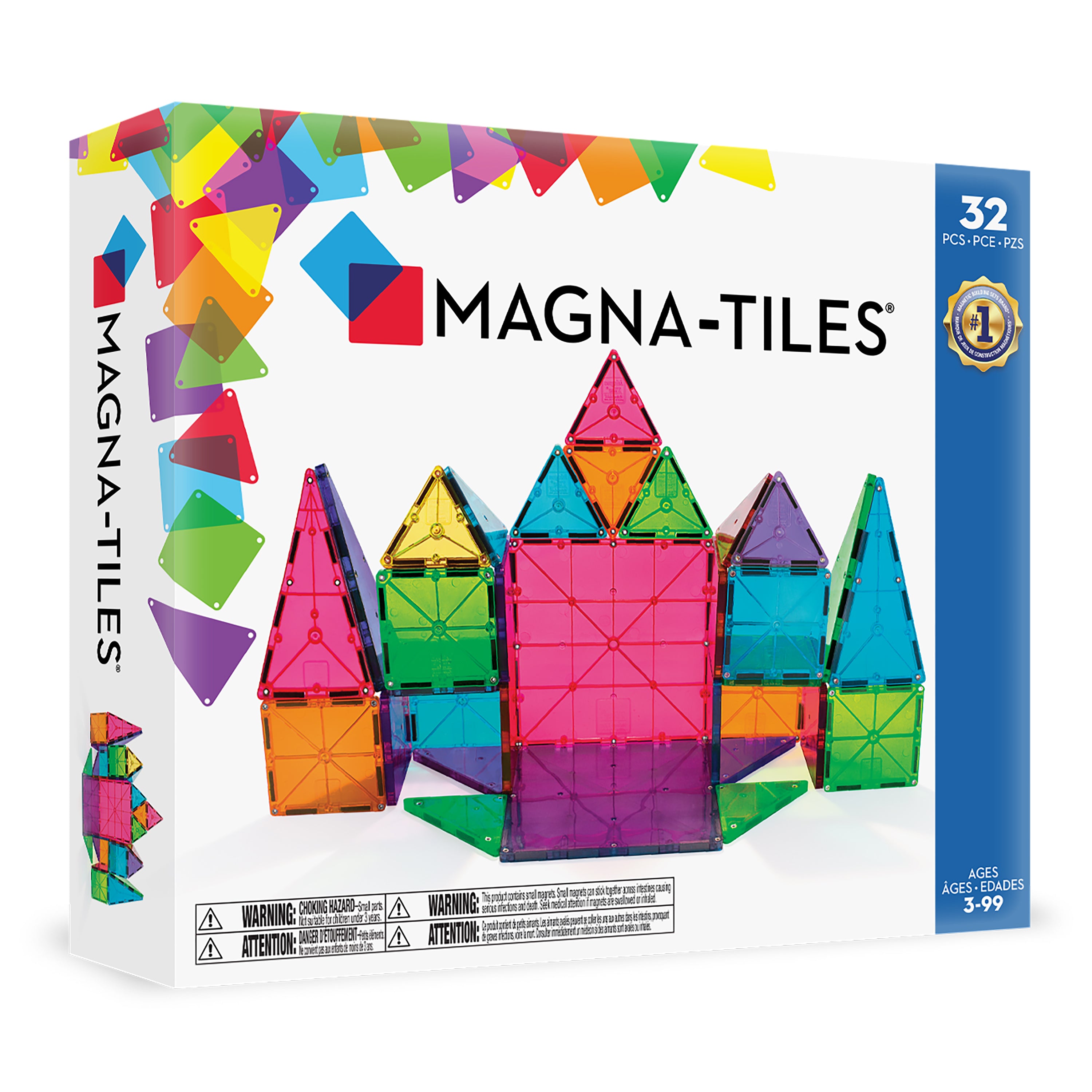
Magna-Tiles Classic 32 (~$50-70, maker age 3-99). Thirty-two pieces: 14 squares, 2 large squares, and 16 triangles across three shapes. The manufacturer specifies food-grade MABS plastic free of BPA, phthalates and latex, with steel rivets holding each magnet in place. Teaches 3D spatial reasoning, symmetry and geometry, with nothing to read at all. Among the best STEM building toys for 5 year olds, this has the least friction. Wrong for a child who wants to be told what to build. Safety: no CPSC recalls across 25-plus years, the cleanest record here; listed around 4.9 stars over 10,831 global ratings. See our magnetic tiles comparison for larger sets and rival brands.
LEGO DUPLO Early Simple Machines 9656 (~$40-60, LEGO Education, maker age 5+). 102 DUPLO pieces including wheels, gears, pulleys, axles and minifigures, plus 8 activity cards with pictorial instructions, a 12-lesson curriculum guide and a storage bin. Pictorial matters for a pre-reader. Teaches levers, gears, pulleys and cause-and-effect, covering the model-building half of the NGSS engineering design progression. Wrong for a young 4-year-old (102 pieces overwhelms) and a child of 7 already asking about robotics. Safety: no recall or choking-hazard warning surfaced for this set in our sources.
Cubetto (~$99, Primo Toys, maker age 3-6). A wooden robot programmed by slotting 24 colour-coded blocks into a physical control board, shipped with 4 adventure mats. Primo Toys states it teaches direction, sequence and subroutines while staying entirely screen-free. Teaches algorithmic thinking through objects rather than symbols, which suits a concrete thinker. Wrong for budget-sensitive buyers at roughly double Botley's price, and for kids who prefer graphical block editors. Our pick for a just-turned-5 child.
Which popular STEM toy will frustrate a 5-year-old?
Snap Circuits Jr. It shows up on nearly every list, and Elenco rates the SC-100 for ages 8 and up. Three years is a wide gap at this stage.
The failure has a predictable shape. The kit holds 28 small colour-coded parts (LED, motor, speaker, alarm, photoresistor) and more than 100 projects. A parent helps through the first three builds. Then a circuit fails to light. The child cannot see why. Focus runs out around the 18-minute mark, and the other 97 projects stay in the box.
Two mismatches cause it, both tracing back to the constraints above. Snapping components onto a grid needs finer control than the scissors-and-shoelaces stage. And diagnosing a dead circuit is abstract reasoning, exactly what concrete thinkers cannot yet do unaided.
None of that makes it a bad kit. At 7 or 8 it is a very good one, with a patented Circuit Safe design. It also carries a choking-hazard warning, contains a small ball unsuitable for under-3s, and needs 2 AA batteries you supply.
Is Wonder Workshop Dash worth it at age 5?
Only for a late-5 child, and only if you have room in the screen budget. Wonder Workshop rates Dash 6+. It arrives pre-assembled and Bluetooth-ready, runs about 5 hours per charge, and is used in more than 40,000 schools.
The trade-off is specific. Programming happens in an app, adding roughly 30-60 minutes of daily screen use. AAP guidance for ages 5 and 6 sits at under 1-2 hours of high-quality content per day, so Dash eats a big slice of that allowance alone. Its small touch targets are also awkward for imprecise hands.
Call it a maybe, not a pick. If your household limits screens, Botley or Cubetto reach the same concepts for free.
Is a monthly subscription better than one good kit?
Usually not as a first purchase. Kiwi Crate for ages 5-8 runs roughly $25-35 a month, or $300-420 annually, which buys three to four of the kits above. KiwiCo has shipped more than 40 million crates and every box includes all materials plus video instructions, so the convenience is real.
The catch: unfinished projects still bill, and parent feedback notes quality varying month to month. Subscribe if variety is the goal and your child finishes things. Otherwise one open-ended set delivers more hours per dollar.
What changes between age 4-5 and age 5-6?

Reading and rule-following, mostly. That shift moves the boundary in both directions, which is why shopping for 4 and 5 year olds works differently from shopping for 5 and 6 year olds.
Buying for 4 and 5 together: stay with wordless, open-ended toys. Magna-Tiles (rated from 3) and Cubetto (rated 3-6) work across the pair. Skip instruction booklets, because the younger child cannot use one and it becomes a parent job.
Buying for 5 and 6 together: activity cards and rule-based sequencing now land, per the AAP milestone on following rules and taking turns. The DUPLO machines set and longer Botley programs both stretch upward. What still does not land at 6 is the 8+ electronics tier. If your child is closer to 6 and burning through these, our guide to engineering toys for 5 to 7 year olds covers the step up.
If you searched for the best STEM toys for a 5 year old boy, the same list applies: every constraint here is developmental, not gendered.
Which safety checks actually matter here?
Two: small parts and loose magnets. ASTM F963-23 is the mandatory US toy safety standard, and toys for ages 3-8 containing small parts must carry warning labels, with the choking-hazard statement required on packaging for the 3-6 band. Read the box, not the marketing copy.
Magnets matter most in a multi-age house. Magna-Tiles fastens its magnets with steel rivets and reports no recalls in over 25 years. The risk is a cracked tile, usually from a drop onto a hard floor, which can free a magnet. Loose magnets are an ingestion hazard for a sibling under 3. Check tiles for cracks and bin any that split.
Which one should you buy?
Bottom line: Botley 2.0 is our pick (4.5/5), the best screen-free coding fit for the exact 5-year-old window, though it hits a skill ceiling by around age 7.
One toy, no other context: Botley 2.0. The 4-8 band brackets this age, sessions end whenever you stop, and nothing needs reading or a tablet.
Your child ignores instructions and builds anyway: Magna-Tiles Classic 32. Endlessly re-buildable, and no CPSC recalls on a 25-plus-year record.
Your child likes being shown how: LEGO DUPLO 9656. Pictorial cards, real gears and pulleys, 12 structured lessons.
Just turned 5: Cubetto. Wooden, screen-free, forgiving of small hands.
Wait on: Snap Circuits Jr. until 7 or 8, and Dash until 6 unless the screen time already fits your week. Both are good products aimed one developmental stage past where your child stands today.
Shopping for a gift? Start here
- Best LEGO Botanicals Sets for Adult Builders and Gift-Givers (2026)
- LEGO Botanicals Bonsai Tree vs LEGO Botanicals Orchid: Which Is Better for Adult Builders and Gift Buyers?
- Holiday Gift Guide 2026: The Best Toys by Age and Budget, From Preschool to Grown-Ups
- Gifts for Grown-Ups Who Still Love Toys: LEGO, Board Games and Puzzles (2026)
How we research: This guide is based on manufacturer specifications, published independent reviews, and verified-buyer feedback, not hands-on testing.
Holiday gift guide drops every Friday in Q4
One email a week with the newest review and the toys our community is actually buying. No spam, unsubscribe anytime.