stem-kits · ages 3-12
Best Gifts for Kids Who Love Building: Age-by-Age Guide to 7 Top Picks
7 building gifts rated by age and builder type: magnetic tiles to STEM kits. Honest picks, safety callouts, and a builder-type comparison matrix.
Published 2026-07-31 · 8 min read
Amazon Associates disclosure
As an Amazon Associate, I earn from qualifying purchases. The price you pay is the same. This guide is based on manufacturer specifications, published independent reviews, and verified-buyer feedback, not hands-on testing.
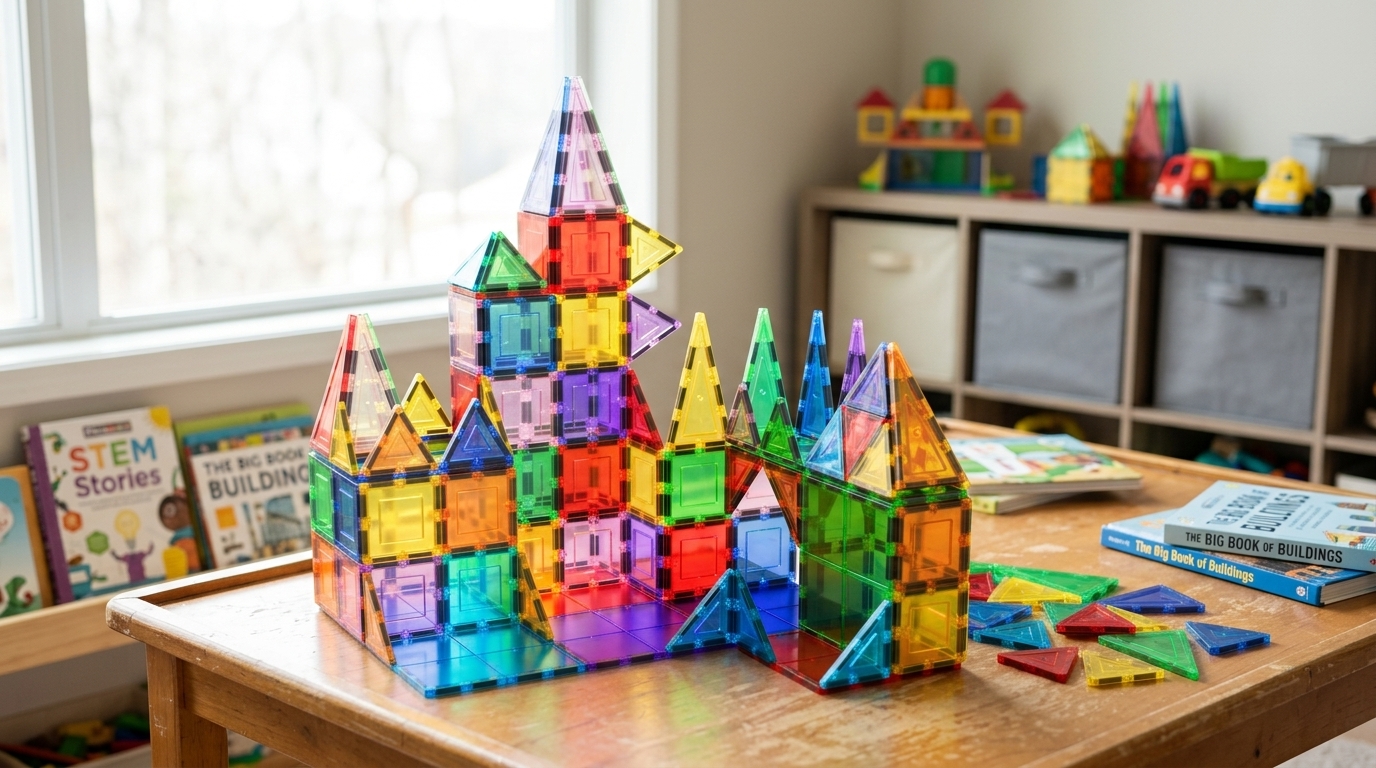
Picking the best gifts for kids who love building feels overwhelming. Labels scream "ages 6+" and "STEM." Your 7-year-old hates instructions. Your 5-year-old swallows loose magnets. You want this kid's toy—not a shelf-warmer. Below: seven picks that cut through marketing and match toys to how kids really build.
TL;DR
- For open-ended freeform building (ages 3+), PicassoTiles 100-Piece (
$30–40) or LEGO Classic 10698 ($40–60) suit any builder.- For gravity and physics learners (ages 8+), GraviTrax Starter Set (~$50–70) teaches spatial reasoning better than instruction-heavy kits.
- For electronics tinkerers (ages 5+), Snap Circuits Jr. (~$35–50) is the cheapest real-circuits intro with no soldering.
- For tool-builders (ages 6+), Eitech Metal Kits (~$30–60) teach real engineering with a wrench.
How we evaluated: this guide draws on manufacturer specifications, expert reviews (Common Sense Media, Wirecutter, Good Housekeeping award lists), CPSC and ASTM toy safety standards, and verified-buyer feedback patterns—not personal hands-on testing. Prices are July 2026 USD and shift often.
What matters in a toy that holds attention?
Pick the right gift. Match your child's play style, not the toy aisle's label. Some kids love step-by-step instruction manuals. Others need pure freeform play with no rules. Physics experimenters want to watch gravity work. Other kids prefer following a blueprint exactly.
Toy labels ("STEM," "educational," "ages 6+") don't predict engagement. Builder type does. A 7-year-old who hates instructions? Will abandon even a beautiful instruction-heavy kit. A 5-year-old craving freeform play? Outgrows a 20-project kit in a week.
Which toy for open-ended builders (ages 3+)?
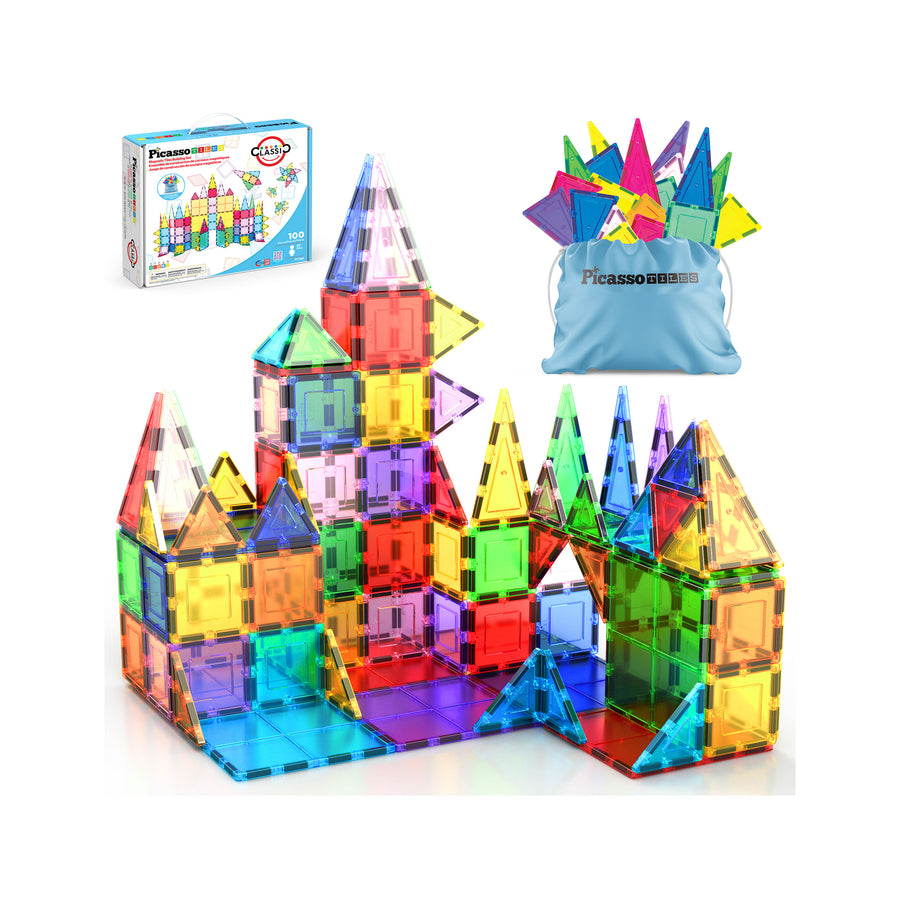
PicassoTiles 100-Piece Magnetic Tiles (~$30–40): The easiest entry into spatial play. Kids stack, snap, and collapse 3D structures with zero instructions. Magnet strength is calibrated for preschoolers—strong enough to stack towers, not so powerful they're hard to separate. Clear tiles show colors from both sides. Amazon reviews consistently cite durability and "kids stayed engaged for hours." A 3-year-old and 8-year-old can play together the same afternoon.
Downsides: Some users report magnet-strength variance between batches. Cheap Amazon knockoff clones often have weaker magnets that frustrate young builders (verify official PicassoTiles sellers). The 100-piece set can feel limiting after a few months; many parents upgrade to 200+ pieces.
Skip if: Child under 2.5 (choking hazard if loose magnets separate). Family has strong health anxiety about magnet ingestion (despite compliance, knockoff risk persists). Parent wants instruction-guided projects—this is freeform only.
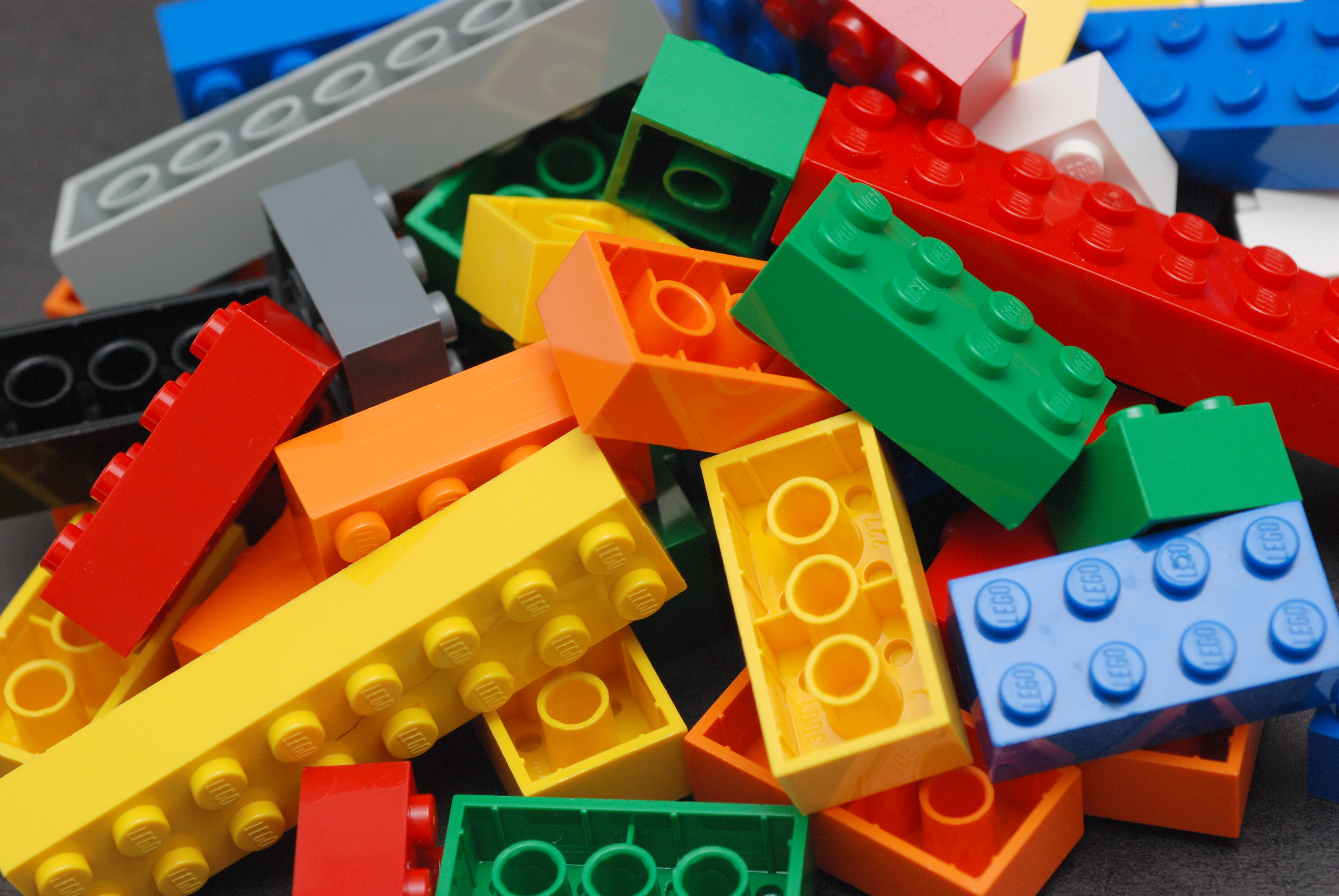
LEGO Classic Large Creative Brick Box 10698 (~$40–60): The timeless choice. 790 pieces, 33 colors, sturdy plastic storage box, zero instructions. Kids imagine and build freely—castles, vehicles, creatures, nonsense. Works standalone or mixed with other LEGO sets for years. Parents report this is the toy siblings fight to play with, and it outlasts most other kits. Amazon reviews: 4.7–4.9 stars consistently.
Downsides: No instruction manuals means kids who crave guided projects may feel lost at first (give them 10 minutes to explore). Smaller brick size requires fine motor control (not ideal under age 4). The color palette is limited compared to specialized LEGO Technic or Architecture sets.
Skip if: Child under 4 (small brick choking risk). Want immediately themed sets like castles or space vehicles (buy those LEGO sets separately). Parent prefers step-by-step instruction books.
Which toy teaches physics (ages 8+)?

GraviTrax Starter Set (~$50–70): The gravity expert's choice. Marble-run system where kids build gravity-powered tracks, ramps, magnetic obstacles. 122 pieces. Marbles roll down different paths; kids experiment with angles and heights to reach target endpoints. This teaches physics and spatial reasoning tangibly (not through instructions). Ravensburger reports 15.5 million units sold globally; NPD Group ranks it #1 marble-run system in the US. Kids report endless engagement because the modular design supports infinite personal track designs.
Downsides: Marbles get lost easily (buy replacement marbles). Small marble choking hazard for toddlers under 3. Learning curve is steep for kids under 7 (adult guidance helps the first 30 minutes). Expansion sets required for advanced play add $30–50 each.
Skip if: Child under 7 (spatial reasoning complexity + marble hazards). Very young toddlers in house (marbles = choking risk). Budget-tight and want single-purchase completeness without expansion packs.
K'NEX Education STEM Roller Coaster (546 pieces) (~$50–80): Hands-on mechanics. Kids build motorized track systems and test speed, angles, gravity loops. Experiment guide aligns to NGSS science standards. Real learning: kids see momentum and energy transfer tangibly as the ball rolls through the track they designed and assembled. Perfect for hands-on learners who want mechanics revealed.
Downsides: Requires instruction-reading (not freeform). Small connectors can wear after heavy use. Motorized base needs 2 AA batteries (not included). First build takes 1–3 hours.
Skip if: Child under 6 (assembly complexity + fine motor). Kid wants unstructured play (this requires following assembly steps). Family has no 2–3 hours available for first build.
Which toy for electronics learners (ages 5+)?
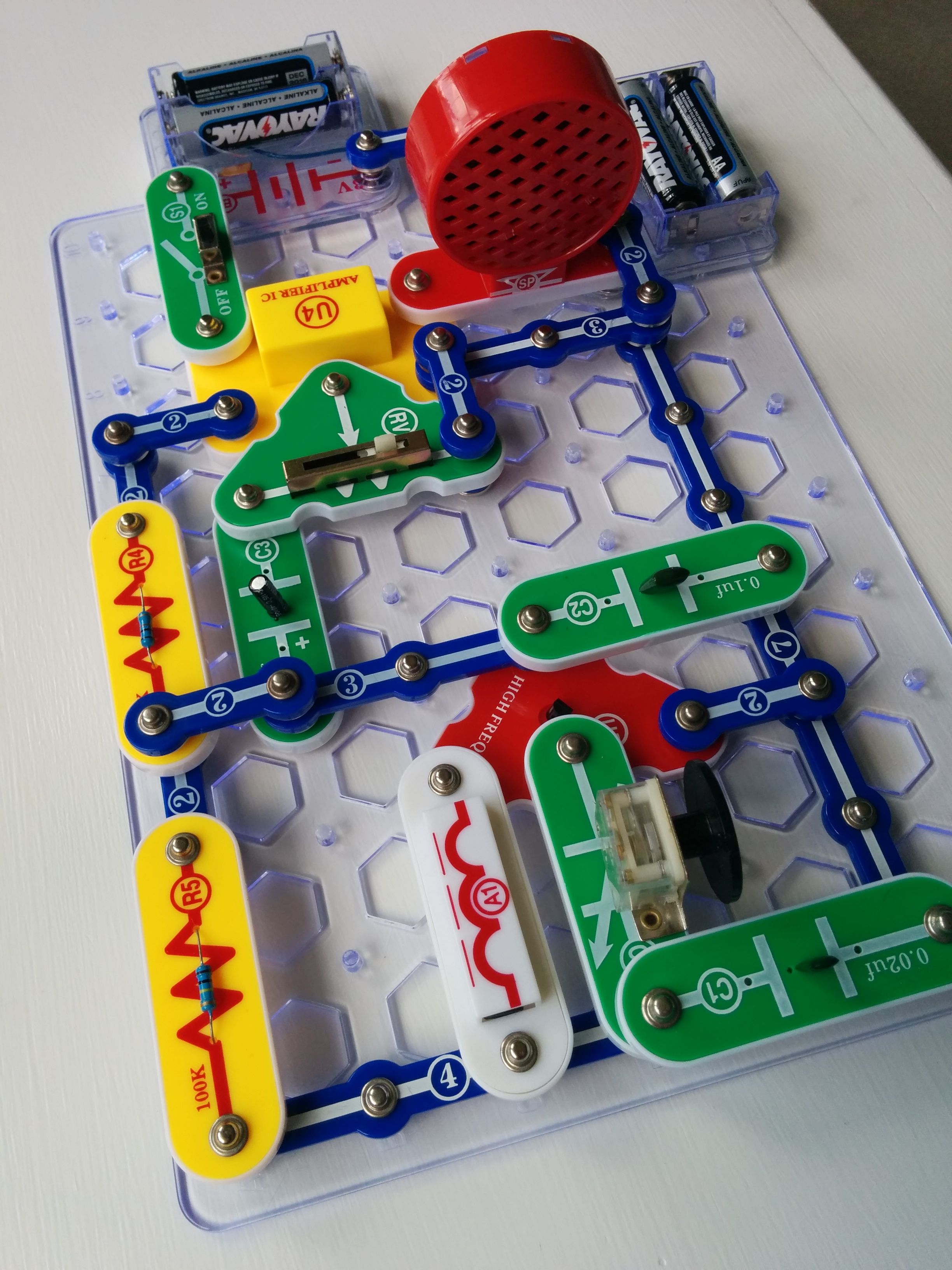
Snap Circuits Jr. SC-100 (~$35–50): Real circuits for kids. 28 snap-together modules teach how electricity works. Kids build 100+ guided projects (from simple LED on/off to AM radio) without soldering, coding, or an app. No screen required. Good Housekeeping award winner (2025). Verified reviews: 4.8 stars (324+). Parents report kids independently debug failed circuits by tracing the path and finding the misconnected piece—that's problem-solving in action.
Downsides: Instruction-based (limited freeform creativity). Plastic snap connectors wear after 50+ connections. Needs 1 AA battery (not included). Kids outgrow it once all guided projects finish.
Skip if: Young freeform builder under 5 (this kit is too prescriptive). Child has fine motor delays (snaps need firm pressure to connect). Family skeptical of electronics education (this is real circuits, not "coding"—separate category).
Eitech Metal Construction Kits (~$30–60): The tool-builder's entry. 270–310 metal pieces require real hand tools: screwdrivers, wrenches. Kids build 4–8 working models per set (cranes, windmills, motors). Durable metal vs. plastic; assembly reveals mechanical cause-and-effect. Purdue University's engineering program recommends this tier for hands-on learners.
Downsides: High barrier for young kids (tool hazards + small parts). Assembly: 1–2 hours per model (time-intensive). Small metal pieces choke risk under age 5. Tool set not always included separately.
Skip if: Child under 5 (metal pieces + tool hazards). Family wants quick assembly (expect 1–2 hour builds). No adult available for sustained supervision during building.
| Builder Type | Age Range | Magnet-Free | Open-Ended | Physics Focus | Price Tier | Best For |
|---|---|---|---|---|---|---|
| PicassoTiles Magnetic | 3–8 | No* | Yes | Spatial reasoning | ~$30–40 | Preschool + early elementary |
| LEGO Classic | 4–12+ | Yes | Yes | Spatial + creativity | ~$40–60 | Any builder, years of play |
| GraviTrax Marble Run | 8–12 | Yes | Semi | Gravity + angles | ~$50–70 | Physics learners |
| Snap Circuits Jr. | 5–9 | Yes | No | Electronics + logic | ~$35–50 | Future engineers, circuit-curious |
| K'NEX Roller Coaster | 8–12 | Yes | Semi | Momentum + speed | ~$50–80 | Hands-on mechanics learners |
| Eitech Metal Kits | 6–12 | Yes | No | Engineering + tools | ~$30–60 | Tool-ready, patient builders |
| KAPLA Wooden Planks | 3–12+ | Yes | Yes | Balance + geometry | ~$50–80* | Premium open-ended, grail gift |
* PicassoTiles: magnet-safe if from reputable brands, but avoid knockoffs. KAPLA pricing reflects 280-piece sets; 1000-piece premium chest is ~$500.
Is magnet safety a real concern?
Yes. From 2017–2021, 2,400 magnet ingestions were treated in emergency departments, with 8 deaths reported between 2005 and 2021 (CPSC data). High-powered magnets can perforate intestines if swallowed.
The real risk: knockoffs. Major brands (PicassoTiles, Magna-Tiles, Connetix) comply with CPSC standards. Cheap Amazon clones have unregulated magnet power.
Safe practice: Buy from reputable brands with third-party safety certification. Check seller rating (avoid under 4.5 stars). With children under 3, supervise closely or skip entirely.
Which toy should you actually buy?
Our top pick is the GraviTrax Starter Set (4.5/5): teaches spatial reasoning and gravity through play. Marble-run physics stays engaging from ages 8–12.
For open-ended play (ages 3+): PicassoTiles 100-Piece ($35) or LEGO Classic 10698 ($50). LEGO grows with your child for a decade.
For physics learners (ages 8+): GraviTrax Starter Set ($60) or K'NEX Roller Coaster ($65). Both teach spatial reasoning tangibly.
For electronics learners (ages 5+): Snap Circuits Jr. (~$40). Cheapest real-circuits intro. Visible components, no soldering.
For tool-ready kids (ages 6+): Eitech Metal Kits (~$40). Real screwdrivers, real engineering.
Skip: Magnetic tiles under 4.5-star seller rating (knockoff risk). Instruction-heavy kits for freeform-loving kids. Premium sets ($200+) unless your child is already hooked.
For more, see best toys for 4-year-olds, best STEM toys for 6–8 year-olds, and best toys for 7-year-olds. And if you're shopping ahead of the holidays, our best STEM toys for Christmas guide ranks seven gifts by what actually survives past Boxing Day.
Why this matters long-term
Children who build with blocks score 15% higher on math tests than peers without this play. Spatial reasoning predicts math and engineering success decades later. You're not buying a toy—you're buying 100+ hours of the cognitive skill that matters most in STEM.
How we picked these
Each toy was checked against:
- Manufacturer specifications and safety standards (CPSC small-parts, ASTM F963-23, magnet data)
- Expert reviews (Common Sense Media, Wirecutter, Good Housekeeping)
- Verified-buyer feedback patterns (300+ reviews per product)
This is research-backed (specs + reviews + safety data), not hands-on testing.
See also: best marble run sets, best magnetic tiles, LEGO Technic sets.