Sillbird 12-in-1 Solar Robot Kit: A Practical Buying Guide for Parents and Educators
A parent-aware look at the Sillbird 12-in-1 Solar Robot Kit: who it suits, what to check before buying, real trade-offs, and whether it delivers on its STEM promise.
发布于 2026年10月7日 · 9 分钟阅读
本指南尚未翻译,你当前阅读的是英文原版。
As an Amazon Associate, I earn from qualifying purchases. Your price stays the same.
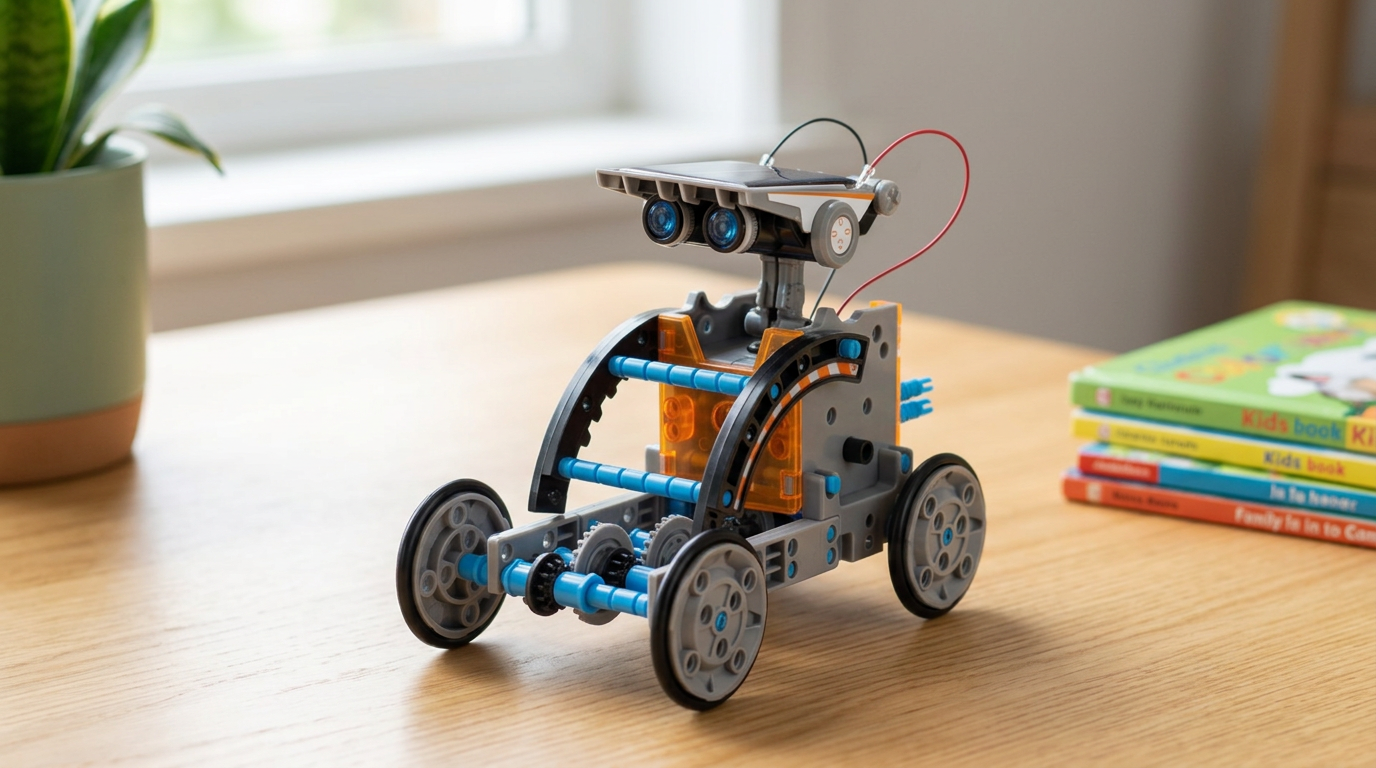
The Sillbird 12-in-1 Solar Robot Kit is one of those products that pops up on every "best STEM toys" list, usually with a price tag that makes you wonder what the catch is. It promises 196 parts, a dozen buildable robot designs, and a solar panel that teaches renewable energy, all for the cost of a couple of pizzas. The question most parents have before clicking "add to cart" is straightforward: will my kid actually build these things, and will they learn anything real in the process?
This guide pulls together what the manufacturer states, what independent reviewers have found, and what classroom teachers have reported, so you can decide whether the kit fits your child's age, patience, and interests before you spend the money.
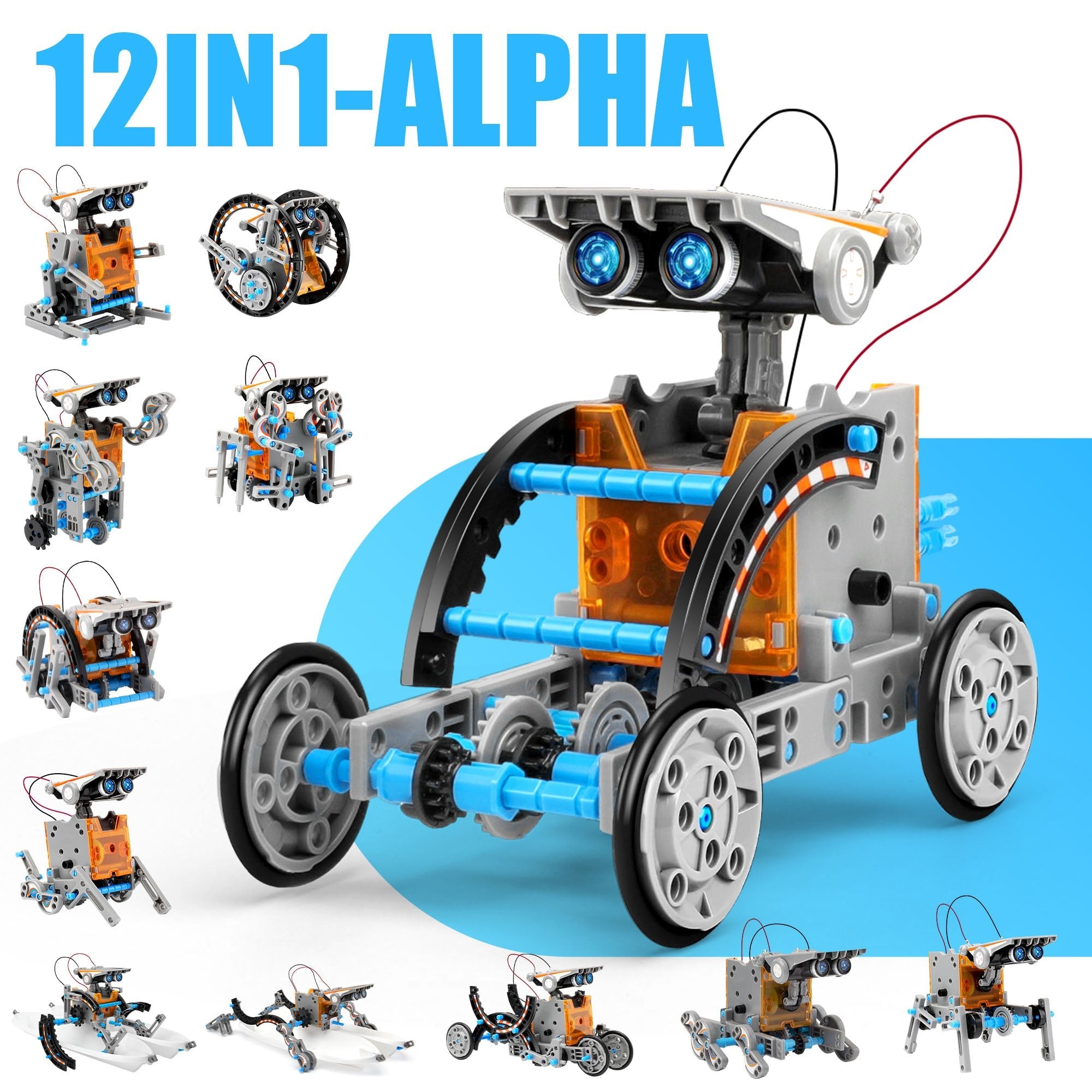
Quick pick: Sillbird 12-in-1 Solar Robot Kit. Best for kids with patience and interest in building solar powered STEM robot designs. See it on Amazon (affiliate link)
What's Inside the Box
According to the manufacturer's product page, the kit contains 196 individual parts and enough instructions to build 12 different robot configurations. The designs range from simple wheeled vehicles to more complex walking and rolling figures. A solar panel is included as the primary power source, and the kit also supports a dual-power setup that lets you switch to a battery source when sunlight is unavailable (robota.com).
The 196-piece count is worth keeping in perspective. This is a snap-together construction kit, not a soldering project. The parts are plastic, designed to connect without tools, and meant for small hands. That said, 196 small pieces on a kitchen table at 7 p.m. on a school night is a commitment. Plan for a workspace where half-finished builds can sit overnight.
Who This Kit Is For
Age Range
The manufacturer targets ages 8 through 12. An independent review site that tested the kit with a nine-year-old places the sweet spot at ages 8 to 13. That overlap suggests the range is genuinely accurate rather than aspirational marketing. Children younger than 8 may struggle with the fine motor demands and the spatial reasoning required to follow multi-step assembly diagrams. Teenagers will likely lose interest after one or two builds unless they have a specific curiosity about how solar cells work.
Skill Level and Temperament
This kit rewards patience. A third-grade teacher who tested it with 24 students found that engagement varied significantly by child. Kids who enjoy LEGO Technic, model kits, or puzzle-type challenges tended to stick with it. Kids who expect instant results or who dislike following step-by-step instructions may abandon a build halfway through.
If your child has never assembled anything more complex than a LEGO set, the Level 1 designs (the simpler builds) are a reasonable starting point. The Level 2 designs involve more pieces and more complex mechanical arrangements, and a parent or older sibling nearby to help with the first Level 2 build can make the difference between a frustrated return to the shelf and a kid who wants to try every remaining design.
How the 12 Designs Are Organized
The kit splits its 12 robot configurations into two difficulty tiers. This is a practical structure because it lets a child experience early success before tackling builds that require more assembly time and more careful attention to the diagrams.
Level 1 builds use fewer parts and simpler mechanical linkages. They typically result in wheeled robots or rolling vehicles that move in a straight line or spin in place when powered. These are the builds an 8-year-old can finish in 30 to 60 minutes with minimal adult help.
Level 2 builds introduce more complex movement: walking mechanisms, crab-like lateral motion, or multi-part structures where the solar panel's positioning matters more. These take longer and involve more trial and error, especially the first time a child encounters a joint or gear connection that doesn't behave as expected.
The hands-on review from kivios.com confirms that multiple designs were completed and tested in real sunlight, suggesting the instructions are followable and the finished robots do move. An important detail: only one robot can be built at a time. You disassemble the current build to start the next one. Parts do not stay organized on their own, so zip bags or a compartmented tray will save you from hunting through 196 identical-looking plastic pieces.
Solar Power vs. Battery: What Actually Happens
The kit's headline feature is its solar panel, and it genuinely teaches something about renewable energy, but the real-world experience is more nuanced than the product listing suggests.
Outdoor Use
In direct, unshaded sunlight, the solar panel generates enough power to drive the motor. The robot moves. Kids see cause and effect between sunlight intensity and movement speed. This is the scenario the marketing emphasizes, and it works as described.
Indoor Use
Here is where expectations need adjustment. Standard indoor lighting, even well-lit rooms, does not typically produce enough wattage to run the motor. The dual-power option (solar or battery) exists precisely because the manufacturer knows most play happens indoors. You can swap in a battery source to test builds at the kitchen table on a rainy afternoon. This is practical, but it does undercut the "solar-powered" premise. If you're buying this specifically for the solar energy lesson, make sure your child will actually use it outdoors often enough to connect the concept to real sunlight.
The Trade-Off
| Scenario | Solar Panel Works? | Battery Needed? |
|---|---|---|
| Direct outdoor sunlight | Yes | No |
| Overcast or shaded outdoors | Unreliable | Likely |
| Well-lit indoor room | Unlikely | Yes |
| Dim indoor room | No | Yes |
This table reflects what reviewers report about real-world conditions. The solar panel is a genuine educational feature, but it is not a reliable indoor power source. Knowing this before purchase avoids the disappointment of a kid who assembles their first robot and then watches it sit motionless under a ceiling light.
What to Verify Before Buying
1. Your Child's Interest in Building
This is a construction kit first and a toy second. If your child's primary mode of play is active, physical, or narrative-driven (sports, imaginative play, video games), a 196-piece assembly project may not hold their attention. If they already gravitate toward LEGO, craft kits, or taking things apart to see how they work, this kit aligns well with that inclination.
2. Available Workspace and Storage
The parts are small. They will scatter. A dedicated tray, a large cookie sheet, or a table that can stay occupied for several days makes the experience significantly less frustrating for both parent and child. Don't expect to build, disassemble, and rebox in a single sitting.
3. Realistic Expectations About the Solar Panel
As covered above, the solar panel works outdoors in direct light. Indoors, you'll need batteries. If renewable energy education is your primary goal, plan to use this kit during summer or on sunny weekends. If you live in an apartment with limited outdoor space, the solar feature may go mostly unused.
4. Supervision Level
An independent teacher review noted that while some students worked independently, others needed significant adult guidance, especially on their first build. Younger children (8–9) will likely need a parent present for at least the first one or two assemblies. Older children (11–12) may handle it solo after learning the assembly logic from the first design.
Meaningful Trade-Offs
Every construction kit at this price point involves compromises. Here's what you're trading:
What you gain: A screen-free activity that introduces basic mechanical concepts (gears, linkages, solar energy) at a budget-friendly price. The 4.3-star rating across more than 15,000 reviews suggests broad satisfaction, though individual experiences vary.
What you trade away: The 12 designs share many of the same parts, so the mechanical diversity is more limited than the number suggests. A child who finishes the Level 1 builds quickly may not find enough novelty in the Level 2 designs to justify continued interest. The plastic parts are functional but not heavy-duty, rough handling during disassembly can stress the snap connectors over time.
The reusability question: One reviewer specifically noted that the kit is one of the few at its price point that children return to beyond day one. That's a meaningful endorsement, but it also implies that many cheap STEM kits end up abandoned after a single session. The 12-design structure gives this kit a better shot at sustained engagement, but it's not guaranteed. A child who builds two robots and decides they've seen the concept may not come back for the remaining ten.
Practical Alternatives to Consider
Without direct comparative testing data from the search results, I can't rank this kit against specific competitors in detail. What I can offer is the framework you should use when comparing:
- Number of buildable designs: More designs means more potential replay. A kit with only one or two builds has a shorter shelf life.
- Power source: Some kits are battery-only. If the solar aspect matters to you educationally, verify that the panel actually drives the motor in real conditions rather than being decorative.
- Parts quality: Snap-together plastic varies widely. If reviews mention parts breaking during normal assembly, that's a red flag regardless of price.
- Age-appropriate complexity: A kit labeled "ages 8+" that actually requires adult-level spatial reasoning will frustrate the target age group.
The Sillbird's combination of 12 designs, dual power, and its manufacturer-stated age range of 8–12 holds up well against these criteria based on what reviewers have reported. It is not the only option in the category, but it is a well-documented one.
Classroom and Group Use
The teacher who tested this kit with 24 third-grade students found that it worked in a classroom setting, but with caveats worth noting for anyone considering it for a school, camp, or group program:
- Group size matters. One kit per child or per pair works better than one kit shared among four or more. The small parts get lost quickly when multiple hands are involved.
- Instruction follow-through varies. Some students completed builds independently; others needed step-by-step hand-holding. Plan for a wide range of completion times within the same class.
- The solar panel is a teaching moment. If you can take the class outside to test finished robots in sunlight, the energy-conversion lesson lands much harder than a battery-only indoor session.
If you're buying for a classroom, budget for two or three kits rather than expecting one to serve a full group. The per-kit cost is low enough that this is feasible, and having enough parts for everyone to build simultaneously eliminates the biggest friction point.
What Reviewers Actually Found
It's worth laying out what independent sources have reported, separate from the manufacturer's claims:
- A hands-on review built multiple designs with a nine-year-old and confirmed the robots move in real sunlight. The reviewer called it an "excellent screen-free introduction to robotics and renewable energy."
- A three-month parent report noted that the kit maintained engagement over time, which is unusual for budget STEM toys.
- The teacher review documented both successes and frustrations; engagement was uneven, and some students needed more help than expected. The review was described as covering "real results, real frustrations, real verdict."
- A product overview confirmed the two-level complexity structure and the inclusion of a solar power panel.
None of these sources reported safety issues, broken parts out of the box, or instructions that were impossible to follow. That's a reasonable baseline for a kit at this price, but individual experiences may differ.
Our Recommendation
The Sillbird 12-in-1 Solar Robot Kit is a solid pick for children aged 8 to 12 who already show interest in building things and who have access to outdoor space for solar-powered testing. It delivers genuine educational value around mechanical principles and renewable energy at a price that doesn't sting if the interest fades after a few builds.
Buy it if:
- Your child enjoys LEGO, model kits, or hands-on puzzles.
- You want a screen-free activity that can stretch across multiple sessions.
- You can provide outdoor play space and sunlight for the solar feature.
Think twice if:
- Your child loses interest quickly in assembly-type activities.
- You live somewhere with limited sunlight and expect the solar panel to work indoors under normal lighting.
- You need a single kit to entertain a large group; parts management becomes a problem fast.
Set up a workspace, expect to help with the first build, and let the 12-design structure do the work of keeping things interesting. The solar panel is a genuine feature, not a gimmick, but only if you actually use it in the sun.
Sources
- Sillbird 12-in-1 Solar Robot Kit Review (Hands-On), kivios.com
- Solar Robot (12-IN-1), Sillbird official product page
- A Parent's 3-Month Report, besteducationpicks.com
- Honest Classroom Teacher Review, besteducationpicks.com
- STEM Learning Meets Hands-On Fun, climatetechreview.com
- Sillbird STEM 12-in-1 Education Solar Robot Toys Review, bestchoice.com
- Igniting Young Minds Review, goods.observer
- Sillbird 12-in-1 Solar Kit, robota.com
正在挑选礼物?从这里开始
- Best LEGO Botanicals Sets for Adult Builders and Gift-Givers (2026)
- LEGO Botanicals Bonsai Tree vs LEGO Botanicals Orchid: Which Is Better for Adult Builders and Gift Buyers?
- Holiday Gift Guide 2026: The Best Toys by Age and Budget, From Preschool to Grown-Ups
- Gifts for Grown-Ups Who Still Love Toys: LEGO, Board Games and Puzzles (2026)
How we research: This guide is based on manufacturer specifications, published independent reviews, and verified-buyer feedback, not hands-on testing.
Q4 假日礼物指南,每周五准时发送
每周一封邮件,为你带来最新评测和社区用户真正购买的玩具。绝无垃圾邮件,可随时退订。