Thames & Kosmos SolarBots 8-in-1 Buying Guide: What Parents Should Know Before Adding It to the Cart
A practical breakdown of the Thames & Kosmos SolarBots 8-in-1 kit: who it fits, what to verify, and how it compares to other solar robot kits for kids.
公開日:2026/09/28 · 7分で読めます
このガイドはまだ翻訳されていないため、英語の原文を表示しています。
As an Amazon Associate, I earn from qualifying purchases. Your price stays the same.

Solar-powered robot kits sit at a useful intersection of play and STEM education. They give kids a hands-on reason to care about renewable energy while building something that actually moves. The Thames & Kosmos SolarBots 8-in-1 is one of the more recognized entries in this category, and it comes from a company with a long track record in science-oriented toys. This guide walks through what the kit offers, who it suits best, what to check before buying, and how it stacks up against alternatives.
Quick pick: Thames & Kosmos SolarBots 8-in-1. Best for kids aged 8 to 12 who enjoy building kits and have regular direct sunlight. See it on Amazon (affiliate link)
What the SolarBots 8-in-1 Kit Includes
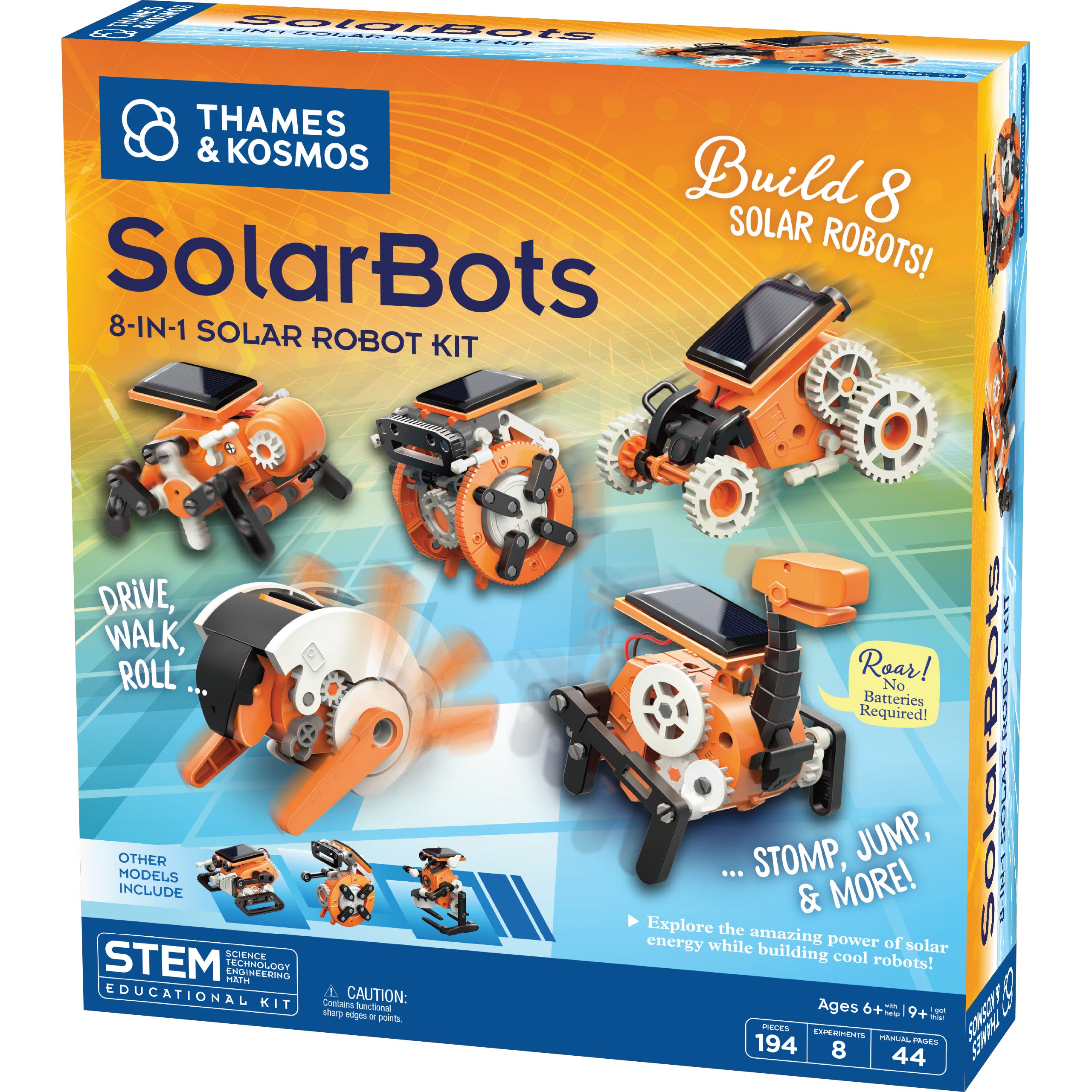
The kit contains enough parts to build eight different solar-powered robot configurations, from a walking bot to a wagging-tail dog to a crab that scuttles sideways. The same core set of pieces rearranges across designs, which means kids build one model, take it apart, and move on to the next.
The driving component is a small solar panel module. When placed in direct sunlight, the panel generates enough current to power a small motor. There are no battery compartments or charging ports. The kit relies entirely on solar energy in real time, so building and testing need to happen outdoors or near a strong window light source.
Thames & Kosmos lists the kit for ages 8 and up. The assembly uses snap-fit plastic pieces rather than glue or soldering, so younger builders in that range may still need occasional adult help with trickier configurations.

Who This Kit Fits
This kit works best for a specific kind of kid (and household): someone aged roughly 8 to 12 who enjoys building things and is curious about how machines work, and whose family has regular access to outdoor space or strong natural light. The solar-only power source is both the educational hook and the biggest practical constraint.
A few traits that make a good match:
- The kid likes assembly projects. If your child has enjoyed LEGO Technic sets, K'NEX, or similar building kits, the snap-together format will feel familiar.
- There is patience for rebuilding. The eight-in-one design means the first model does not stay built. Kids who get attached to a finished product and resist taking it apart may find this frustrating.
- Outdoor play is already part of the routine. The solar panel needs direct sunlight. On overcast days or in dimly lit apartments, the motor simply will not run.
For kids who are primarily interested in coding or programmable robotics, this kit is not the right fit. There is no electronic controller, no app, and no programmable behavior. It is a mechanical building kit powered by a solar cell.
What to Verify Before Buying
A few practical checks can save a return or a disappointed afternoon.
Age and Skill Fit
Thames & Kosmos recommends ages 8+, but that range is broad. An experienced 8-year-old builder can handle the easier configurations (the rolling bot, the stationary spinner). The more complex models, like the walking dog or the six-legged bot, involve smaller connectors and more precise alignment, better suited to ages 10 and up, or to younger builders working alongside a parent.
If the child has never built a snap-fit model kit before, consider starting with one of the simpler Thames & Kosmos kits first and graduating to this one once they have the assembly confidence.
Light Conditions
This is worth emphasizing because it is the most common source of frustration in reviews of solar-powered toys. The included solar panel is small. It needs direct, strong sunlight: not indirect light through a window, not a desk lamp, and not overcast skies. In practice, that means:
- Summer afternoons in most of the continental U.S. work well.
- Winter months at northern latitudes may provide too little direct sun for reliable operation.
- Indoor use under typical room lighting will not power the motor.
Some buyers in low-sun regions have reported using a bright LED work lamp held close to the panel as a workaround, though results vary and this sidesteps the solar-education value of the kit.
Part Count and Small Pieces
The kit involves numerous small connectors, axles, and gears. It is not a choking-hazard risk for the recommended age range, but parts are easy to lose on carpet or grass. Building on a table or tray helps, and keeping the original packaging for storage is wise.
Trade-offs Worth Knowing About
No kit is perfect, and the SolarBots 8-in-1 has specific strengths and limitations worth weighing.
What it does well:
- Teaches solar energy through direct cause-and-effect. The panel works or it does not, there is no abstraction.
- Eight models from one kit stretches the value across many build sessions.
- The snap-fit design avoids adhesives, batteries, and tools, which keeps setup and cleanup simple.
- Thames & Kosmos has manufactured science kits since 1863 (under the Kosmos brand in Germany) and is distributed widely in North America through Thames & Kosmos, LLC. The company's instruction manuals are generally clear and well-illustrated.
Where it falls short:
- Solar-only power is a hard dependency on weather and geography. This is not a "rainy day" toy.
- The motor is simple: it spins. There are no sensors, no programmable logic, no remote control. The educational ceiling is lower than kits that include a microcontroller.
- Plastic quality is functional but not premium. Some reviewers of Thames & Kosmos kits have noted that the snap-fit joints can loosen after repeated assembly cycles.
- There is no storage case. Parts come in a cardboard box, and once it is opened, organization is the buyer's problem.
How It Compares to Other Solar Robot Kits
The SolarBots 8-in-1 is not the only solar robot kit on the market. Two other options come up frequently in the same price range, and each makes different trade-offs.
| Feature | Thames & Kosmos SolarBots 8-in-1 | Sillbird STEM Solar Robot Kit (12-in-1) | KidzLabs Solar Race Car Kit |
|---|---|---|---|
| Number of models | 8 | 12 | 1 |
| Power source | Solar panel only | Solar panel only | Solar panel only |
| Recommended age | 8+ | 8+ (some models 10+) | 8+ |
| Includes programmable features | No | No | No |
| Assembly complexity range | Easy to moderate | Easy to moderate | Easy |
| Instruction quality | Well-illustrated manual | Adequate; some buyers note unclear steps | Simple single-model guide |
| Parts storage | Box only | Box only | Box only |
| Educational focus | Solar energy + mechanical design | Solar energy + mechanical design | Solar energy basics |
The Sillbird 12-in-1 kit offers more configurations from a similar type of kit, which may appeal to kids who want maximum build variety. However, buyer feedback on instruction clarity is more mixed compared to Thames & Kosmos. The KidzLabs Race Car is a much simpler, single-build project, better as a quick introduction for younger or less experienced builders, but it will not hold attention as long.
If the goal is a structured, multi-model build experience from a manufacturer with a deep history in science education, the Thames & Kosmos kit has an edge. If maximum configurations per dollar matters more, the Sillbird kit is worth considering.
Practical Tips for Getting the Most Out of It
A few suggestions that come up repeatedly from experienced buyers:
- Build on a flat surface with a tray or towel underneath. Small parts roll and disappear fast on grass or carpet.
- Start with the simplest model. The instruction booklet sequences the models roughly from easiest to hardest. Follow that order so the child builds confidence before tackling the complex builds.
- Test the solar panel first, before building anything. Hold it in direct sunlight and confirm the motor spins. This avoids the disappointment of finishing a 30-minute build only to discover the light conditions are not strong enough.
- Use resealable bags or small containers for parts. The kit does not include a case, and mixing pieces between models without a system leads to frustration.
- Pair the build with a short conversation about solar energy. Thames & Kosmos includes some background information in the manual, but a parent who asks "Why does this only work outside?" or "What happens if we cover half the panel?" turns the kit into a richer learning moment.
A Note on Safety and Standards
Thames & Kosmos products sold in North America are designed to comply with ASTM F963 (the U.S. toy safety standard) and are tested for age-appropriate hazards. The kit does not involve sharp edges, toxic materials, or high-voltage components. The solar panel produces low-voltage DC power, not enough to pose an electrical risk.
That said, this guide has not independently verified the kit's compliance documentation. Parents of children with specific material sensitivities or allergies should check the product packaging and Thames & Kosmos's published safety information before purchasing.
Final Recommendation
The Thames & Kosmos SolarBots 8-in-1 is a solid choice for kids aged 8 to 12 who enjoy building kits and have regular access to direct sunlight. It teaches solar energy through tangible, cause-and-effect play without overcomplicating the experience with electronics or software. The eight-model format gives it more replay value than single-build solar kits, and Thames & Kosmos's instruction quality is a genuine differentiator.
The kit's biggest limitation is its weather dependency. If your child wants a project for indoor days or evening play, this will not deliver. In that case, a battery-powered or USB-rechargeable STEM kit is a better fit.
For households where outdoor play is part of the daily routine and a child is ready to move beyond basic LEGO sets into something with real-world engineering concepts, the SolarBots 8-in-1 earns its place on the shelf.
You can find the Thames & Kosmos SolarBots 8-in-1 on Amazon.
ギフトをお探しですか?まずはこちら
- Best LEGO Botanicals Sets for Adult Builders and Gift-Givers (2026)
- LEGO Botanicals Bonsai Tree vs LEGO Botanicals Orchid: Which Is Better for Adult Builders and Gift Buyers?
- Holiday Gift Guide 2026: The Best Toys by Age and Budget, From Preschool to Grown-Ups
- Gifts for Grown-Ups Who Still Love Toys: LEGO, Board Games and Puzzles (2026)
How we research: This guide is based on manufacturer specifications, published independent reviews, and verified-buyer feedback, not hands-on testing.
Q4期間中は毎週金曜日にホリデーギフトガイドをお届け
週1回、最新レビューとコミュニティで実際に購入されているおもちゃをご紹介します。迷惑メールは送りません。いつでも配信停止できます。